Now reading: Homeland
Persiahaus

Greater Iran · Tajikistan

Tajikistan

تاجیکستان

Capital: Dushanbe

The Persian-speaking republic of Central Asia, home of the Tajik language and the memory of the Samanids.

Part of the wider Iranian world in our Atlas for its shared history, languages and customs; not a claim on any modern state or its identity. What we mean by Greater Iran

Milad TowerGolestan PalaceTreasury of National JewelsSoleymaniyeh PalacePearl Palace (Kakh-e Morvarid)Amir Kabir DamChalus RoadShrine of Fatima MasumehJamkaran MosqueNamak LakeFeyziyeh SchoolKhorhehJameh Mosque of SavehChal Nakhjir CaveMighan WetlandNaqsh-e Jahan SquareFin GardenJameh Mosque of IsfahanVank CathedralPersepolisNaqsh-e RostamNasir al-Mulk MosqueArg-e BamThe Lut desertGanjali Khan ComplexDowlat Abad GardenJameh Mosque of YazdChak Chak (Pir-e Sabz)NaybandTomb of FerdowsiTomb of Omar KhayyamRobat SharafMofakham Mirror HouseBelqeys CitadelAspakhu Fire TempleBesh QardashAkbarieh GardenFurg CitadelQanat of Baladeh, FerdowsGonbad-e QabusGreat Wall of GorganGolestan National ParkKhalid NabiMount DamavandAbbasabad GardenVeresk BridgeBadab-e SurtMasulehRudkhan CastleAnzali LagoonTomb of Sheikh Zahed GilaniSheikh Safi al-Din ShrineLake NeorArdabil BazaarTabriz BazaarBlue Mosque of TabrizSaint Stepanos MonasteryTakht-e SoleymanQara KelisaLake UrmiaTeppe HasanluDome of SoltaniyehKatale Khor CaveChehrabad Salt MineRakhtshuy Khaneh of ZanjanAlamut CastleJameh Mosque of QazvinKharraqan TowersSa'd al-Saltaneh CaravanseraiGanjnamehTomb of Esther and MordechaiAli Sadr CaveHegmataneh (Ecbatana)UramanKaraftu CaveLake ZarivarDar ol-Ehsan MosqueBisotunTemple of Anahita, KangavarTekyeh Moaven ol-MolkVali CastleSeymareh (Darreh Shahr) Ancient CityKabir KuhAli KoshFalak-ol-AflakLake GaharBisheh WaterfallPol-e KashkanChogha ZanbilSusaKul-e FarahZard KuhChoghakhor WetlandChaleshtar CastleGandoman WetlandMount DenaPersian GateSisakhtBelad ShapurSirafBushehr Old TownKharg IslandNayband Marine ParkHormuz IslandQeshm Island GeoparkLaftHindu Temple of Bandar AbbasShahr-e SukhtehMount TaftanDahan-e GholamanDasht-e KavirBayazid Bastami ComplexPir-e Alamdar TowerFriday Mosque of HeratMinaret of JamMusalla ComplexArch of BostLashkari BazarKajaki DamBlue MosqueNoh Gonbad MosqueBala Hissar of BalkhBabur's GardenDarul Aman PalaceNational Museum of AfghanistanBamiyan nichesShahr-e GholgholaMinarets of GhazniMausoleum of Ahmad Shah DurraniTomb of Mahmud of GhazniAncient PanjakentMausoleum of RudakiIskanderkulRegistanArk of BukharaSamanid MausoleumItchan Kala, KhivaKunya-UrgenchAyaz KalaAncient MervNisaGonur DepeMaiden TowerMausoleum of NezamiAteshgah of BakuErbil CitadelLalishAmediBolan PassMehrgarhHinglaj MataTaq KasraHatraAkdamar IslandWalls of DiyarbakırVan FortressGarni TempleEtchmiadzin CathedralBlue Mosque of YerevanNarikalaSvetitskhoveli CathedralUplistsikheNaryn-KalaJuma Mosque of DerbentGunibDargavsRekomMukhtarov MosqueQal'at al-BahrainDilmun Burial MoundsPearling PathKumzarKhasab CastleTelegraph Island

Point at a region or landmark; zoom out to wander to the neighbours.

The whole Atlas

Tajik is a form of Persian, written in Cyrillic since the Soviet era. Tajiks look back to the Samanids, the ninth- and tenth-century dynasty of Bukhara whose court revived Persian as a language of literature.

Rudaki, called the father of Persian poetry, was born at Panjrud in today's Tajikistan, and at Panjakent archaeologists have uncovered a Sogdian city of painted houses.

Cities and towns

  • Dushanbeدوشنبه

    The capital

  • Khujandخجند

    An old city on the Syr Darya

  • Panjakentپنجکنت

    The Sogdian city of painted houses

Landmarksبناها و نشانه‌ها

  • Ancient Panjakent

    پنجکنت باستان

    A Sogdian city of the fifth to eighth centuries

  • Mausoleum of Rudaki

    آرامگاه رودکی

    The tomb of the first great poet of New Persian, in his home village

  • Iskanderkul

    اسکندرکول

    A turquoise mountain lake named after Alexander

Tajikistan through time

Iranian history

636–1040

The Arab conquest and the Persian revivalفتح اعراب و احیای زبان فارسی

Islam reached Iran with the Arab armies of the 7th century. Persian survived, took on a new script and, under dynasties such as the Samanids, returned as one of the great literary languages of the world.

  • c. 329 BCE Alexander begins his campaigns in Sogdiana
  • 722 Devashtich, last ruler of Panjakent, executed
  • c. 941 Death of Rudaki at Panjrud
  • 1946 Systematic excavations begin at Panjakent
  • 1958 Mausoleum built for the 1,100th anniversary of his birth

Poets of Tajikistanشاعران
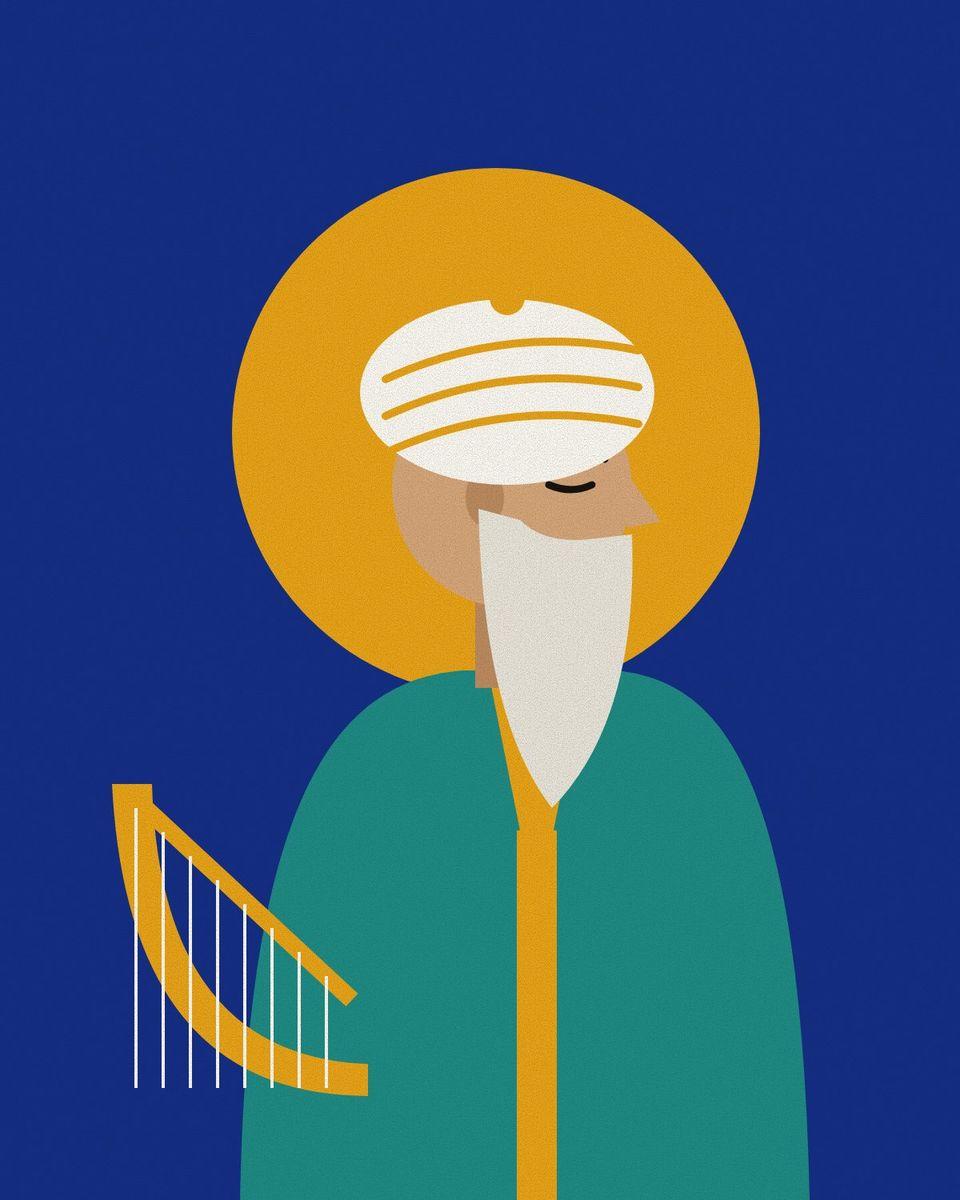
Stylised portrait of Rudaki with a long white beard and eyes closed, a white turban, against a saffron halo on deep lapis, with a harp (chang).

Rudaki

رودکی

c. 858–c. 941 · Panjrud and Bukhara

Poet of the Samanid court at Bukhara, honoured in Persian tradition as the father of Persian poetry.
Known for: The first great poet of New Persian

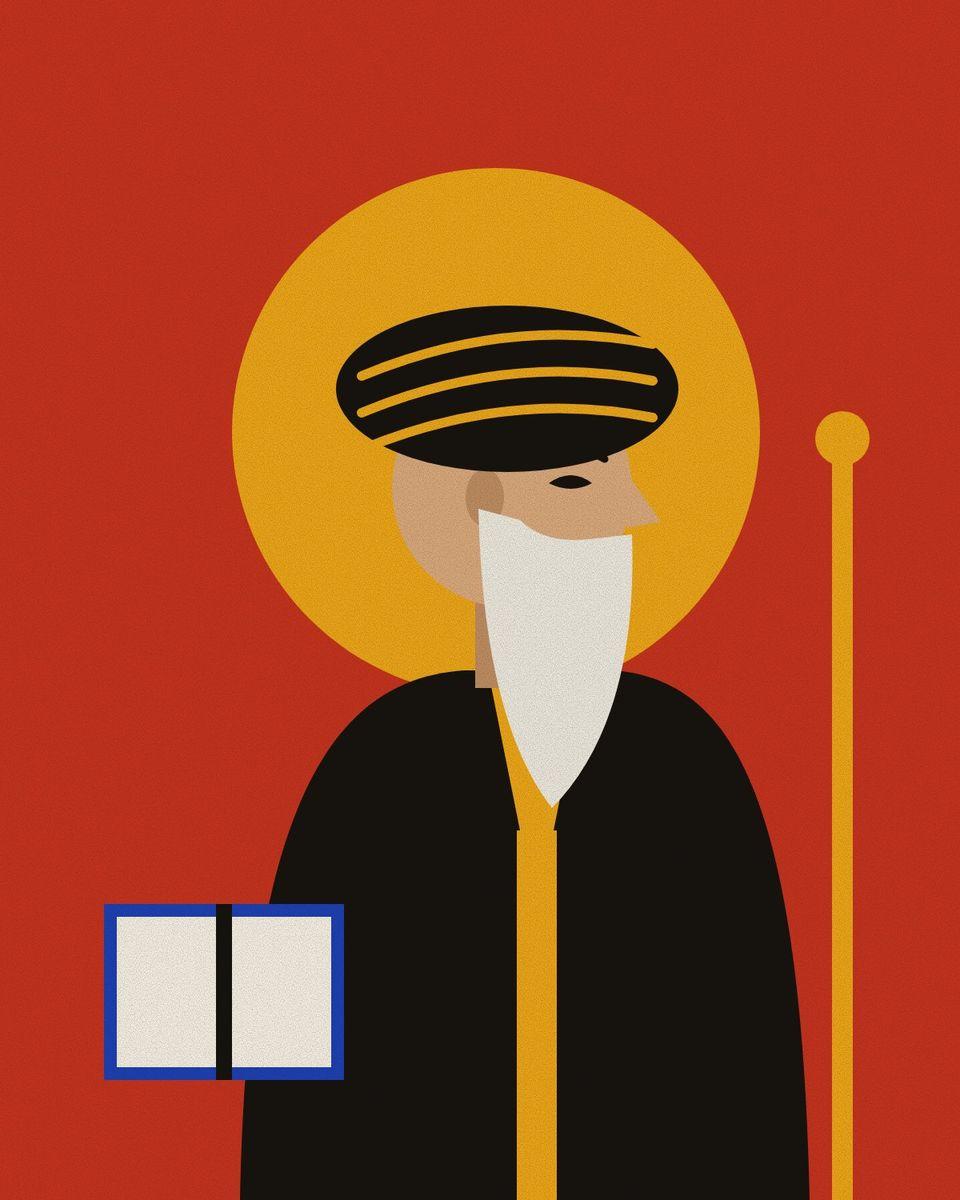
Stylised portrait of Naser Khosrow with a long white beard and a dark turban, against a saffron halo on pomegranate red, with a traveller's staff and a book.

Naser Khosrow

ناصرخسرو

1004–c. 1088 · Qobadiyan, Balkh and Yumgan

Poet, philosopher, traveller and Ismaili preacher, whose qasidas argue for reason and faith against the deceits of the world.

Known for: His Divan and the Safarnameh (Book of Travels)

Loiq Sher-Ali

لایق شیرعلی

1941–2000 · Panjakent; Dushanbe

Tajikistan's best-loved modern poet, who made the Persian language and its classical heritage his great theme.

Known for: Poems in praise of the Persian language

Stories from hereداستان‌ها

Avesta · poetry · folk belief

Pari

Malign in the Avesta and the image of beauty in Persian poetry, the pari is still believed in many regions to live near water, giving and taking in equal measure.

A haft-sin table at the spring equinox: a blue hyacinth, a dish of sprouted wheat tied with red ribbon, an apple, a gold-framed mirror catching the sun between two candles, a goldfish bowl and a dish of painted eggs, under a turquoise arc of sky with the sun halfway up it.

1 Farvardin · the March equinox

Nowruz

The Persian new year, Nowruz, 'new day', begins at the moment of the March equinox. Homes are cleaned, the haft-sin is laid, and families visit one another across Iran, Afghanistan, Central Asia, the Caucasus and the diaspora.

An autumn table with pomegranates, apples and quinces, a gold-framed mirror and a sprig of myrtle in a turquoise vase, while plane leaves fall, under a red arc of sky carrying a rayed golden sun for Mithra.

16 Mehr · early October

Mehregan

The autumn feast of Mehr, or Mithra, god of covenants and friendship. For centuries it stood beside Nowruz as one of the two great feasts of the Persian year; Zoroastrians and Tajiks keep it still.

A korsi covered with a red quilt on the longest night, set with a cut watermelon, pomegranates whole and halved, a bowl of nuts and dried fruit, a candle and an open book, under a deep blue arc of sky full of stars with a thin crescent moon.

30 Azar · the winter solstice

Shab-e Yalda

The longest night of the year. Families gather at the home of their eldest, eat pomegranates, watermelon and ajil, read Hafez and the Shahnameh, and stay up together until the dark has turned.
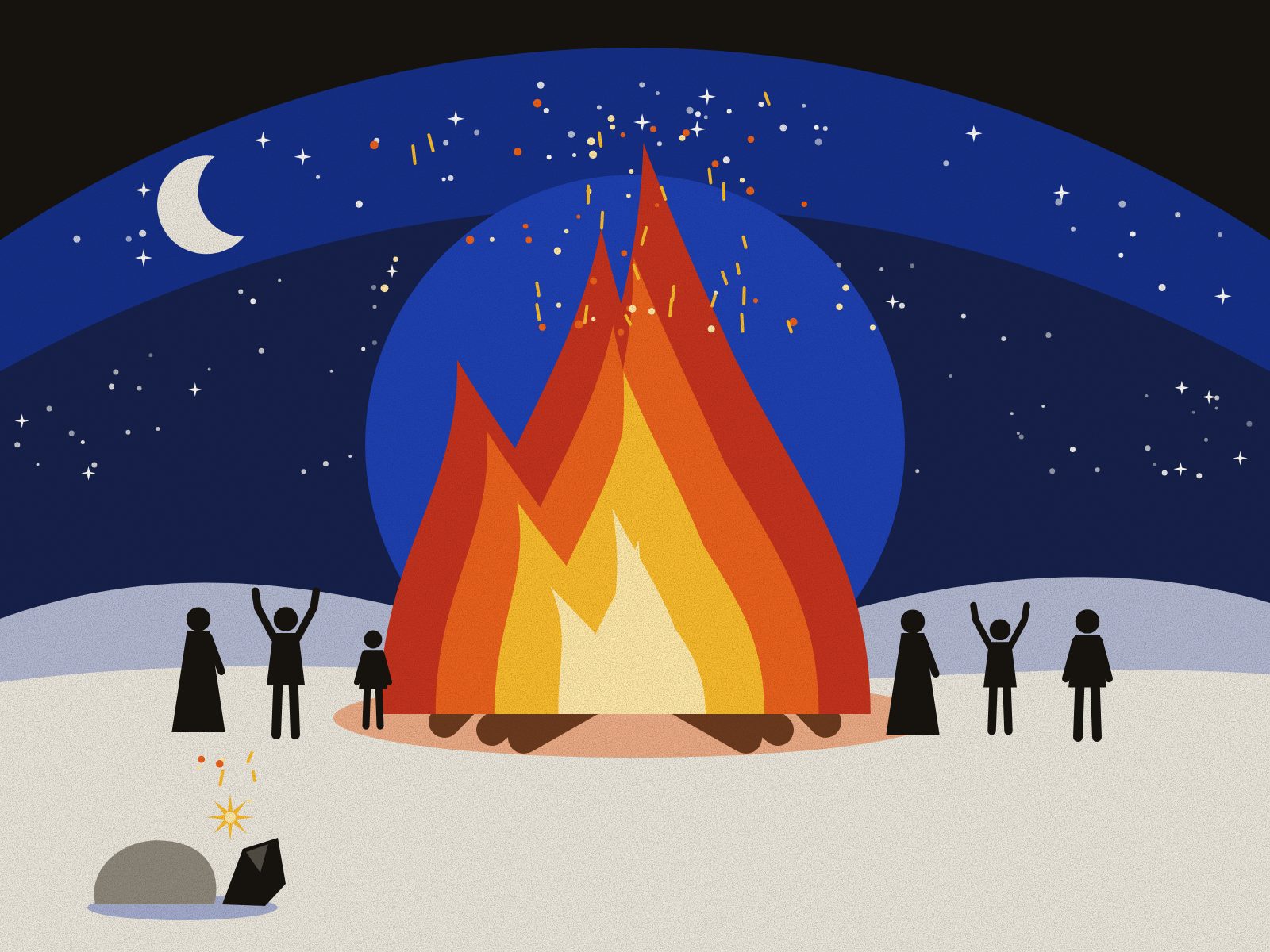
A great bonfire of stacked logs blazing on snowy ground on a midwinter night, small figures standing around it and sparks rising into a starry sky, with a grey stone and a dark flint striking a spark in the foreground.

10 Bahman · fifty days before Nowruz

Sadeh

A midwinter fire festival held fifty days before Nowruz, when a great bonfire is lit at dusk. The Shahnameh credits the first Sadeh fire to King Hushang; the Zoroastrians of Kerman and Yazd still light it.
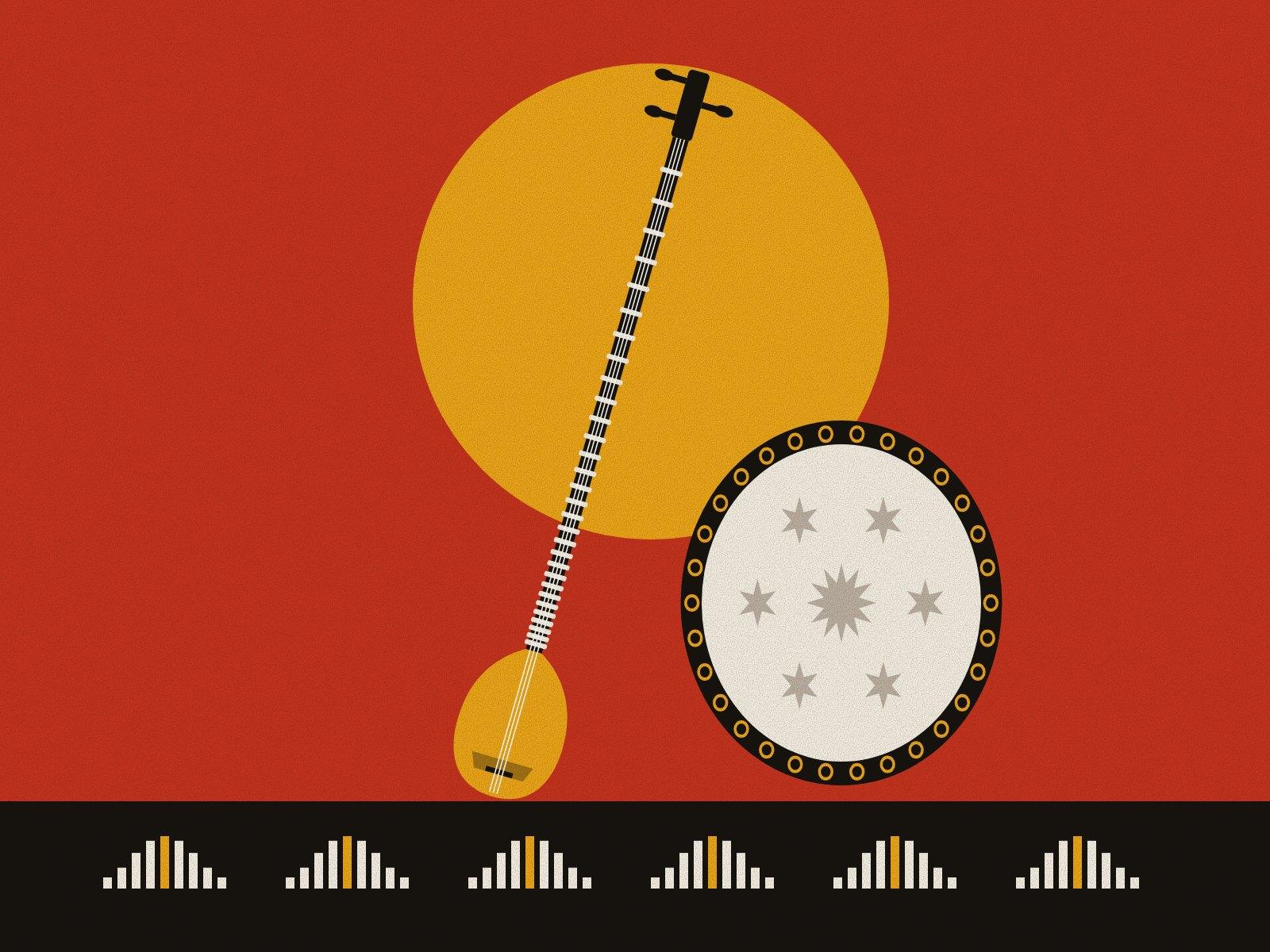
A Bukharan tanbur with a tiny saffron body and very long neck beside a ringed doira frame drum, before a saffron halo on red, above six groups of rising and falling bars

The six maqams of Bukhara

Shashmaqam

Six great suites of song and instrumental music, crystallised at the court of Bukhara and sung in Tajik Persian and Uzbek: the Shashmaqam is the classical music of Tajikistan and Uzbekistan, and each nation defines it as its own.

A gramophone with a saffron cabinet and a great blue horn before a red halo on black, with a pale radio microphone and a cassette on the ground

Notation, radio, pop and revolution

The twentieth century

A century of change: notation and the conservatory, the Golha radio programmes, a pop era, the transformations after 1979 and a diaspora scene centred on Los Angeles.