Now reading: Homeland
Persiahaus

Peoplesمردمان

Persians and Azerbaijanis, Kurds and Baluch, Armenians and Hazaras: the Iranian world is made of many peoples, each with its own language, faith, music and memory. All of them are part of the Iranian identity, and each defines itself. These are their stories, told as far as possible from within.

All of Peoples

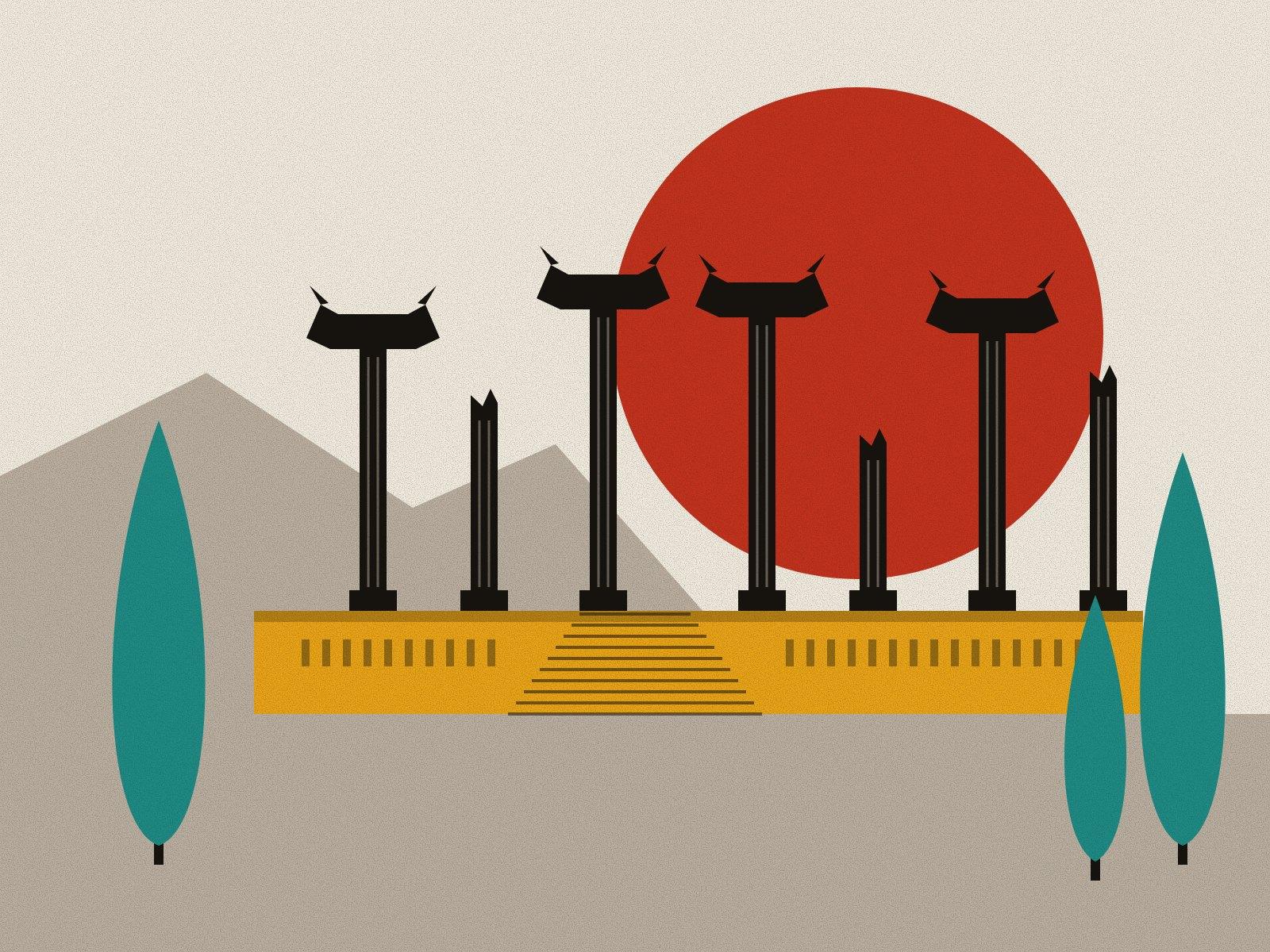
The columns of Persepolis, some crowned with double-bull capitals and some broken, on a saffron terrace with its stair, against a red sun on paper, between tall turquoise cypresses on the plain of Fars.

A people named after a province, a language that travelled far beyond it

Persians

Persian speakers of Iran call themselves *Fars* or simply *Irani*. They are one people among many in Iran, and their language became a shared tongue for far more than themselves.
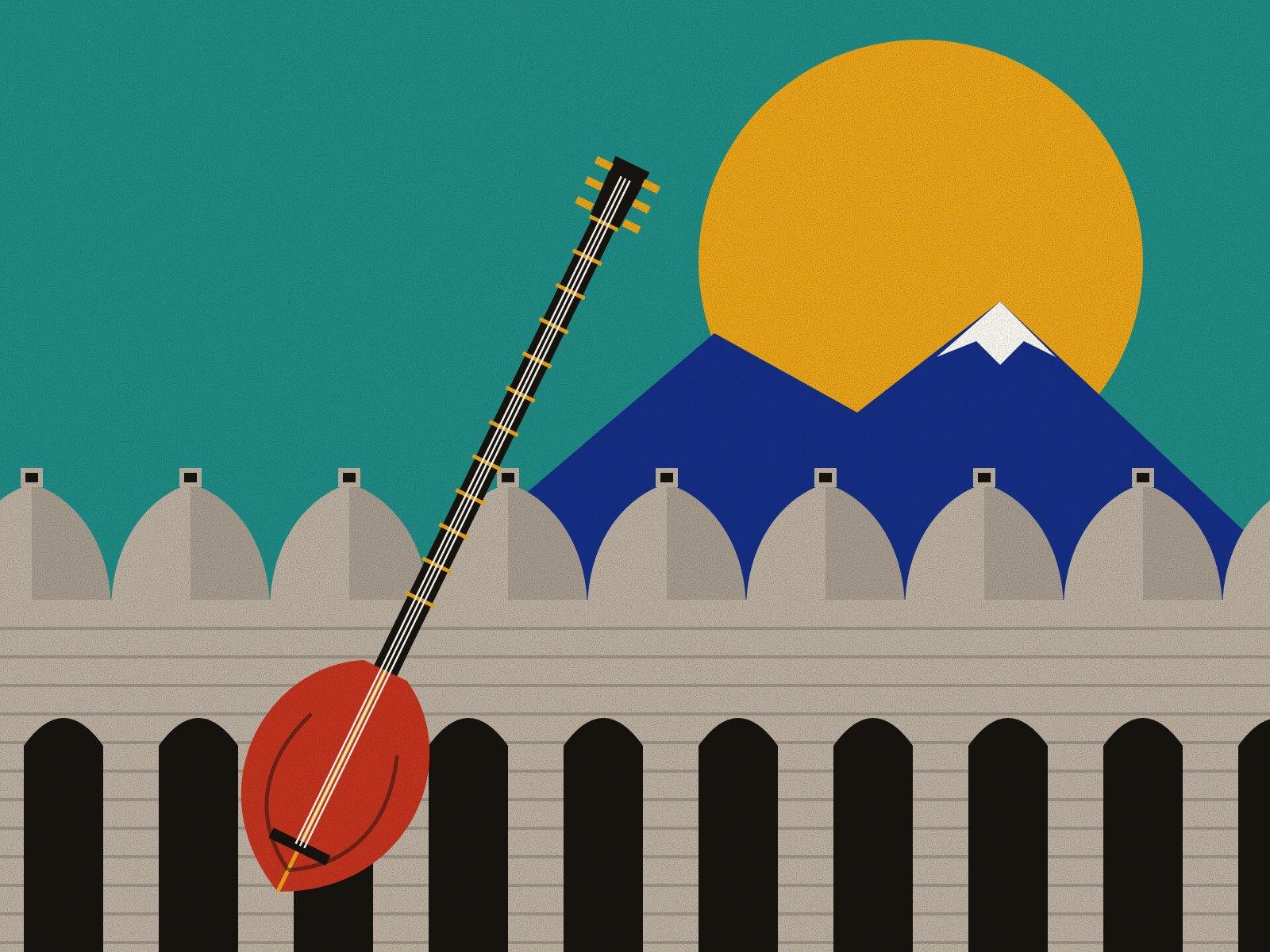
A long-necked saz with a red bowl and saffron frets, the instrument of the ashiq minstrels, before the rows of brick domes and arches of the Tabriz bazaar, with Mount Sahand and a saffron sun on turquoise behind.

Turkic speech, an ancient Iranian province, and a nation of their own to the north

Azerbaijanis

Iran’s Azerbaijanis, who often call themselves *Türk*, speak a Turkic language in a land named after an Iranian satrap. North of the Aras, the Republic of Azerbaijan is a separate nation that defines itself.

A Newroz night in the Zagros: snow-capped blue peaks under a pale moon, small bonfires on the ridges, and a great fire beside a line of tiny figures with linked hands in the circle dance, the leader raising a red handkerchief.

Mountain people of four states and many dialects

Kurds

Kurds live across the Zagros and Taurus in Iran, Iraq, Turkey and Syria. In Iran they speak several Kurdish languages, keep several faiths, and light Newroz fires that every Iranian knows.
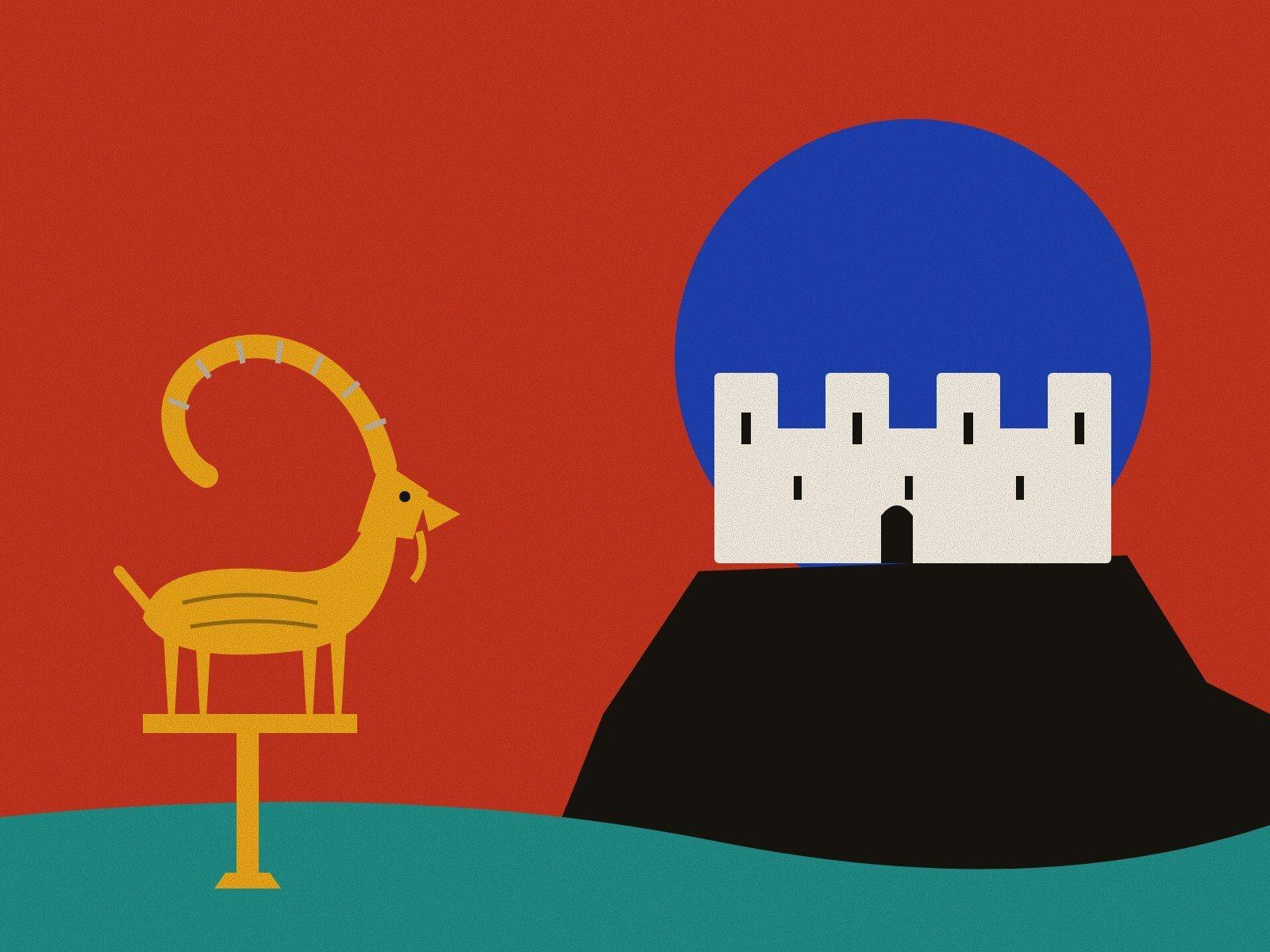
The round towers of Falak-ol-Aflak fortress on a dark hill against a lapis halo on pomegranate red, with a saffron ibex with great ridged horns standing on a finial in front, after the Luristan bronzes.

The people of the central Zagros

Lurs

Lurs speak Luri, a close cousin of Persian, in the valleys of Lorestan, Kohgiluyeh and the southern Zagros. Their country holds the Luristan bronzes, black tents and the old seasonal migration.

The Bakhtiari migration: a long thread of tiny white sheep, black goats and laden pack horses winding down from the snowfields of Zard Kuh and fording a turquoise river, under a saffron sun on lapis.

The great migration over the Zagros

Bakhtiari

The Bakhtiari cross the high Zagros twice a year with their flocks. They are famous for that migration, for their part in the Constitutional Revolution, and for rugs laid out like gardens.
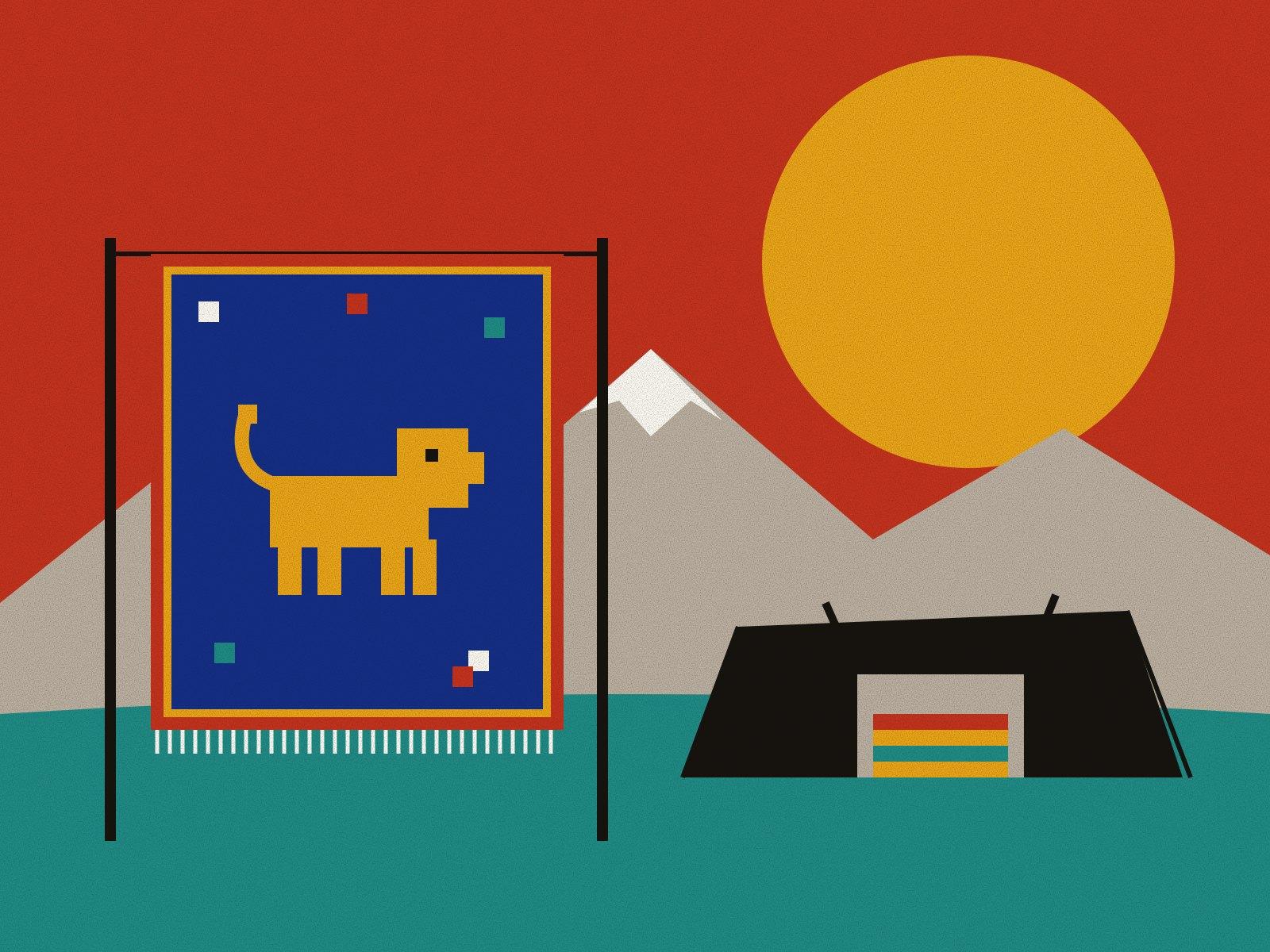
A gabbeh rug with a bold saffron lion on a deep blue field hung on a line to air, beside a black goat-hair tent with striped bedding inside, below the snow-tipped Dena range, under a saffron sun on red.

A Turkic confederation in the heart of Fars

Qashqai

The Qashqai are a Turkic-speaking tribal confederation of Fars, famous for one of Iran’s longest migrations, for their gabbehs and kilims, and for women’s dress of many coloured skirts.
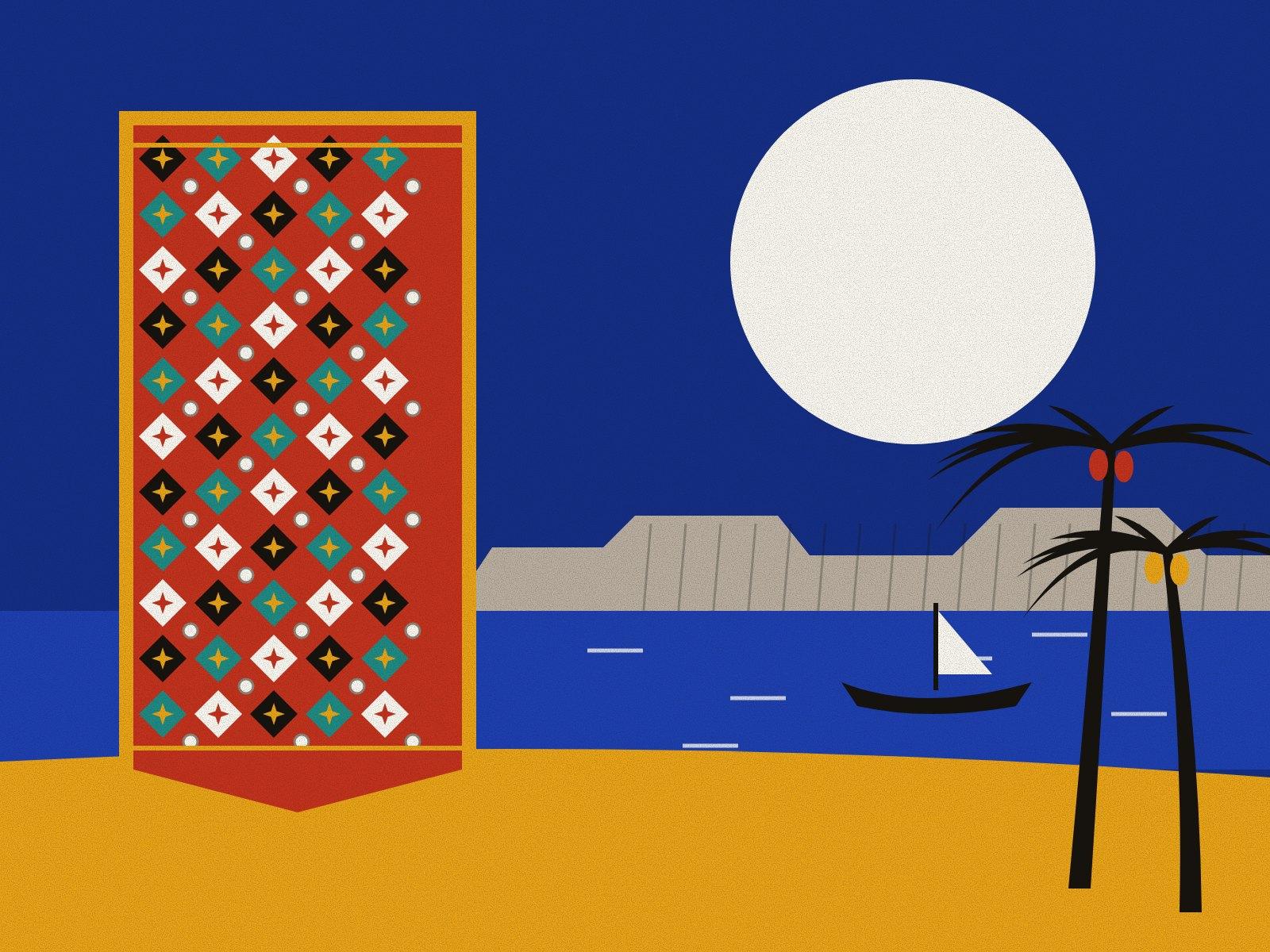
A long panel of Baluch needlework, red and saffron-edged, filled with diamonds and stars and set with tiny mirrors, beside the Makran coast at night with a dhow on the sea, clay hills, saffron sand and date palms under a white moon.

From the Makran coast to the deserts of Sistan

Baluch

The Baluch, *Baloch* in their own spelling, live across Iran, Pakistan and Afghanistan and around the Gulf. They keep the Balochi language, epic ballads, healing music and some of Iran’s finest embroidery.
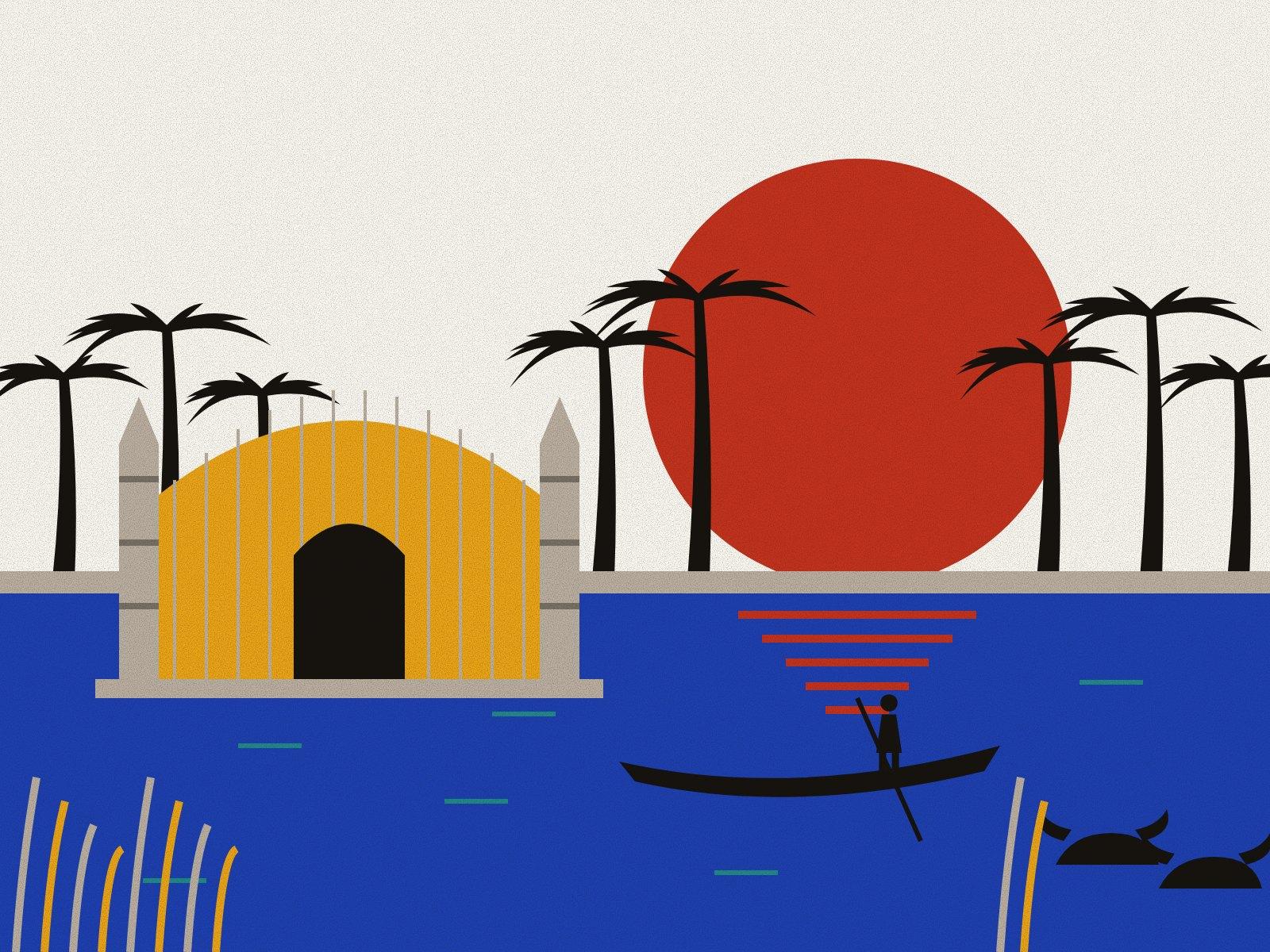
A vaulted reed guesthouse with tall reed-bundle pillars in the marshes of Khuzestan, a narrow reed boat poled across the blue water, two water buffalo half-submerged and palm groves on the far bank, under a red sun on white.

Marshes, palms and the Gulf coast

Arabs of Iran

Iran’s Arabs live mainly in Khuzestan and along the Gulf coast. Their Arabic dialects, tribal poetry, coffee and date palms are as old in Iran as any city on the plain.
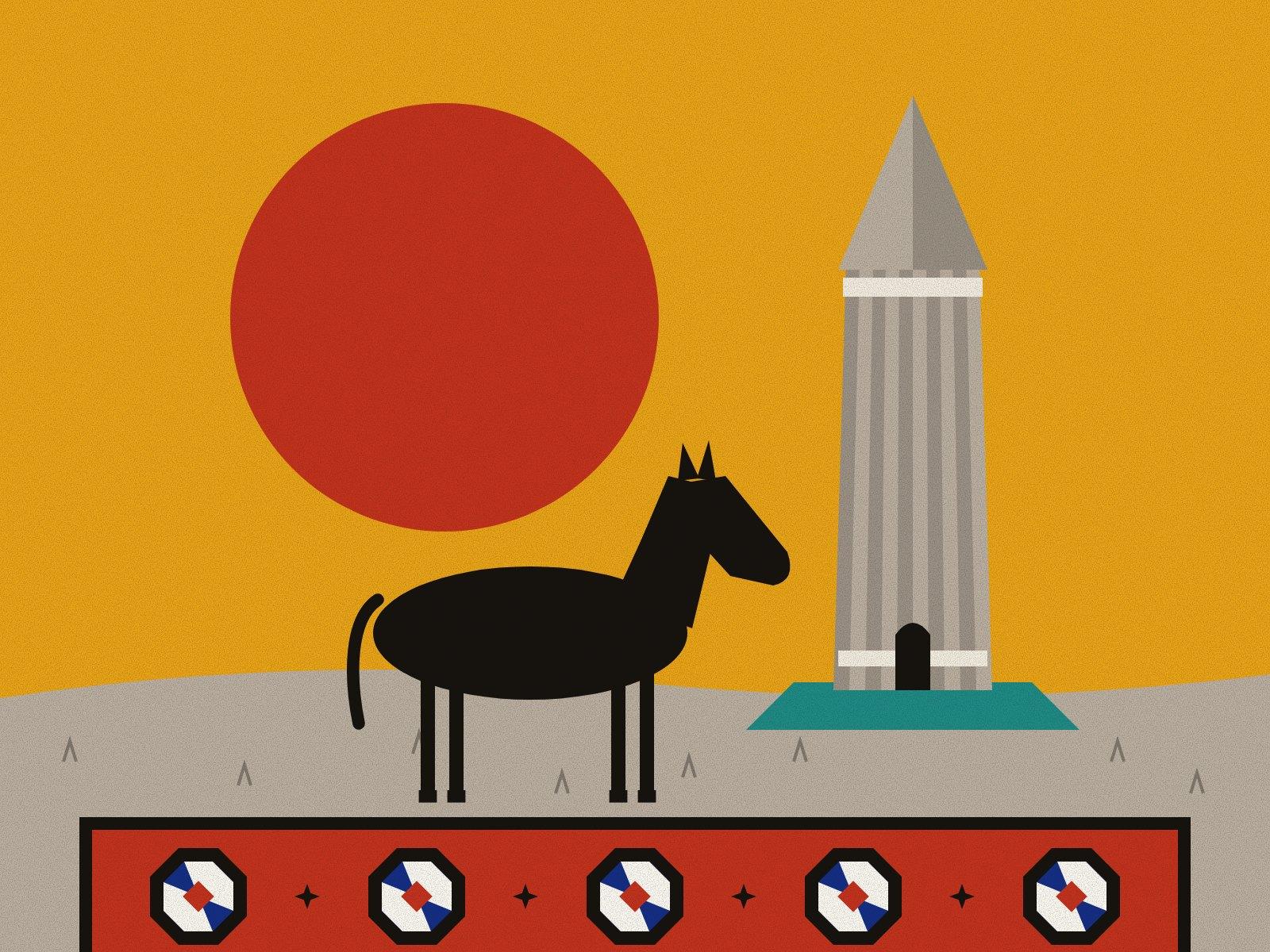
The tall fluted brick tower of Gonbad-e Qabus with its conical roof rising from the Turkmen steppe, a lean black horse, and a red Turkmen carpet of quartered guls laid in front, under a red sun on saffron.

Horses, carpets and the steppe of Gorgan

Turkmen

Iran’s Turkmen live on the Turkmen Sahra plain north of the Alborz. They keep the poetry of Magtymguly, the music of the *bagshy*, red carpets and a passion for horses.

A wooden Caspian house on stilts with a deep veranda and a red tiled roof, before misty Hyrcanian forest and terraced tea, above flooded and ripening rice paddies, under a pale sun on turquoise.

The Caspian peoples between forest and sea

Gilaks and Mazandaranis

On the green Caspian shore, Gilaks and Mazandaranis speak their own Iranian languages, grow rice, tea and citrus, and keep festivals and a calendar of their own.

Vank Cathedral in New Julfa, its brick drum and pointed Persian dome topped by a small cross and a band of turquoise tile over the door, beside its pale bell tower with a bell in the arch, against a saffron sun on deep lapis.

New Julfa, Tehran and the old monasteries of the north-west

Armenians of Iran

Armenians, *Hay* in their own language, have lived in Iran for well over two thousand years. They keep the Armenian Apostolic Church, the Eastern Armenian language and some of Iran’s oldest churches.

The Urmia plain, rows of vines running towards Lake Urmia and the hills beyond, a line of orchard trees and a small old church with a low dome and a cross, with a large bunch of dark grapes in front, under a turquoise sun on paper.

Aramaic speakers of the Urmia plain

Assyrians of Iran

Assyrians, *Suraye* in their own language, are Aramaic-speaking Christians whose roots in north-western Iran go back to the Church of the East and beyond.
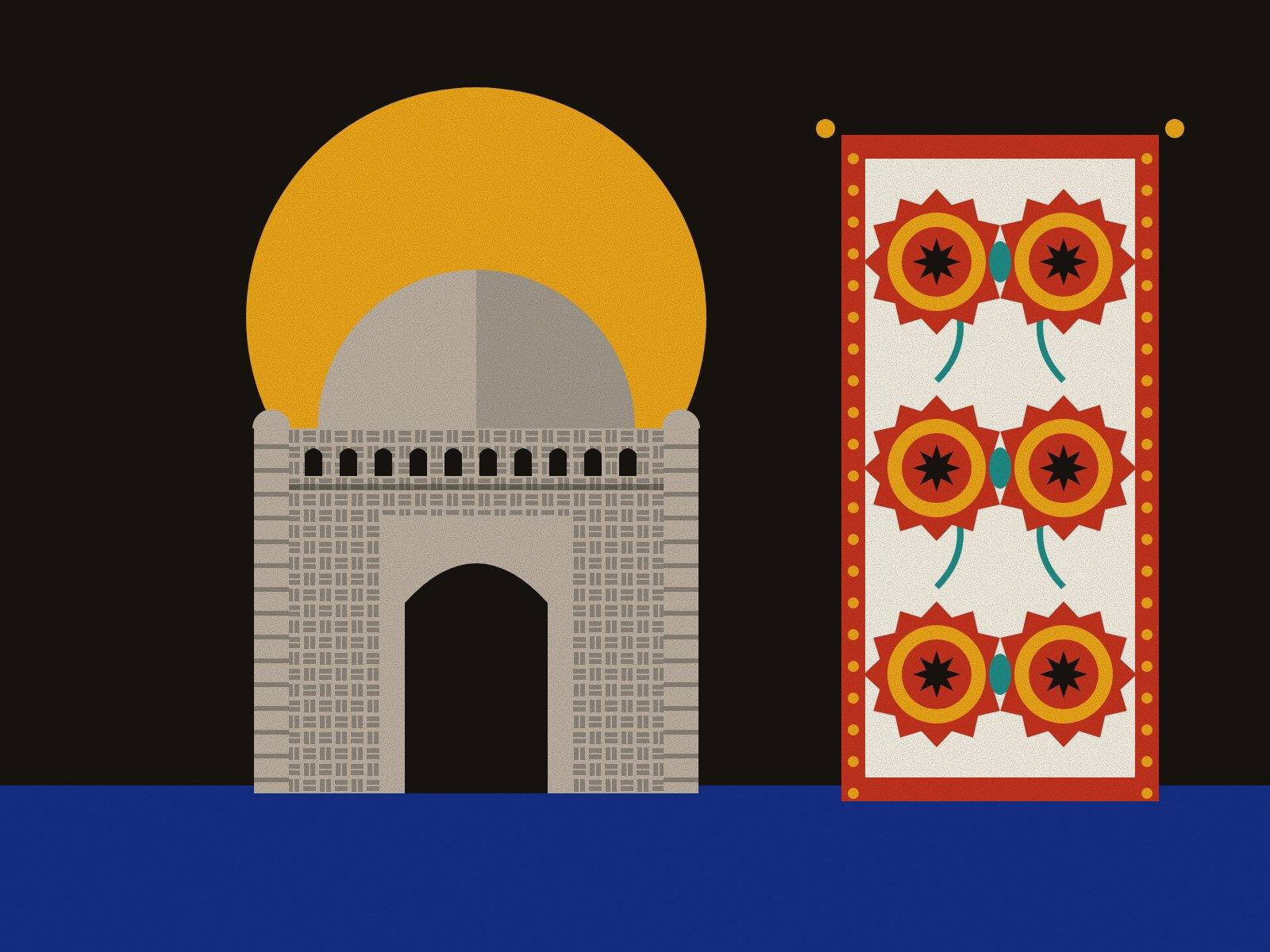
The Samanid mausoleum of Bukhara, a domed cube of basket-weave brick with a small dome at each corner and an arcade under the cornice, against a saffron halo on black, beside a suzani hanging of red and saffron rosettes on cream.

Persian speakers of Afghanistan and Central Asia

Tajiks

Tajiks speak Persian in Afghanistan, Tajikistan and Uzbekistan. They are heirs of the Samanids and of Rudaki, and their homelands define themselves.
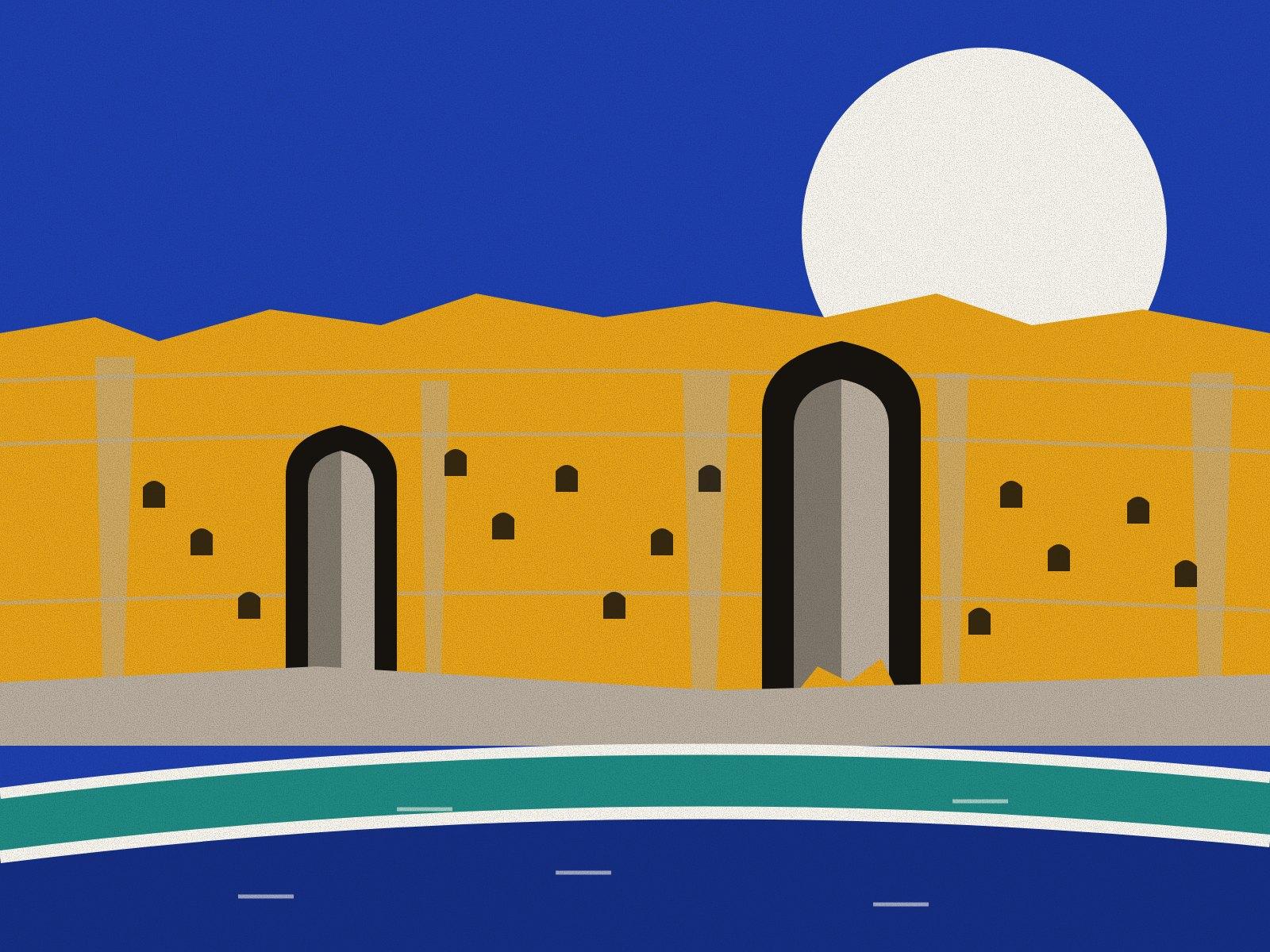
The sandstone cliff of Bamiyan with its two great empty niches and rows of small caves, above the turquoise and deep blue lakes of Band-e Amir held back by white travertine dams, under a white sun on lapis.

The people of the high Hazarajat

Hazaras

The Hazaras of central Afghanistan speak Hazaragi, a form of Persian, and are mostly Shia. Their homeland holds Bamiyan and Band-e Amir; their diaspora reaches Mashhad, Quetta and Australia.

Masuleh, the stepped village of the Talysh mountains, its ochre houses with dark lattice windows climbing the forested slope in tiers so that each roof is the street of the house above, under a lapis sun on white.

The smaller communities, and the wider family

Talysh, Tats and other peoples

The Iranian world holds many more peoples than any list can name: Talysh and Tats in the north, Ossetians in the Caucasus, Pashtuns to the east, Georgians in Isfahan, Afro-Iranians on the south coast, and more.