Mofakham Mirror House
آینهخانه مفخمA Qajar mirror-work pavilion of the khans of Bojnurd
In the centre of Bojnurd, the capital of North Khorasan, stands a small, extravagant pavilion known as the Ayeneh-khaneh, the Mirror House. It is the best-known survivor of the residence of the Shadlu khans, the Kurmanji Kurdish family who governed Bojnurd and its region in the Qajar era, and it takes its name from Yar Mohammad Khan Shadlu, known by the title Sardar Mofakham.
The building was part of a larger governor’s complex of the nineteenth century, laid out within a formal garden that has since largely been lost. Its front is faced with painted Qajar tiles showing human figures, animals and floral and geometric designs, with tiled towers at the corners. Inside, the reception hall is lined with ayeneh-kari, mirror mosaic of thousands of small cut pieces set into plaster, so that every candle or lamp is caught and multiplied across ceiling and walls. It was a room for receiving guests and holding meetings, built to impress.
Accounts differ on the exact dates of building, but the decoration is typical of the late Qajar period. In 1991 the Cultural Heritage Organization took over the mansion and turned it into a museum of anthropology and archaeology.
For visitors, the Mirror House is the obvious starting point in Bojnurd: a modest building on a city street, which opens onto one of the most dazzling interiors of north-eastern Iran.
Mofakham Mirror House through time
Iranian historyThe Pahlavi century and afterدوران پهلوی و پس از آن
Two Pahlavi shahs built railways, universities and a centralised state, while poets, novelists and film-makers created a new Persian culture. The era ended with the revolution of 1979.
- Converted into a museum
More in North Khorasanخراسان شمالی
Belqeys Citadel
The mud-brick ruins of medieval Esfarayen
Aspakhu Fire Temple
A stone Sasanian building in a village at the edge of Golestan National Park
Besh Qardash
A spring and shrine of “five brothers” outside Bojnurd
Stories from the regionداستانها
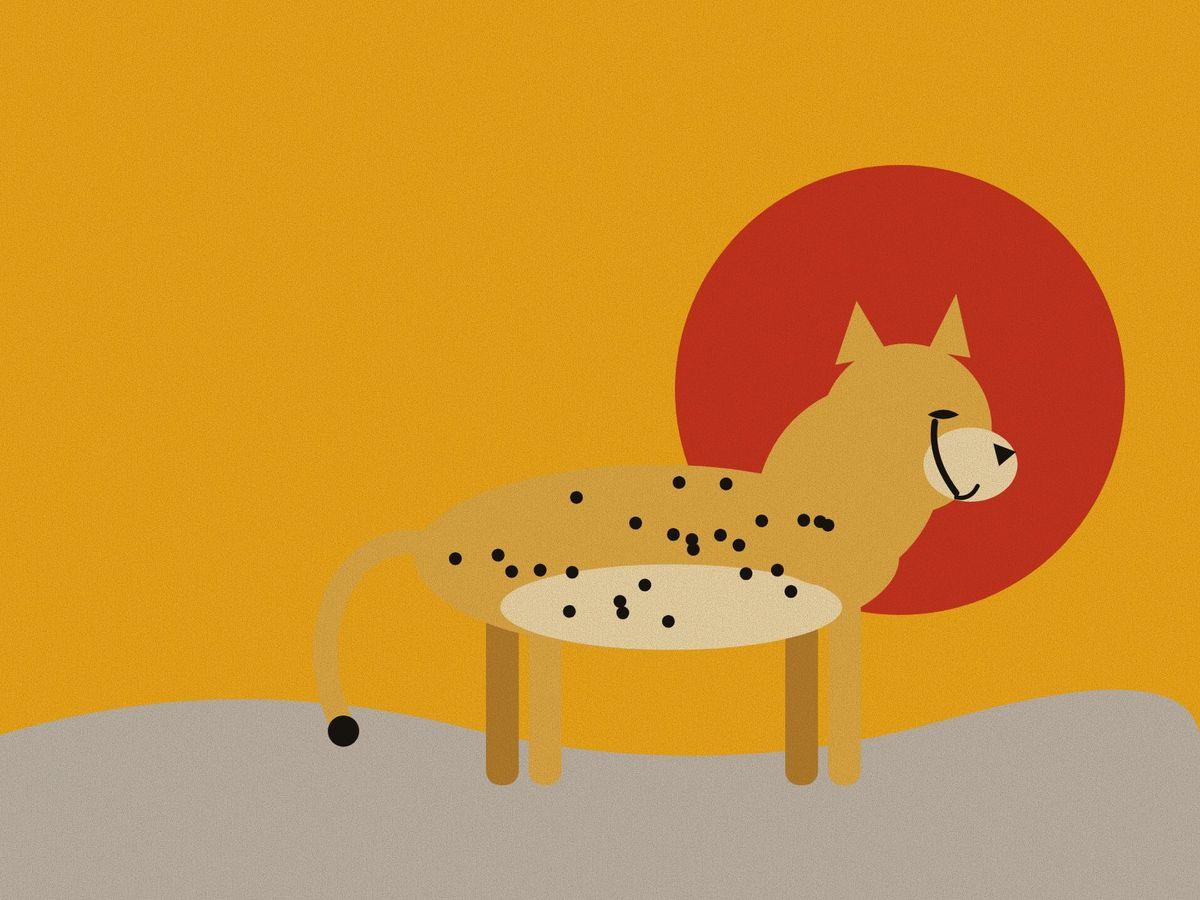
The Asiatic cheetah
Once a hunting companion of kings, now the last of its line: the Asiatic cheetah survives in the wild only in Iran, and only a few dozen are thought to remain.

Kurds
Kurds live across the Zagros and Taurus in Iran, Iraq, Turkey and Syria. In Iran they speak several Kurdish languages, keep several faiths, and light Newroz fires that every Iranian knows.
Seleucids and Parthians
After Alexander, Greek kings ruled Iran for a time, until the Parthians, horsemen from the north-east, built an empire that lasted nearly five centuries and held Rome at bay.