Chaleshtar Castle
قلعه چالشترA Bakhtiari khan's mansion of stone, inscriptions and courtyards
Chaleshtar Castle stands in the village of Chaleshtar, a few kilometres from Shahrekord. Despite its name it is less a fortress than a grand country house: the residence of a Bakhtiari khan, built in the late Qajar period, when the great families of the Bakhtiari confederation were among the most powerful in Iran. Its builder is usually named as Khoda Rahm Khan, though sources on its history are few.
The complex has several parts: the khan-neshin, the khan's quarters for receiving guests; the andaruni, the private family quarters, known as Sotudeh castle; a bathhouse; storerooms and stables. Its stone façades, arched porches and decorated rooms combine Qajar Iranian forms with European touches fashionable at the time, and verses from the Quran are carved and painted in its decoration.
Houses like this were built in many villages of Chaharmahal by the khans of the region. They were set on the plains rather than on hilltops and had little defensive purpose: their grandeur expressed the power and standing of the families who ruled the tribes. Bakhtiari khans played a major role in the Constitutional Revolution of 1905–1911, when Bakhtiari forces marched on Tehran in 1909.
Today Chaleshtar Castle is a registered monument and a fine place to see the domestic world of the Bakhtiari elite, with its courtyards, painted rooms and the plain beyond its walls. It stands in contrast to the black goat-hair tents of the Bakhtiari herders who moved with their flocks between the Zagros and Khuzestan, and shows the settled, landed side of the same society.
Chaleshtar Castle through time
Iranian historyAfsharids, Zands and Qajarsافشاریان، زندیان و قاجاریان
A soldier-king who sacked Delhi, a regent who rebuilt Shiraz, and a dynasty that made Tehran the capital and lived through Iran's Constitutional Revolution.
- Bakhtiari forces march on Tehran
More in Chaharmahal and Bakhtiariچهارمحال و بختیاری
Zard Kuh
The range where the Karun and the Zayandeh rise
Choghakhor Wetland
A high mountain wetland of reeds and migrating birds
Gandoman Wetland
A reed marsh near Borujen, Iran's newest Ramsar wetland
Stories from the regionداستانها

Bakhtiari
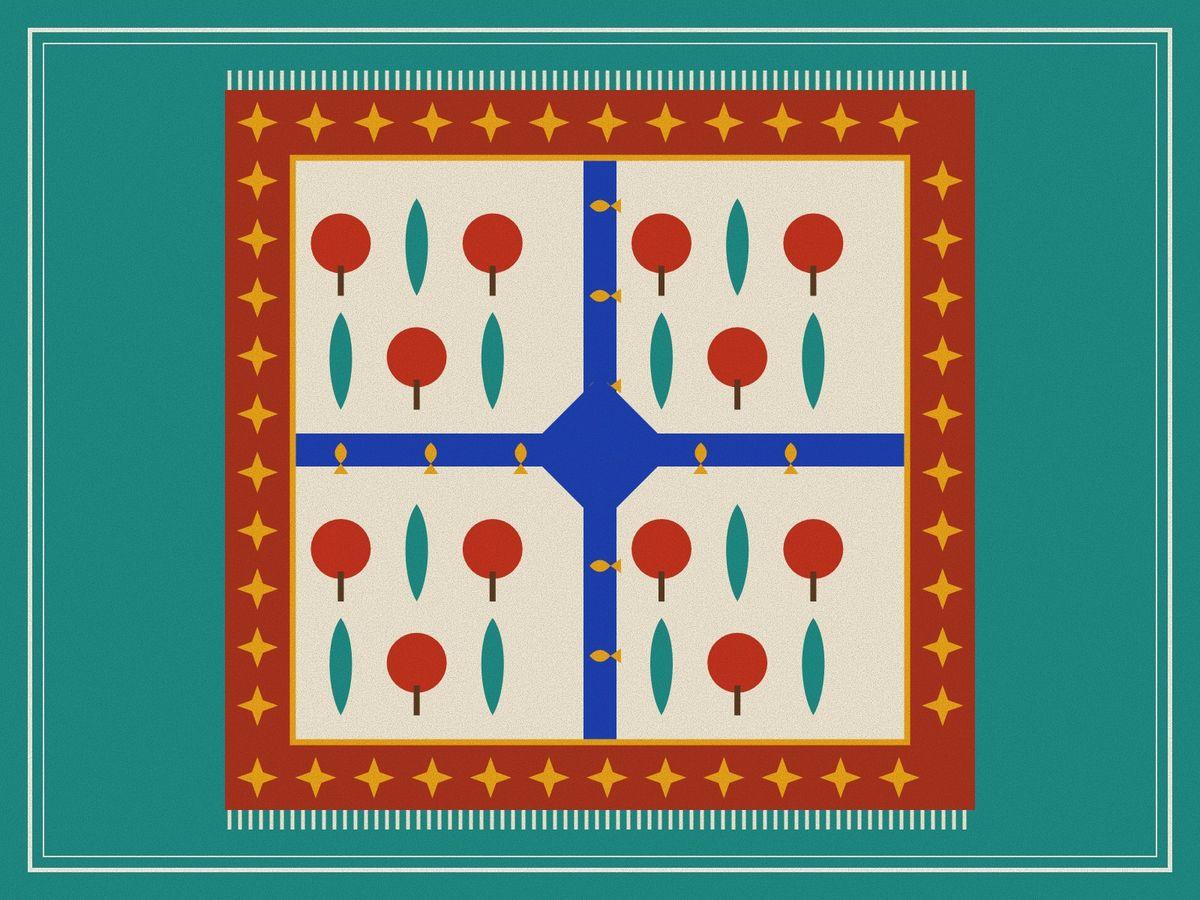
The Bakhtiari cross the high Zagros twice a year with their flocks. They are famous for that migration, for their part in the Constitutional Revolution, and for rugs laid out like gardens.
The garden carpet
Water channels, fish, cypresses and flowering trees: a garden carpet maps the Persian *chahar bagh* onto wool, seen from above and from the side at once.

Luri and Bakhtiari
Close cousins of Persian, the Luri varieties of the central Zagros, Bakhtiari among them, carry the songs, laments and migration routes of the Lur and Bakhtiari peoples.