The Persian year turns on its feasts: Nowruz at the spring equinox, bonfires on the last Wednesday night of winter, a day out of doors on the thirteenth, water at midsummer, the autumn feast of Mehr, the longest night and the midwinter fire. Many reach back to the Zoroastrian calendar; today they are kept by people of every faith and none, across the Iranian world and far beyond it.
Spring · 1 Farvardin · the March equinox
Nowruzنوروز
Next: Sunday, 21 March 2027
The Persian new year, Nowruz, 'new day', begins at the moment of the March equinox. Homes are cleaned, the haft-sin is laid, and families visit one another across Iran, Afghanistan, Central Asia, the Caucasus and the diaspora.
Spring · 13 Farvardin · the last day of the Nowruz holidays
Sizdah Bedarسیزدهبدر
Next: Friday, 2 April 2027
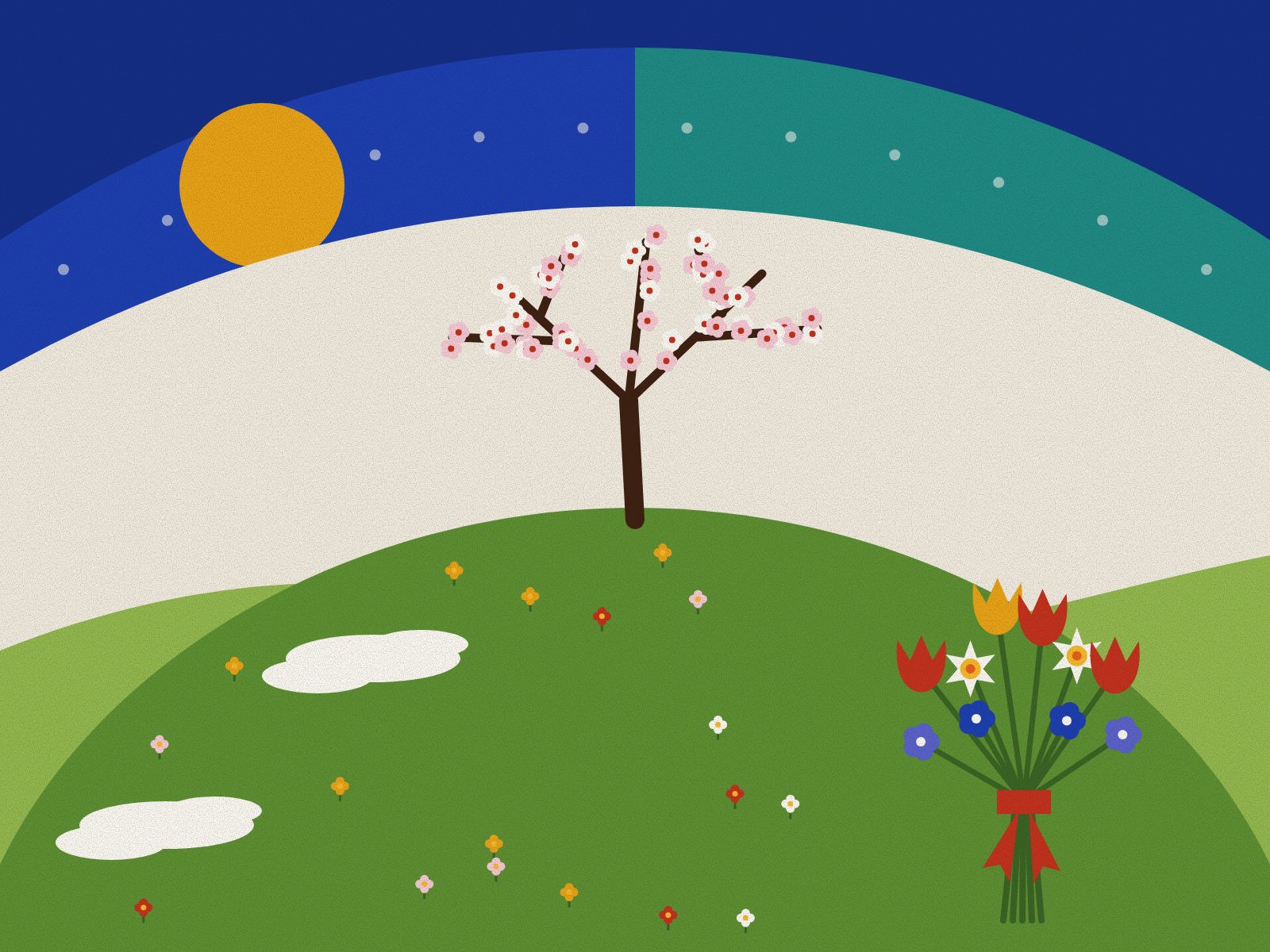
On the thirteenth day of the new year, families leave their homes for parks, rivers and hillsides, throw the sabzeh from the haft-sin into running water and knot blades of grass for a wish. In Iran it is officially Nature Day.
A midsummer festival of water on Tir day of the month of Tir. People splash one another, tie a rainbow cord round the wrist, and remember Tishtrya, the star who brings rain, and the arrow of Arash.
The autumn feast of Mehr, or Mithra, god of covenants and friendship. For centuries it stood beside Nowruz as one of the two great feasts of the Persian year; Zoroastrians and Tajiks keep it still.
The longest night of the year. Families gather at the home of their eldest, eat pomegranates, watermelon and ajil, read Hafez and the Shahnameh, and stay up together until the dark has turned.
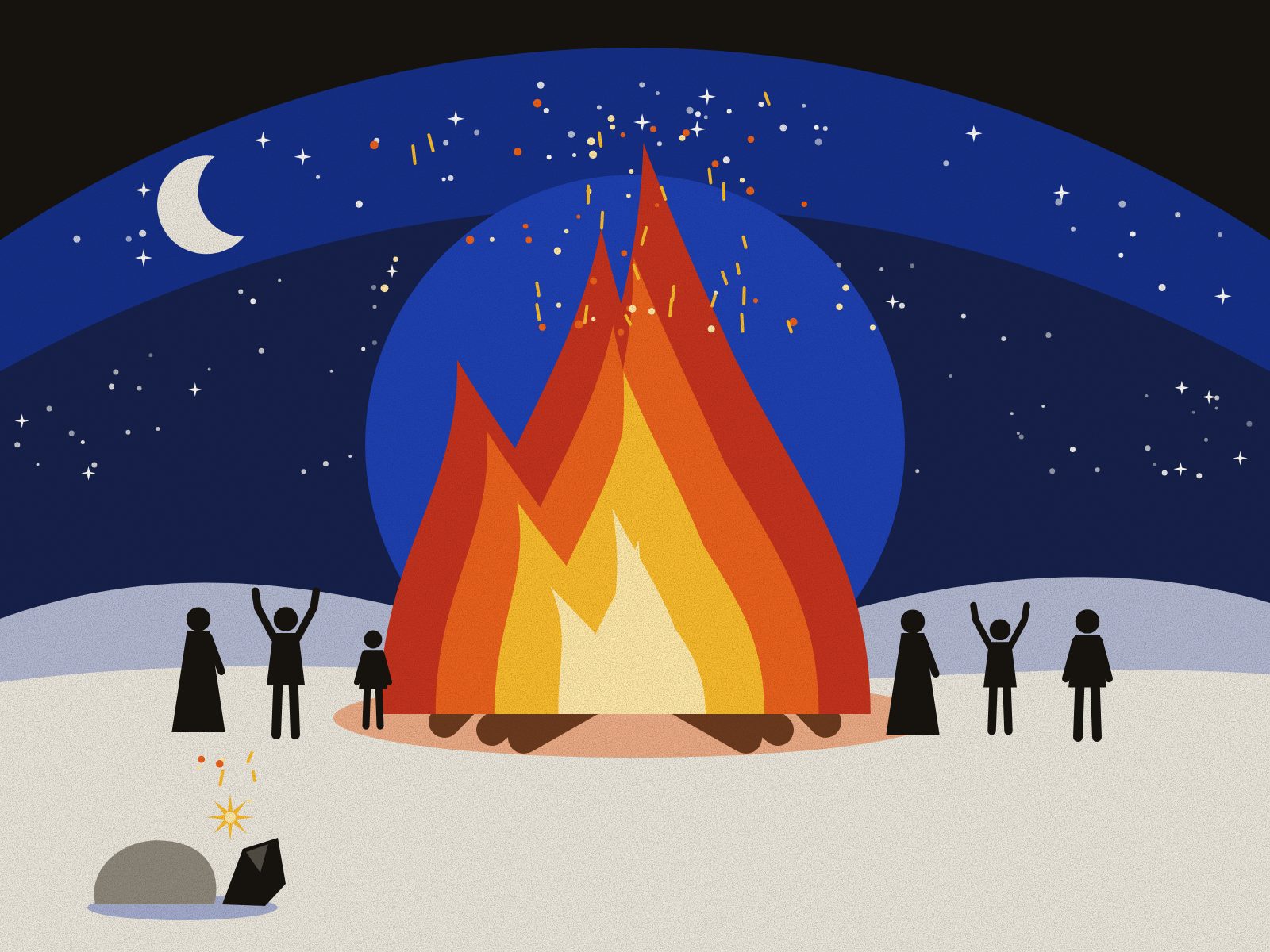
A midwinter fire festival held fifty days before Nowruz, when a great bonfire is lit at dusk. The Shahnameh credits the first Sadeh fire to King Hushang; the Zoroastrians of Kerman and Yazd still light it.
Winter · 29 Bahman · or 5 Esfand, by the older count
Sepandarmazganسپندارمذگان
Next: Thursday, 18 February 2027
An old Zoroastrian feast of Spenta Armaiti, guardian of the earth, once a day when women were given gifts. Revived in the twentieth century, it is now often called the Persian day of love.
Winter · The eve of the last Wednesday of the year
Chaharshanbe Suriچهارشنبهسوری
Next: Tuesday evening, 16 March 2027
On the Tuesday night before the last Wednesday of the year, Iranians light bonfires and jump over them, giving their winter pallor to the flames and taking back the fire's red. It is the first of the rites that clear the way for Nowruz.
The Persian new year, Nowruz, 'new day', begins at the moment of the March equinox. Homes are cleaned, the haft-sin is laid, and families visit one another across Iran, Afghanistan, Central Asia, the Caucasus and the diaspora.
Spring · 13 Farvardin · the last day of the Nowruz holidays
Sizdah Bedar سیزدهبدر
Next: Friday, 2 April 2027
On the thirteenth day of the new year, families leave their homes for parks, rivers and hillsides, throw the sabzeh from the haft-sin into running water and knot blades of grass for a wish. In Iran it is officially Nature Day.
A midsummer festival of water on Tir day of the month of Tir. People splash one another, tie a rainbow cord round the wrist, and remember Tishtrya, the star who brings rain, and the arrow of Arash.
The autumn feast of Mehr, or Mithra, god of covenants and friendship. For centuries it stood beside Nowruz as one of the two great feasts of the Persian year; Zoroastrians and Tajiks keep it still.
The longest night of the year. Families gather at the home of their eldest, eat pomegranates, watermelon and ajil, read Hafez and the Shahnameh, and stay up together until the dark has turned.
A midwinter fire festival held fifty days before Nowruz, when a great bonfire is lit at dusk. The Shahnameh credits the first Sadeh fire to King Hushang; the Zoroastrians of Kerman and Yazd still light it.
Winter · 29 Bahman · or 5 Esfand, by the older count
Sepandarmazgan سپندارمذگان
Next: Thursday, 18 February 2027
An old Zoroastrian feast of Spenta Armaiti, guardian of the earth, once a day when women were given gifts. Revived in the twentieth century, it is now often called the Persian day of love.
Winter · The eve of the last Wednesday of the year
Chaharshanbe Suri چهارشنبهسوری
Next: Tuesday evening, 16 March 2027
On the Tuesday night before the last Wednesday of the year, Iranians light bonfires and jump over them, giving their winter pallor to the flames and taking back the fire's red. It is the first of the rites that clear the way for Nowruz.