Mehregan
مهرگانThe autumn feast of Mehr, or Mithra, god of covenants and friendship. For centuries it stood beside Nowruz as one of the two great feasts of the Persian year; Zoroastrians and Tajiks keep it still.

Mehregan is the feast of Mehr, the Persian form of Mithra, kept on Mehr day of the month of Mehr: the sixteenth day of the seventh month, in early October. Mithra was the Avestan god of contract and covenant, and because a covenant binds people together his name came to mean friendship and affection. Mehr is still the everyday Persian word for kindness. The feast comes as the harvest is gathered in, and its themes follow from that: thanks for the year's crops, gifts between friends and family, and promises kept.
A feast of kings
For centuries Mehregan stood beside Nowruz as one of the two great feasts of the Persian year. The Greek geographer Strabo records that the satrap of Armenia sent the Persian king twenty thousand foals every year for the Mithrakana, an early form of the name. Under the Sasanians it ranked second only to Nowruz, and the kings were usually crowned on one feast or the other. The name travelled with the feast: mihrajan, the Arabic word for a festival, comes from it.
Some people have given the preference to Mihragān by as much as they prefer autumn to spring.
The courts of the early Islamic centuries kept Mehregan too, and poets wrote for it as they wrote for Nowruz. Rudaki, the first great poet of New Persian, opens a short poem to his king with the news that the feast has come and the season has turned:
ملکا! جشن مهرگان آمد
جشن شاهان و خسروان آمد
خز به جای ملحم و خرگاه
بدل باغ و بوستان آمد
My king, the feast of Mehregan has come,
the feast of shahs and emperors has come.
Fur has come in place of fine silk, and the tent
has come to take the place of garden and orchard.
A century later Manuchehri, at the Ghaznavid court, wrote a long poem for Sultan Masud that begins by bidding its hearers be glad, for Mehregan has come, and another in which the feast arrives bringing oranges, pomegranates and chamomile from every quarter.
Fereydun's day
The best-known story of Mehregan ties it to the fall of the serpent-shouldered tyrant Zahhak. Al-Biruni writes that on Mehr day Fereydun overcame Zahhak and confined him in Mount Damavand, and that the days after Mehregan were all feast days, as were the days after Nowruz. Gardizi tells the same story, adding that some of the Magi placed the victory on Ram day, the twenty-first, which was kept as the Great Mehregan. Tradition paired the two feasts: Zahhak had overthrown Jamshid, the king of Nowruz, and at Mehregan Fereydun set the balance right.
Ferdowsi's Shahnameh tells how Fereydun, with the blacksmith Kaveh's banner before him, took Zahhak's palace and bound him alive in Damavand. Then it crowns him 'on the blessed day at the start of the month of Mehr'. Fires are lit at his command and ambergris and saffron burned, and the poet adds that keeping Mehregan was Fereydun's faith, and ease and feasting his custom.
Mehregan today
The date has its own small puzzle. Mehr day is the sixteenth of a thirty-day month, but the modern Iranian calendar gives its first six months thirty-one days. Counted in the old months of thirty, Mehr day lands on 10 Mehr, and many Zoroastrians and others keep the feast then. Some sources also hold that the feast first fell at the start of Mehr, near the autumn equinox, and moved to Mehr day later, and old accounts spread it over six days, from Mehr day to Ram day.
Zoroastrians keep it most fully. The scholar Bahram Farahvashi described it as a family feast among the Zoroastrians of Yazd and Kerman, with a sheep offered to Mehr in some Zoroastrian villages around Yazd. A Mehregan table is set with autumn fruit, pomegranates, apples, grapes and pears among them, beside wheat and rice. Zoroastrians recite from the Avesta, and Muslims who join in say prayers of their own. In Tajikistan, where it is called Mehrgon, the festival is a public celebration of the harvest, with music and dancing, wrestling, flower shows and crafts for sale.
In 2024 UNESCO inscribed the Ceremony of Mehregan on its Representative List of the Intangible Cultural Heritage of Humanity, a joint file of Iran and Tajikistan describing celebrations that run through the autumn harvest, from early October to early November. It is not a public holiday in Iran, but it is marked by events in many provinces, and Iranians in Europe and North America gather for it around a Mehregan table, giving thanks as the year turns.
When it fallsکی
In the Persian calendar it keeps its day; in the Gregorian calendar the day moves a little from year to year.
Friday, 8 October 2027
Saturday, 7 October 2028
Sunday, 7 October 2029

In the Shahnamehشاهنامه
- Fereydun binds Zahhak in Damavand →Fereydun crosses the Arvand on horseback, seizes Zahhak's palace at Kang Dezhhukht and frees Jamshid's daughters. When Zahhak returns he strikes him down, but the angel Sorush stops the killing blow, and Zahhak is bound alive inside Mount Damavand.
- Kaveh the blacksmith →Zahhak makes his nobles sign a declaration of his justice. Kaveh, a blacksmith whose son is due to feed the serpents, tears it up, raises his leather apron on a spear and leads the people to Fereydun, who makes it the royal banner.
Across Cultureپیوندها

Faiths
Mithra and the old Iranian gods
Before and beside Zarathushtra stood older Iranian divinities: Mithra of the covenant, Anahita of the waters, Verethragna of victory. Their names survive in hymns, festivals and children.
Mythology
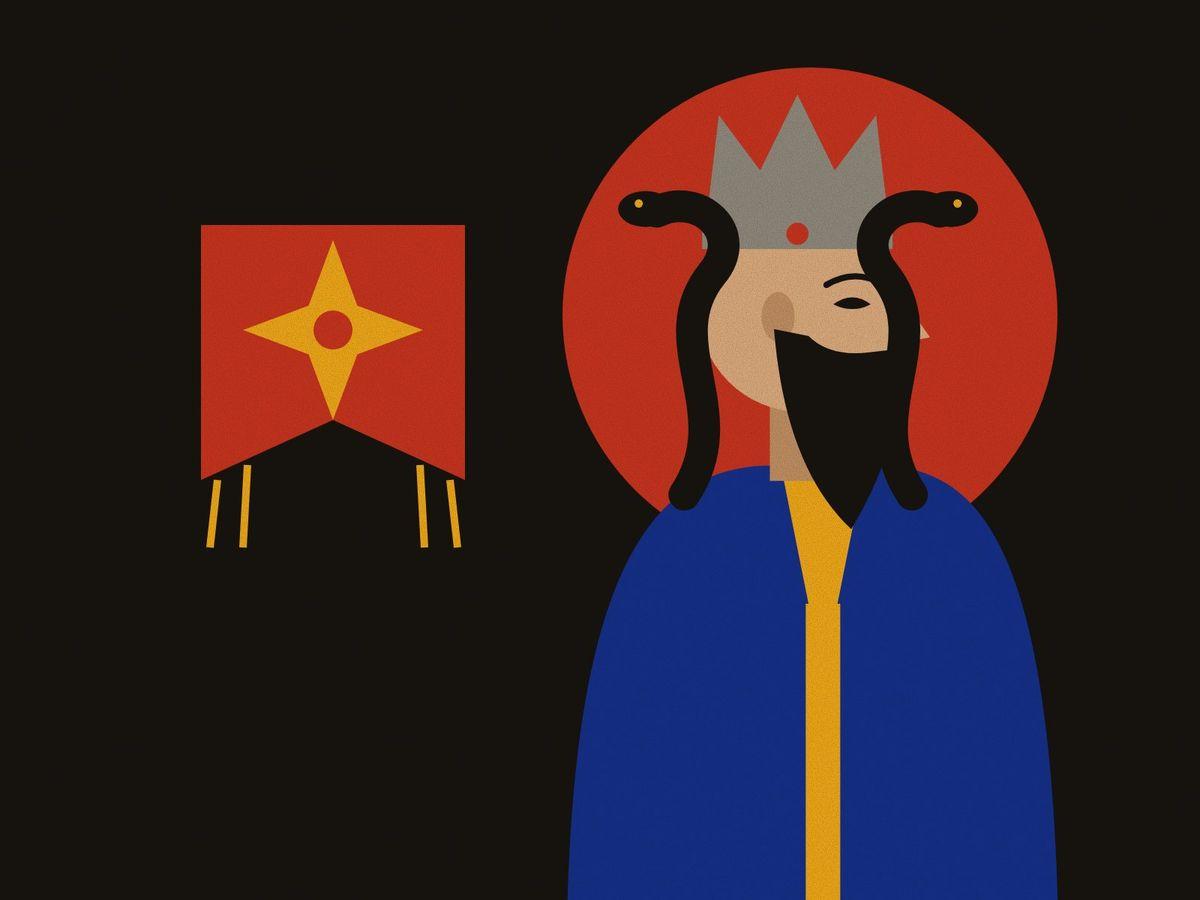
Zahhak and Kaveh the blacksmith
A king with serpents growing from his shoulders, and the blacksmith who raised his leather apron on a spear and brought him down.
Mythology
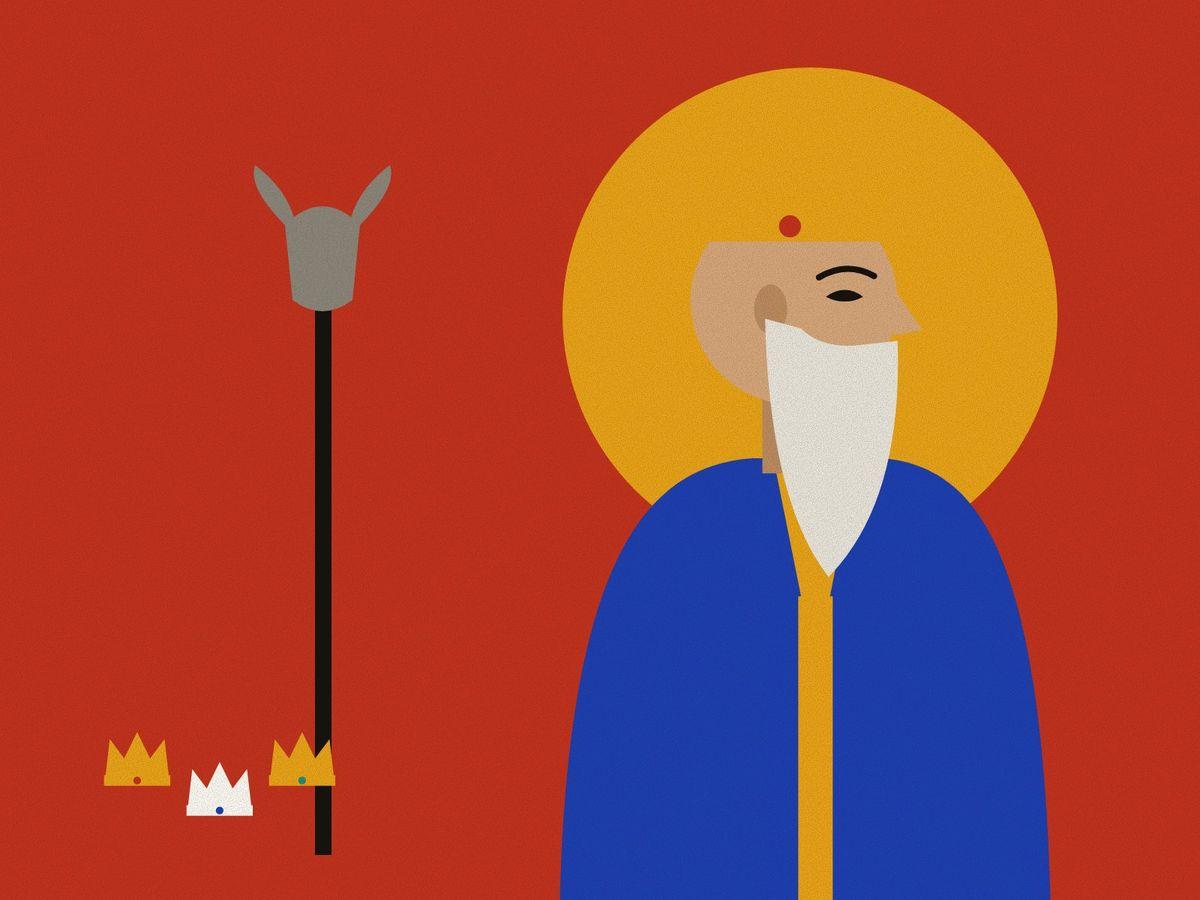
Fereydun and his three sons
The king who freed Iran from Zahhak divided the world between his sons, and in doing so, Ferdowsi says, began the long feud between Iran and Turan.
Faiths
Zoroastrianism
Good thoughts, good words, good deeds: the faith of Zarathushtra, kept by its followers in Yazd, Kerman, Tehran, Mumbai and far beyond.
Peoples
Tajiks
Tajiks speak Persian in Afghanistan, Tajikistan and Uzbekistan. They are heirs of the Samanids and of Rudaki, and their homelands define themselves.
More from Festivalsجشنها

Nowruz
The Persian new year, Nowruz, 'new day', begins at the moment of the March equinox. Homes are cleaned, the haft-sin is laid, and families visit one another across Iran, Afghanistan, Central Asia, the Caucasus and the diaspora.

Sizdah Bedar
On the thirteenth day of the new year, families leave their homes for parks, rivers and hillsides, throw the sabzeh from the haft-sin into running water and knot blades of grass for a wish. In Iran it is officially Nature Day.

Tirgan
A midsummer festival of water on Tir day of the month of Tir. People splash one another, tie a rainbow cord round the wrist, and remember Tishtrya, the star who brings rain, and the arrow of Arash.