Uraman
هورامانStepped villages of the Hawrami Kurds, a UNESCO cultural landscape
Uraman, or Hawraman, is a mountainous region on the western edge of Iran, in Kurdistan and Kermanshah provinces near the border with Iraq. Its people, the Hawrami Kurds, speak their own language, Hawrami, and have farmed these steep valleys for thousands of years. In 2021 UNESCO inscribed the Cultural Landscape of Hawraman/Uramanat as a World Heritage site.
The villages are built in steps up the mountainsides. Houses of dry stone and timber rise in terraces so tightly packed that the flat roof of one house becomes the yard or street of the house above, a pattern also found at Masuleh but here on a far larger scale. Around the villages, narrow terraces held by stone walls carry walnut, mulberry and pomegranate trees, watered by channels that lead streams along the slopes.
The best-known village is Uraman Takht, a cascade of houses on a slope above a river. It hosts the festival of Pir Shalyar, a local saint, held in mid-winter, with communal meals, music on the daf, the large frame drum, and circle dances that draw visitors from across the region. Out of festival time, a walk through the village is an education in how a hard landscape can be made to feed people.
Uraman through time
Iranian historyThe Pahlavi century and afterدوران پهلوی و پس از آن
Two Pahlavi shahs built railways, universities and a centralised state, while poets, novelists and film-makers created a new Persian culture. The era ended with the revolution of 1979.
- Hawraman inscribed by UNESCO
More in Kurdistanکردستان
Karaftu Cave
A natural cave carved into rooms, with a Greek inscription to Heracles
Lake Zarivar
A freshwater lake beside Marivan with a long memory
Dar ol-Ehsan Mosque
The Friday mosque of Sanandaj, built by an Ardalan ruler
Stories from the regionداستانها
Al
A female being said to haunt women in the days after childbirth, feared across Iran and among its neighbours, and kept at bay with iron, onion and company.

Nowruz
The Persian new year, Nowruz, 'new day', begins at the moment of the March equinox. Homes are cleaned, the haft-sin is laid, and families visit one another across Iran, Afghanistan, Central Asia, the Caucasus and the diaspora.
How a Persian rug is made
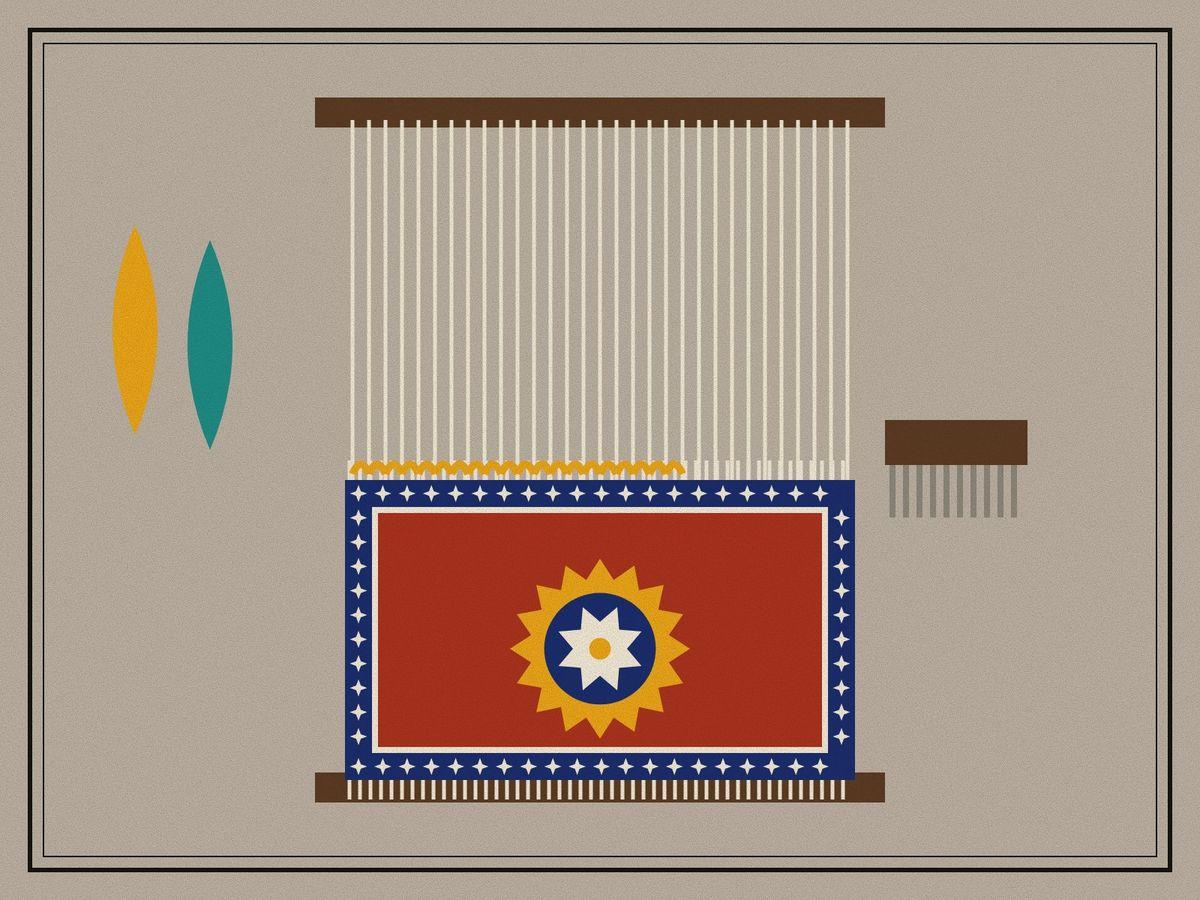
Three sets of threads and two kinds of knot: what a pile carpet is made of, and what its back reveals that its front conceals.