Now reading: Homeland
Persiahaus

Greater Iran · Iraq

Iraqi Kurdistan

کردستان عراق

Capital: Erbil

Erbil, Sulaymaniyah and the mountains of Kurdistan in Iraq, where Kurdish, an Iranian language, is spoken.

Part of the wider Iranian world in our Atlas for its shared history, languages and customs; not a claim on any modern state or its identity. What we mean by Greater Iran

Milad TowerGolestan PalaceTreasury of National JewelsSoleymaniyeh PalacePearl Palace (Kakh-e Morvarid)Amir Kabir DamChalus RoadShrine of Fatima MasumehJamkaran MosqueNamak LakeFeyziyeh SchoolKhorhehJameh Mosque of SavehChal Nakhjir CaveMighan WetlandNaqsh-e Jahan SquareFin GardenJameh Mosque of IsfahanVank CathedralPersepolisNaqsh-e RostamNasir al-Mulk MosqueArg-e BamThe Lut desertGanjali Khan ComplexDowlat Abad GardenJameh Mosque of YazdChak Chak (Pir-e Sabz)NaybandTomb of FerdowsiTomb of Omar KhayyamRobat SharafMofakham Mirror HouseBelqeys CitadelAspakhu Fire TempleBesh QardashAkbarieh GardenFurg CitadelQanat of Baladeh, FerdowsGonbad-e QabusGreat Wall of GorganGolestan National ParkKhalid NabiMount DamavandAbbasabad GardenVeresk BridgeBadab-e SurtMasulehRudkhan CastleAnzali LagoonTomb of Sheikh Zahed GilaniSheikh Safi al-Din ShrineLake NeorArdabil BazaarTabriz BazaarBlue Mosque of TabrizSaint Stepanos MonasteryTakht-e SoleymanQara KelisaLake UrmiaTeppe HasanluDome of SoltaniyehKatale Khor CaveChehrabad Salt MineRakhtshuy Khaneh of ZanjanAlamut CastleJameh Mosque of QazvinKharraqan TowersSa'd al-Saltaneh CaravanseraiGanjnamehTomb of Esther and MordechaiAli Sadr CaveHegmataneh (Ecbatana)UramanKaraftu CaveLake ZarivarDar ol-Ehsan MosqueBisotunTemple of Anahita, KangavarTekyeh Moaven ol-MolkVali CastleSeymareh (Darreh Shahr) Ancient CityKabir KuhAli KoshFalak-ol-AflakLake GaharBisheh WaterfallPol-e KashkanChogha ZanbilSusaKul-e FarahZard KuhChoghakhor WetlandChaleshtar CastleGandoman WetlandMount DenaPersian GateSisakhtBelad ShapurSirafBushehr Old TownKharg IslandNayband Marine ParkHormuz IslandQeshm Island GeoparkLaftHindu Temple of Bandar AbbasShahr-e SukhtehMount TaftanDahan-e GholamanDasht-e KavirBayazid Bastami ComplexPir-e Alamdar TowerFriday Mosque of HeratMinaret of JamMusalla ComplexArch of BostLashkari BazarKajaki DamBlue MosqueNoh Gonbad MosqueBala Hissar of BalkhBabur's GardenDarul Aman PalaceNational Museum of AfghanistanBamiyan nichesShahr-e GholgholaMinarets of GhazniMausoleum of Ahmad Shah DurraniTomb of Mahmud of GhazniAncient PanjakentMausoleum of RudakiIskanderkulRegistanArk of BukharaSamanid MausoleumItchan Kala, KhivaKunya-UrgenchAyaz KalaAncient MervNisaGonur DepeMaiden TowerMausoleum of NezamiAteshgah of BakuErbil CitadelLalishAmediBolan PassMehrgarhHinglaj MataTaq KasraHatraAkdamar IslandWalls of DiyarbakırVan FortressGarni TempleEtchmiadzin CathedralBlue Mosque of YerevanNarikalaSvetitskhoveli CathedralUplistsikheNaryn-KalaJuma Mosque of DerbentGunibDargavsRekomMukhtarov MosqueQal'at al-BahrainDilmun Burial MoundsPearling PathKumzarKhasab CastleTelegraph Island

Point at a region or landmark; zoom out to wander to the neighbours.

The whole Atlas

Kurdish belongs to the western branch of the Iranian languages, and the Kurdish homeland spans the Zagros and Taurus mountains across four countries. In Iraq, the Kurdistan Region is centred on Erbil, Sulaymaniyah and Duhok.

The citadel of Erbil, a mound built up over thousands of years of continuous settlement, is a UNESCO World Heritage site. Sulaymaniyah, founded by the Baban princes in 1784, is a centre of Kurdish poetry and culture.

Cities and towns

  • Erbilاربیل

    The city of the ancient citadel

  • Sulaymaniyahسلیمانیه

    A centre of Kurdish letters

  • Duhokدهوک

    A town in the northern mountains

Landmarksبناها و نشانه‌ها

  • Erbil Citadel

    ارگ اربیل

    A mound of thousands of years of settlement

  • Lalish

    لالش

    The holy valley of the Yazidis and the tomb of Sheikh Adi

  • Amedi

    آمیدی

    A Kurdish town on the top of a sheer-sided mesa

Iraqi Kurdistan through time

Iranian history

1040–1335

Seljuks, Mongols and Ilkhanidsسلجوقیان، مغولان و ایلخانان

Turkic and then Mongol conquerors took Iran in turn. The Seljuks built mosques and colleges; the Mongols brought catastrophe, then, as the Ilkhanids, became patrons of history-writing and art.

  • 331 BCE Alexander defeats Darius III near Arbela
  • c. 1142 Imad al-Din Zengi rebuilds the fortress of Amedi
  • 1162 Death of Sheikh Adi ibn Musafir, buried at Lalish
  • 2007 Residents moved out for restoration
  • 2014 Erbil Citadel inscribed by UNESCO
  • 2014 Islamic State attacks on the Yazidis of Sinjar

Stories from hereداستان‌ها

Kurdish and wider tradition

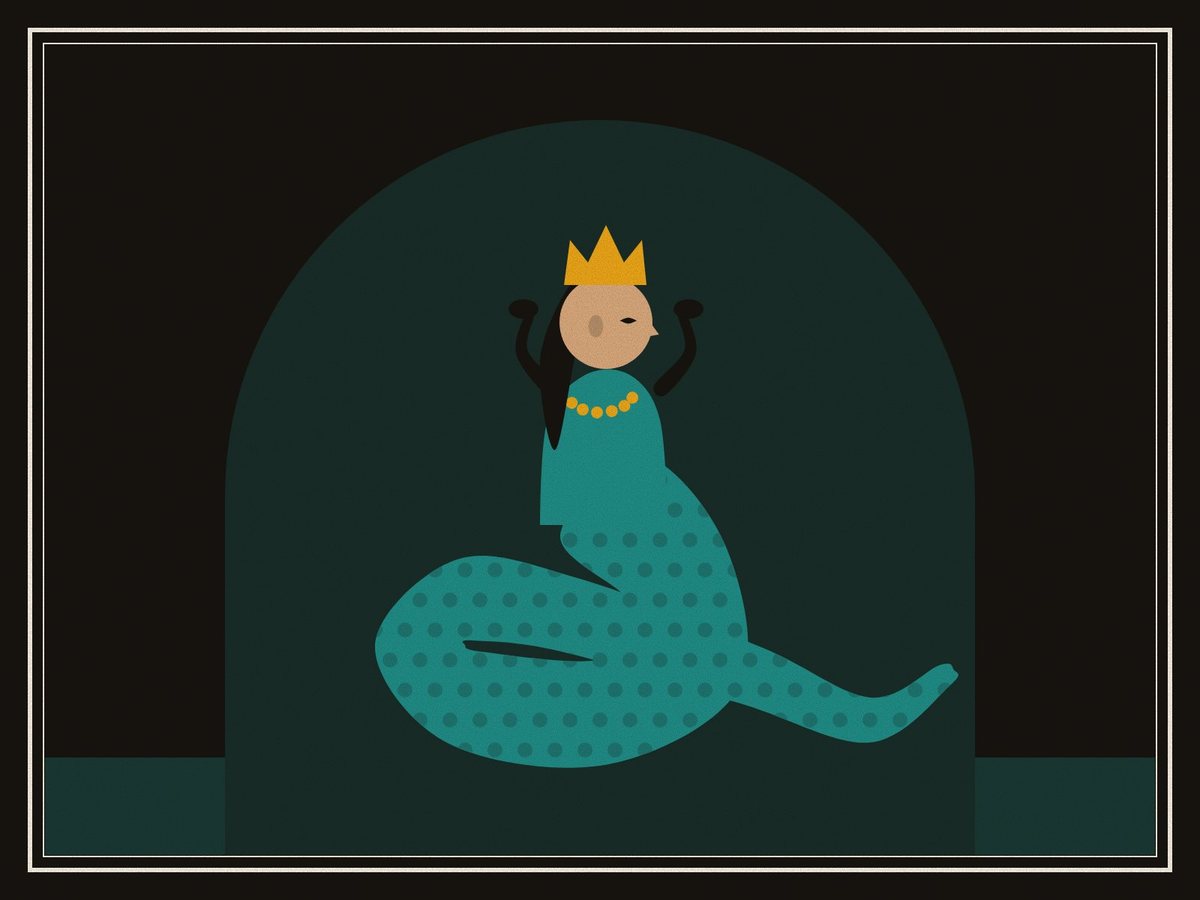
Shahmaran

The wise queen of the snakes, a woman above and a serpent below, whose trust was betrayed by the young man she loved, and whose image still hangs in many Kurdish homes.

A haft-sin table at the spring equinox: a blue hyacinth, a dish of sprouted wheat tied with red ribbon, an apple, a gold-framed mirror catching the sun between two candles, a goldfish bowl and a dish of painted eggs, under a turquoise arc of sky with the sun halfway up it.

1 Farvardin · the March equinox

Nowruz

The Persian new year, Nowruz, 'new day', begins at the moment of the March equinox. Homes are cleaned, the haft-sin is laid, and families visit one another across Iran, Afghanistan, Central Asia, the Caucasus and the diaspora.
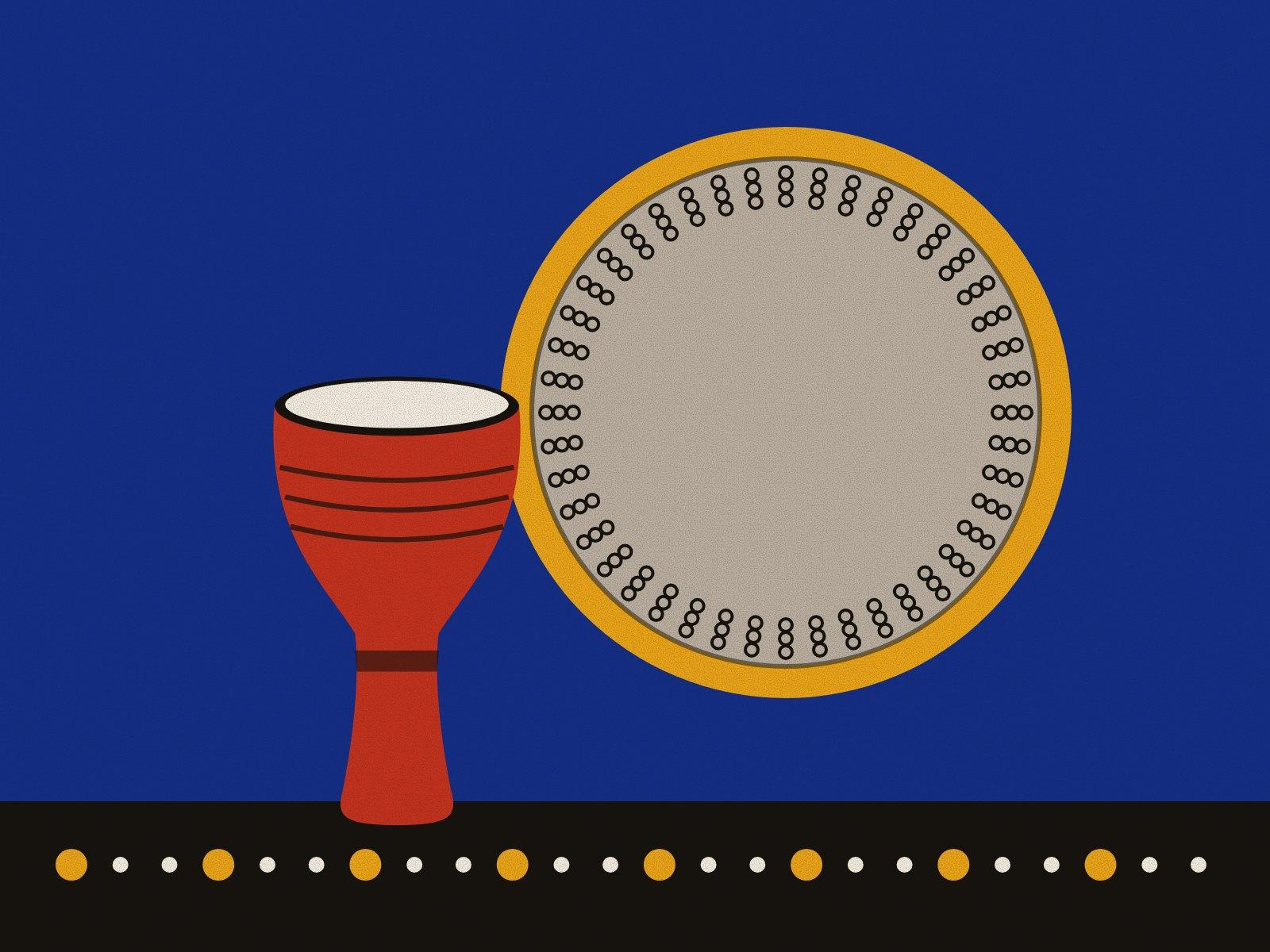
A red goblet-shaped tombak standing before a great saffron daf seen from behind, chains of small iron rings hung round the inside of its frame, on deep blue

The drums of court and lodge

Tombak and daf

The goblet-shaped tombak gives Persian classical music its pulse; the great frame drum, the daf, beats at the heart of Kurdish Sufi ceremony and, since the late twentieth century, on concert stages.
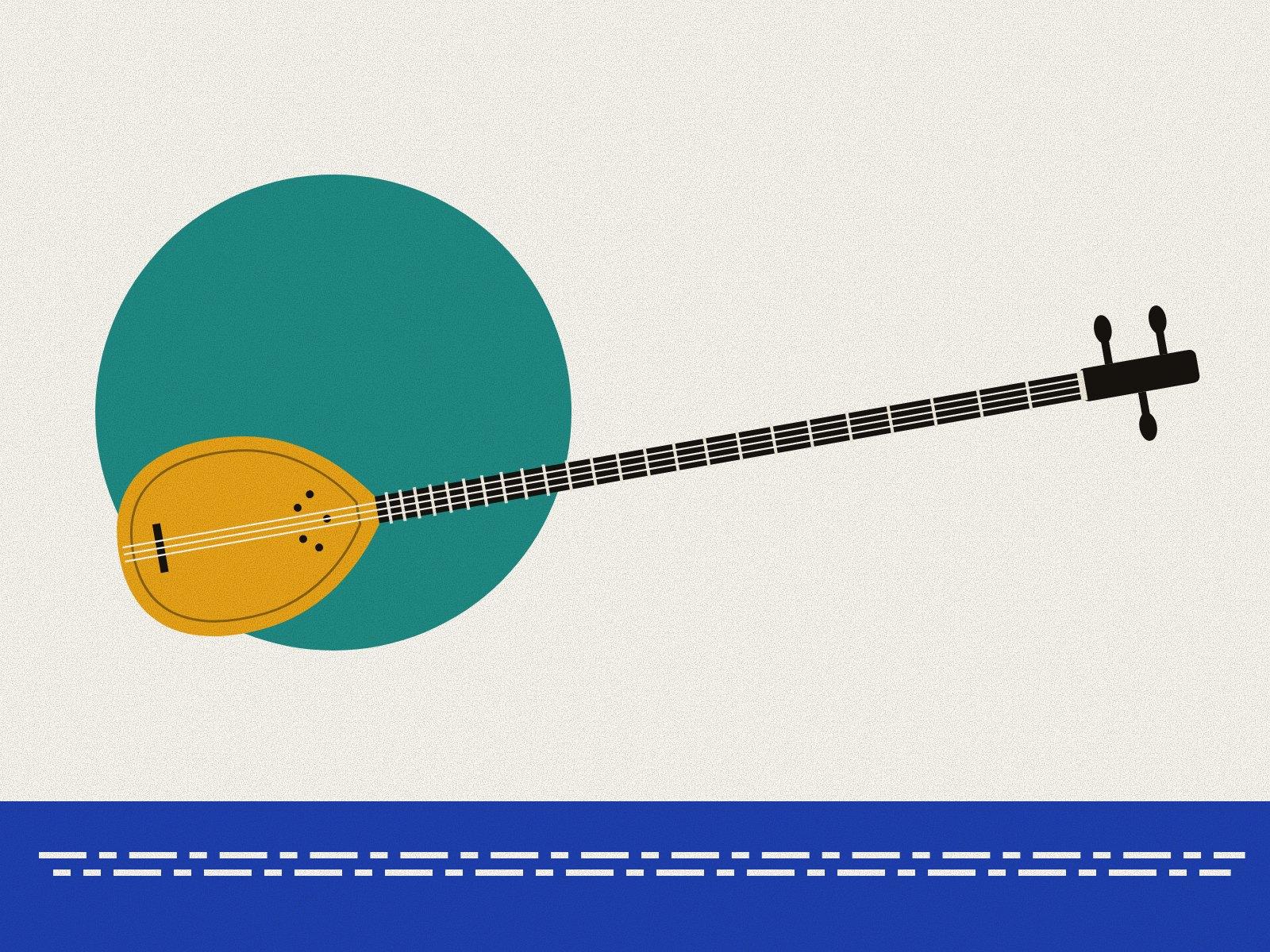
A Kurdish tanbur held almost level, its saffron pear-shaped body and long slender fretted neck crossing a turquoise halo on white above a lapis ground with rows of dashes

The sacred lute of the Yarsan

Tanbur

A long-necked lute with two or three strings, the Kurdish tanbur carries the sacred music of the Yarsan, the People of Truth, in the mountains between Kermanshah and Iraqi Kurdistan.
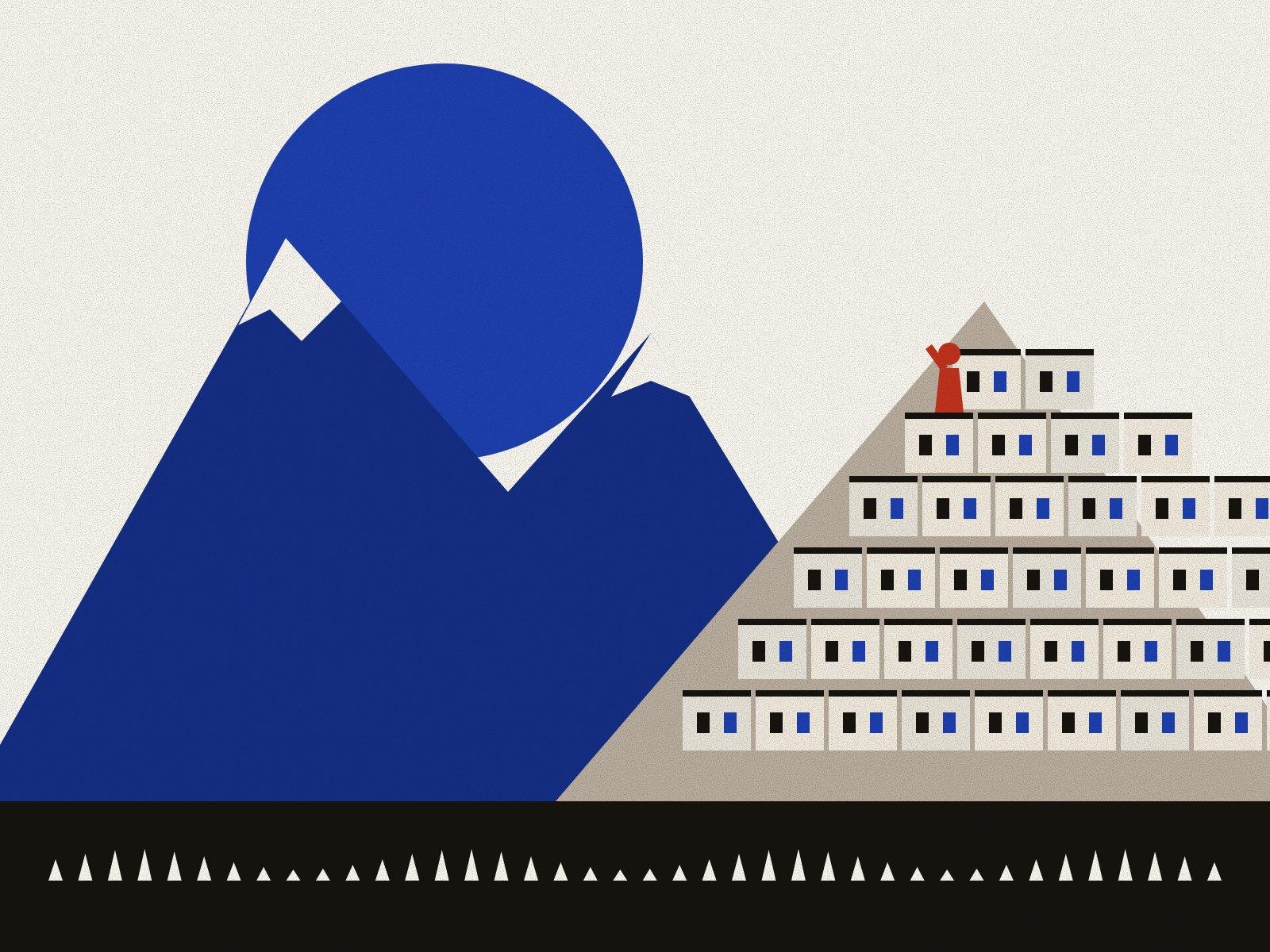
A terraced village of pale stepped houses climbing a slope towards snow-tipped blue mountains, a small red figure on a roof, singing across the valley

Dengbêj, siyachamana and the songs of the mountains

Kurdish song

From the unaccompanied storytelling song of the *dengbêj* to the ancient Hawrami *siyachamana*, Kurdish song carries history, love and lament across four countries.