Persian
زبان فارسیSpoken in Tehran, Kabul and Dushanbe under three names and written in two alphabets, Persian is one language with three national standards and a thousand years of shared poetry.

A schoolchild in Shiraz, a taxi driver in Herat and a grandmother in Khujand can recite the same lines of Hafez and understand one another. Accents and vocabulary take a little patience. In Iran the language is called Farsi; in Afghanistan, Dari; in Tajikistan, Tajik (tojikī). Linguists treat these as national standards of a single language, Persian, a member of the western branch of the Iranian languages within the Indo-European family. Its speakers usually call it, when they want to be grand about it, zabān-e Fārsi or simply Pārsi.
The name Farsi comes from Fars, the province of Shiraz and Persepolis, the old Pārsa of the Achaemenids: the Arabic alphabet has no p, so Pārsi became Fārsi. Dari is the older literary name. Medieval writers explained it as the speech of the dar, the royal court, and Afghanistan adopted it as the official name of the language in the twentieth century. There Dari is an official language alongside Pashto, while in Tajikistan Tajik has been written in the Cyrillic alphabet since 1940, after a brief period in Latin letters from 1928.
A language made in the east
New Persian, the language of today, grew out of Middle Persian, and its first great flowering came not in Fars but in the east. In the ninth and tenth centuries the Samanid court at Bukhara patronised poets who wrote in Persian in the Arabic script, and Rudaki, born near Panjakent in present-day Tajikistan, became the first master whose name everyone remembers. Ferdowsi finished the Shahnameh in Tus around 1010. From then on Persian was the language of courts and chanceries from Anatolia to Bengal: the Mughal emperors kept their records in it, and it remained an official language in British India until the 1830s.
That reach is why the three standards differ less than one might expect. Educated Dari and Tajik keep vowels that Tehran has merged, such as the long ē and ō of classical verse, so that sher ‘lion’ and shir ‘milk’ stay distinct in Kabul but sound the same in Tehran. Colloquial Tehrani shortens freely: nān ‘bread’ becomes nun, mikhāham ‘I want’ becomes mikham. Tajik has absorbed Russian words for modern things, Dari has many from Pashto and English, and Iranian Persian has borrowed generously from French. The grammar underneath, simple in its endings and rich in compound verbs built with kardan ‘to do’ and shodan ‘to become’, is common to all three.
A schoolchild in Shiraz, a taxi driver in Herat and a grandmother in Khujand can recite the same lines of Hafez and understand one another.
A shared inheritance
Persian is one language of the Iranian world among many, and for millions of Kurds, Azerbaijanis, Baluch, Pashtuns, Uzbeks and others it is a second language rather than a mother tongue. It has also been, for a thousand years, the tongue in which many of them wrote poetry, kept accounts and argued about God. That is the sense in which it is shared: Rumi wrote it in Konya, Bidel in Delhi, Iqbal in Lahore, Khalili in Kabul and Loiq Sher-Ali in Dushanbe, and each of their countries reads them as its own.
Poetsشاعران
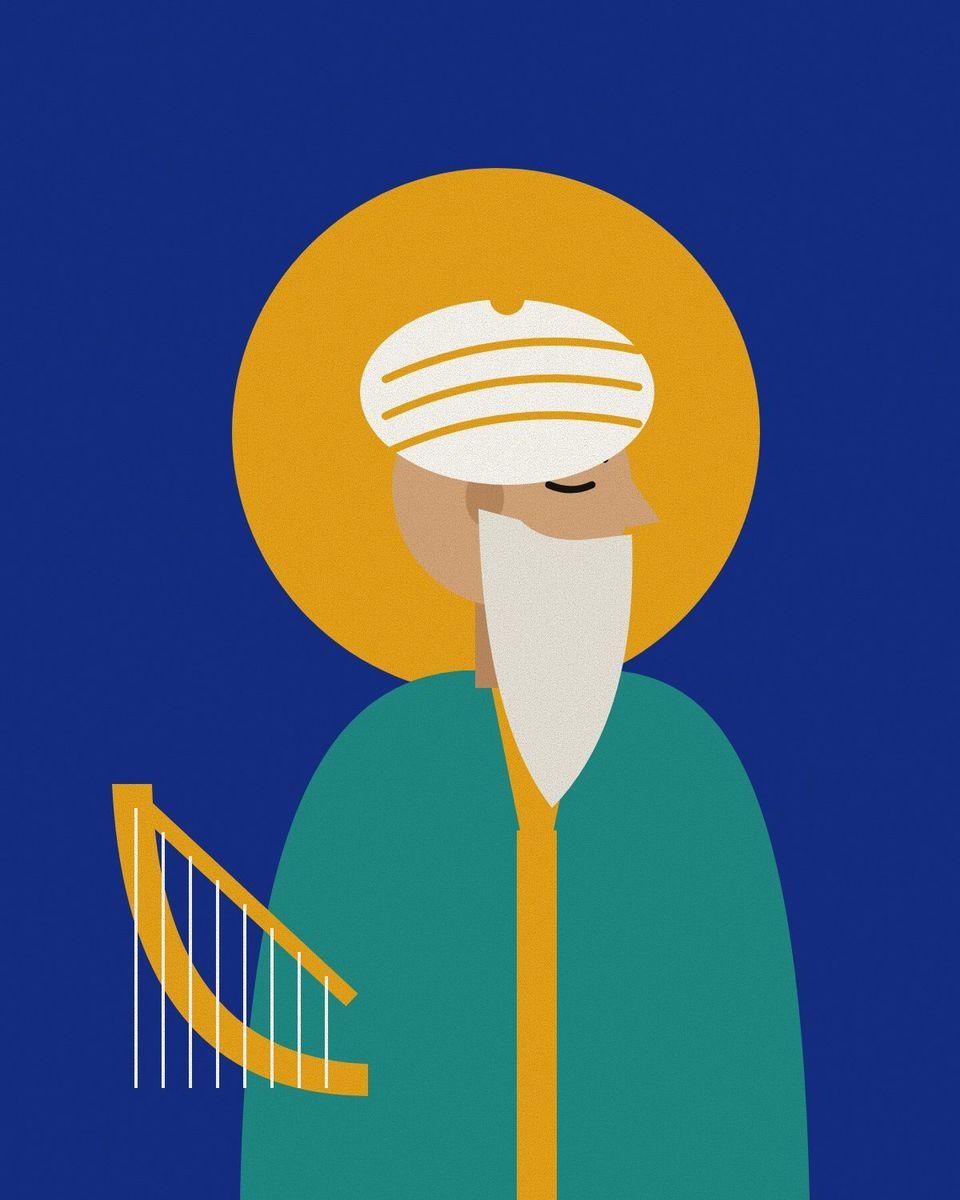
Rudaki
رودکیPoet of the Samanid court at Bukhara, honoured in Persian tradition as the father of Persian poetry.

Ferdowsi
فردوسیThe poet of the Shahnameh, the national epic of Iran, credited with keeping the Persian language and its old stories alive.

Hafez
حافظThe supreme master of the ghazal, whose Divan is found in nearly every Iranian home.

Rumi
مولاناJalal al-Din, called Mowlana in Iran, the mystic poet of Konya and one of the most read poets in any language.
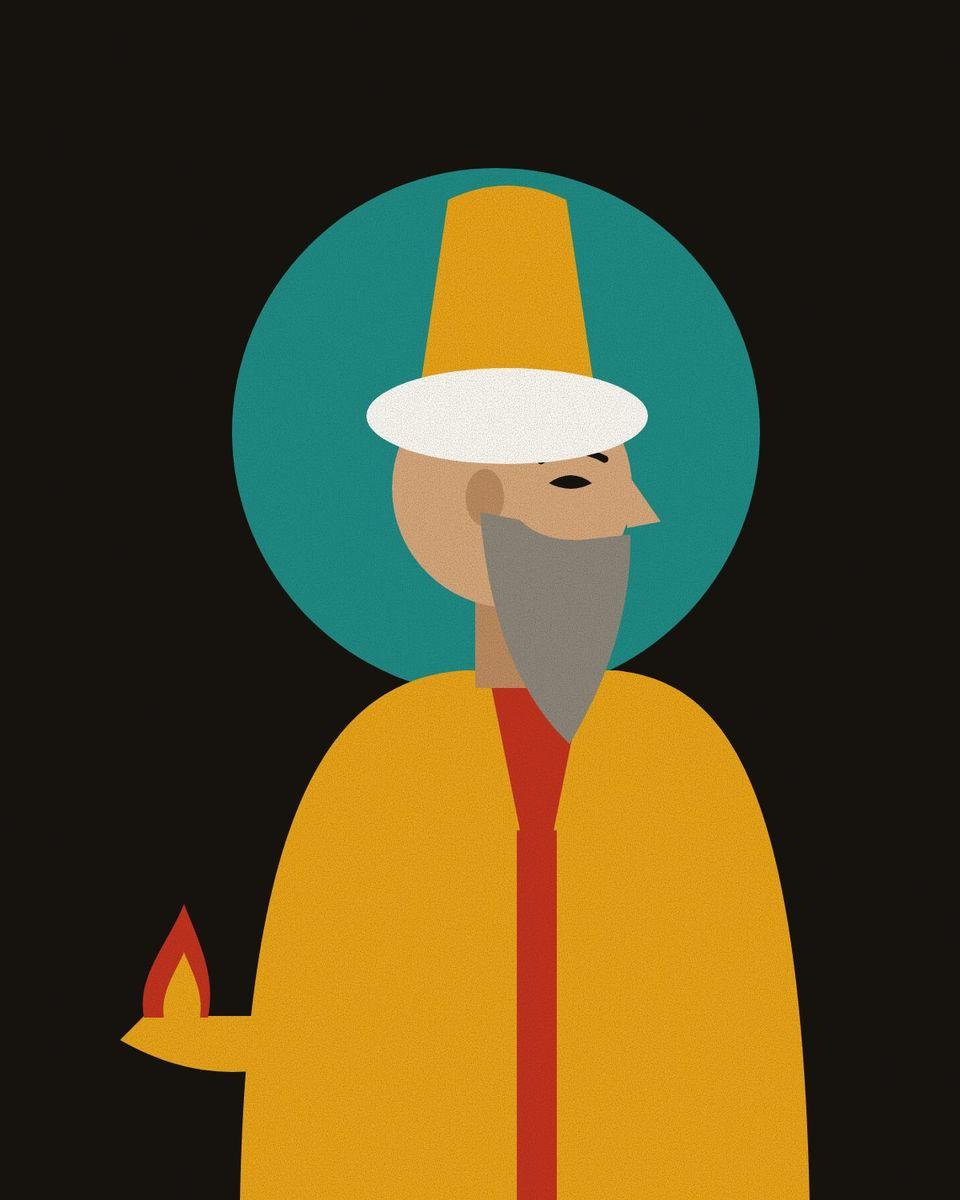
Bidel Dehlavi
بیدل دهلویPersian poet of Mughal India, master of the late Indian style, loved above all in Afghanistan and Central Asia.
Khalilullah Khalili
خلیلالله خلیلیAfghanistan's foremost Persian poet of the 20th century: courtier, historian, diplomat and, at the end, an exile.
Loiq Sher-Ali
لایق شیرعلیTajikistan's best-loved modern poet, who made the Persian language and its classical heritage his great theme.
Across Cultureپیوندها
Music
Avaz: the classical voice
In Persian classical music the singer is the centre, and the song is a poem: a ghazal of Hafez, Saadi or Rumi, unfolded line by line in free rhythm and ornamented with the breaking voice of the *tahrir*.
Music
Shashmaqam
Six great suites of song and instrumental music, crystallised at the court of Bukhara and sung in Tajik Persian and Uzbek: the Shashmaqam is the classical music of Tajikistan and Uzbekistan, and each nation defines it as its own.
Peoples
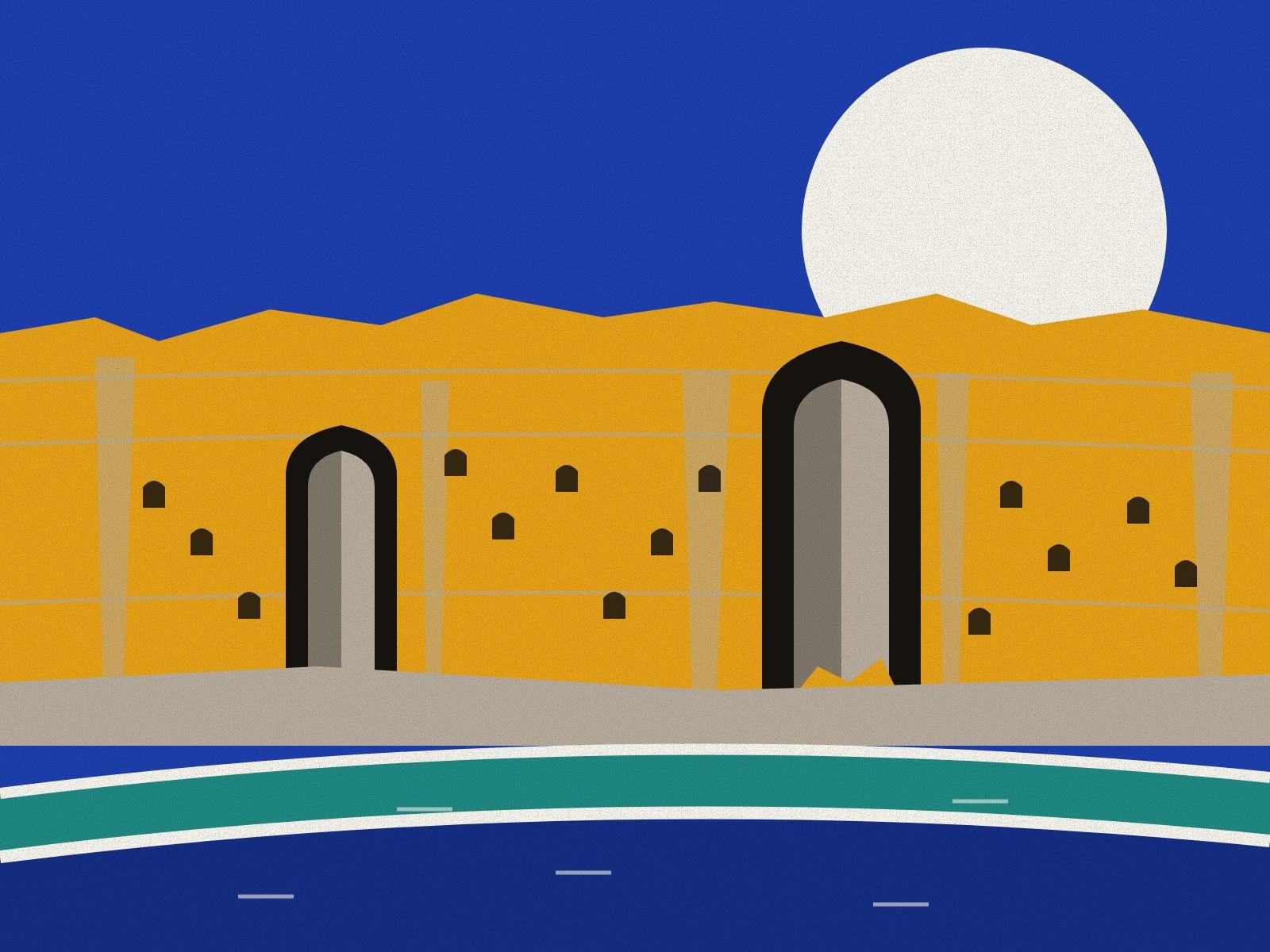
Hazaras
The Hazaras of central Afghanistan speak Hazaragi, a form of Persian, and are mostly Shia. Their homeland holds Bamiyan and Band-e Amir; their diaspora reaches Mashhad, Quetta and Australia.
Peoples
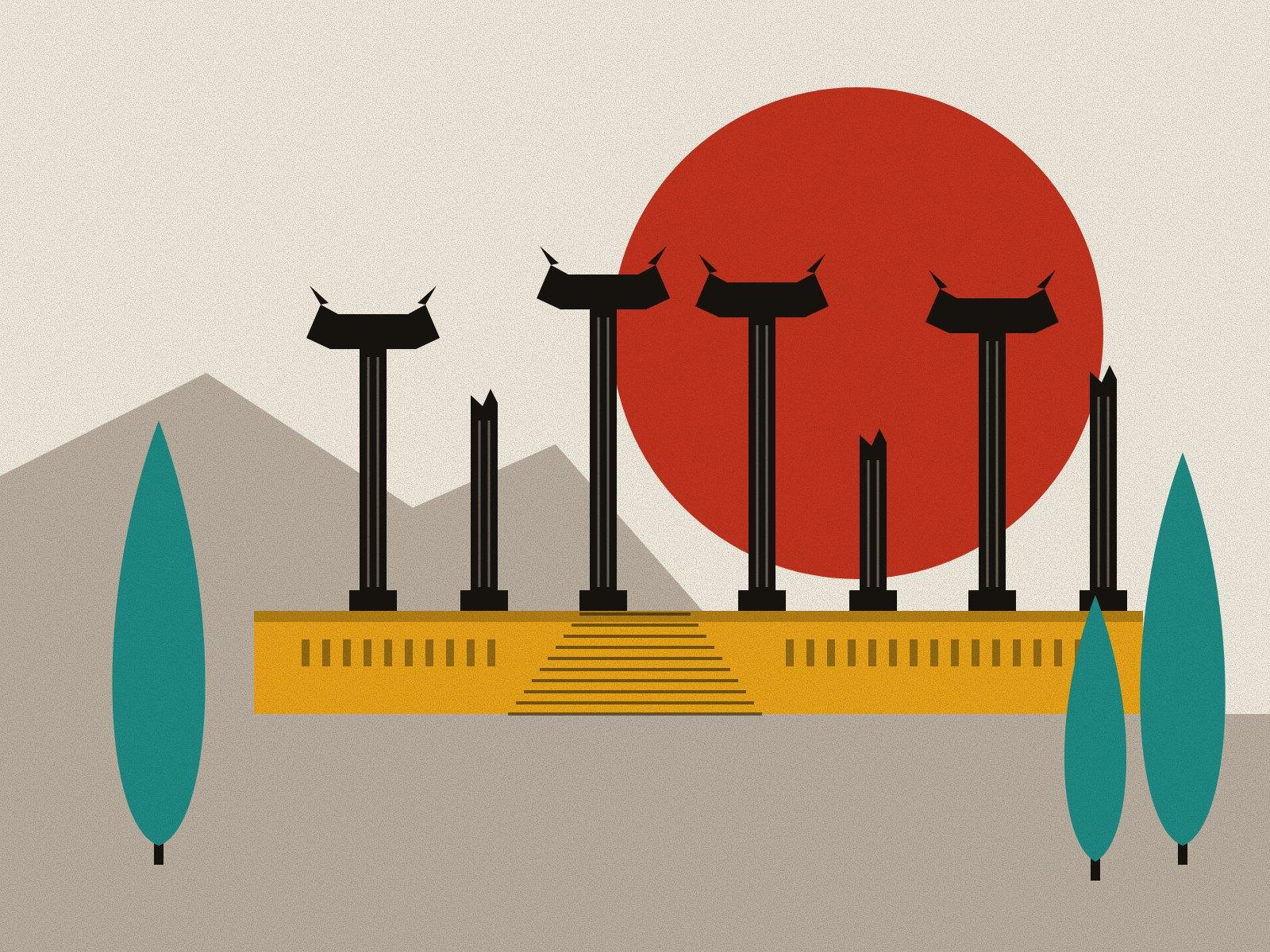
Persians
Persian speakers of Iran call themselves *Fars* or simply *Irani*. They are one people among many in Iran, and their language became a shared tongue for far more than themselves.
Peoples
Tajiks
Tajiks speak Persian in Afghanistan, Tajikistan and Uzbekistan. They are heirs of the Samanids and of Rudaki, and their homelands define themselves.
More from Languagesزبانها

Old Persian and the cuneiform inscriptions
Carved into cliffs and palace walls in a script of wedges, Old Persian is the oldest recorded form of the Persian language, and the key that unlocked the cuneiform world.

Avestan
Known only from the sacred texts of Zoroastrianism, Avestan is one of the two oldest recorded Iranian languages, and it is still recited daily in fire temples in Yazd, Tehran and Mumbai.
Middle Persian (Pahlavi)
Between Old Persian and the Persian of Rudaki stands Middle Persian, the language of Sasanian kings and Zoroastrian theologians, written in a script that famously says one word and means another.