
Toward a Persian Modernism
In the 1960s, a group of Iranian artists turned the folk objects of street shrines and talismans into modern art. Their question is still ours: how does a tradition become contemporary without becoming a costume?
Had each of them held a candle in hand,the difference would have gone out of their words.
The house
A house for conversation, after the cafés where Iran’s writers, poets and artists once met: essays, discourse and dispatches, signed by the people who wrote them.
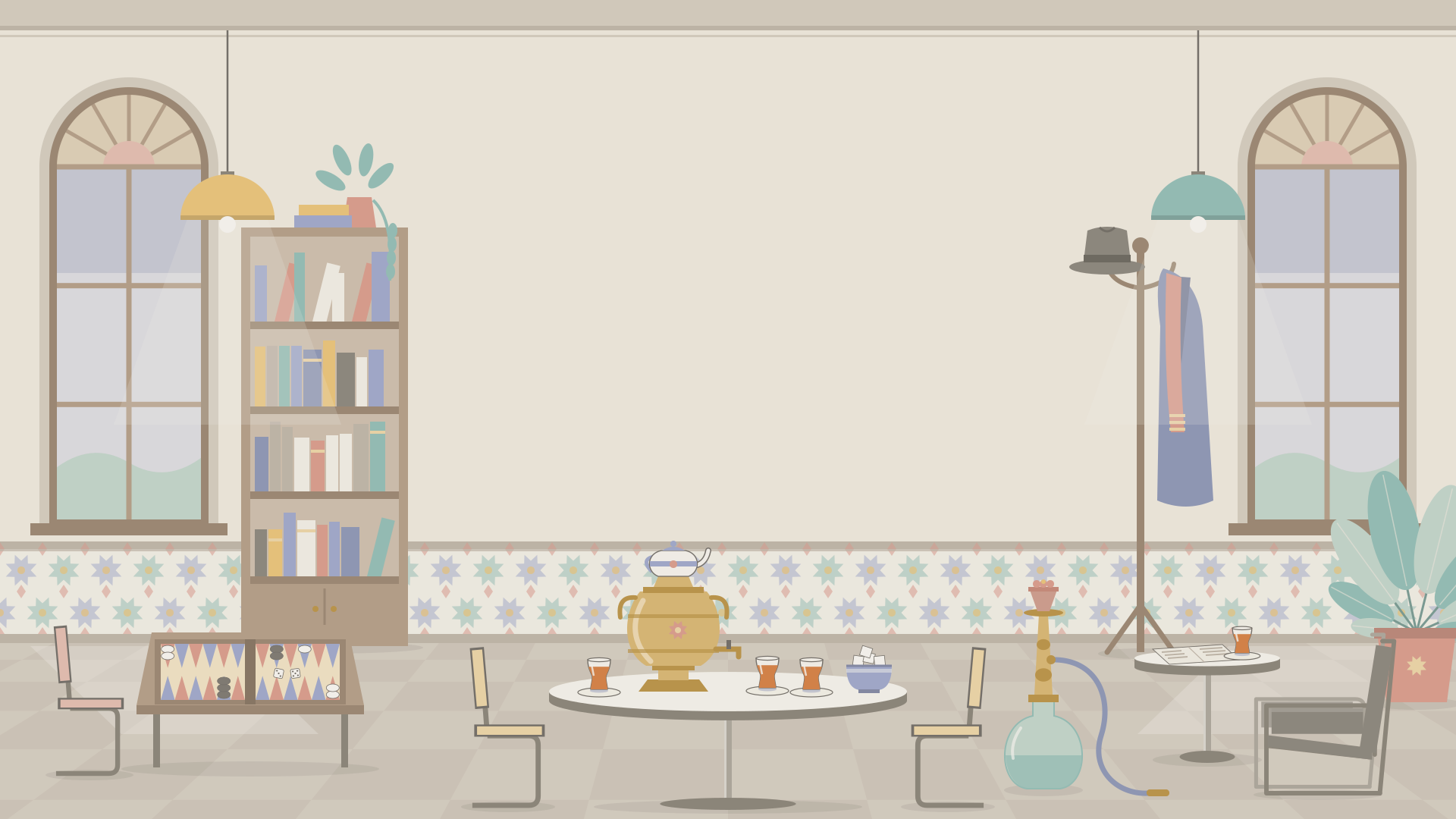
Café Naderi, opened in Tehran in the 1920s, became one of the places where the city’s writers and artists met over tea; Sadegh Hedayat and Ahmad Shamlou are remembered among its regulars. Cafés like it were Iran’s informal salons: a table, a glass of tea, and an argument that could run until closing time.
CafeHaus takes that table as its model. It is a place where poets and engineers, believers and sceptics, monarchists, republicans and people with no party at all can sit down together and talk, openly and with respect.
Conversation here includes difficult and controversial ideas. We do not ask anyone to agree. We ask them to listen before they judge, to argue with ideas rather than with people, and to remember that the person across the table is Iranian too.
There is one condition of entry: a link to the Iranic cultural world. By birth or by marriage, by language or by love; from Tehran or Herat, Dushanbe or Los Angeles; Persian, Kurd, Azerbaijani, Baluch, Arab, Armenian, Lur, Turkmen or any other people of that world; of every faith and of none.
What is said at these tables is signed by the people who say it, and opinion is labelled as opinion. It is not always the view of Persiahaus, and the house rules of our editorial charter apply to all of us. Pull up a chair.
From the Print Room
One face, many Iranians. A woman in a chador and a woman with her hair uncovered; a Kurd, a Baluch, a Turkmen and a Tehrani: different, sometimes in disagreement, and all Irani. A poster series from Persiahaus Studio.
Essays, discourse and dispatches, newest first.
In the 1960s, a group of Iranian artists turned the folk objects of street shrines and talismans into modern art. Their question is still ours: how does a tradition become contemporary without becoming a costume?
On Yalda, Iranians everywhere stay up through the darkest night of the year with pomegranates, watermelon and a book of Hafez. A dispatch on what ritual becomes when it travels.
The fourfold Persian garden gave the world its word for paradise. It also gave it a theory of order, built from walls, water and shade.
Rumi opens his great poem with a flute cut from its reed bed. For anyone who has left a homeland, it reads less like mysticism than like a description of daily life.
An ancient ceremonial city and a twentieth-century German art school have nothing in common but everything that matters: the grid, the column, the workshop and the dream of a total work.


