Zoroastrianism
Good thoughts, good words, good deeds: the faith of Zarathushtra, kept by its followers in Yazd, Kerman, Tehran, Mumbai and far beyond.
Good thoughts, good words, good deeds: the faith of Zarathushtra, kept by its followers in Yazd, Kerman, Tehran, Mumbai and far beyond.

Before and beside Zarathushtra stood older Iranian divinities: Mithra of the covenant, Anahita of the waters, Verethragna of victory. Their names survive in hymns, festivals and children.

Mani, born in Sasanian Mesopotamia in 216 CE, founded a faith of light and darkness that reached from Roman Africa to the coast of China, and left Persian a proverbial painter.
Under King Kavad I, a priest called Mazdak preached that goods should be shared and the world made just. His movement was crushed, but its memory lasted for centuries.
Twelver Shia Islam shapes the year for most Iranians: the mourning of Muharram, the shrines of Mashhad and Qom, the shared food of a vow fulfilled.

Sunni Islam is the faith of most Muslims in Afghanistan and Tajikistan, of Kurds, Baluch and Turkmen in Iran, and of the great scholars of medieval Khorasan.

Orders, lodges, remembrance and the music of sama’: the mystical path that gave Persian its greatest poetry, and still gathers seekers today.

A Shia community that follows a living Imam, with roots in Fatimid Cairo, the castles of Alamut and the high valleys of the Pamirs.
Jews have lived in Iran for more than two and a half thousand years, writing Persian in Hebrew letters and keeping the tomb of Esther and Mordecai in Hamadan.

From the Church of the East under the Sasanians to the frescoes of Vank Cathedral, Christianity has been part of Iran for nearly two thousand years.
Born in nineteenth-century Iran, the Bahá’í Faith teaches the oneness of God, of religion and of humanity. Its followers in Iran have faced documented persecution.
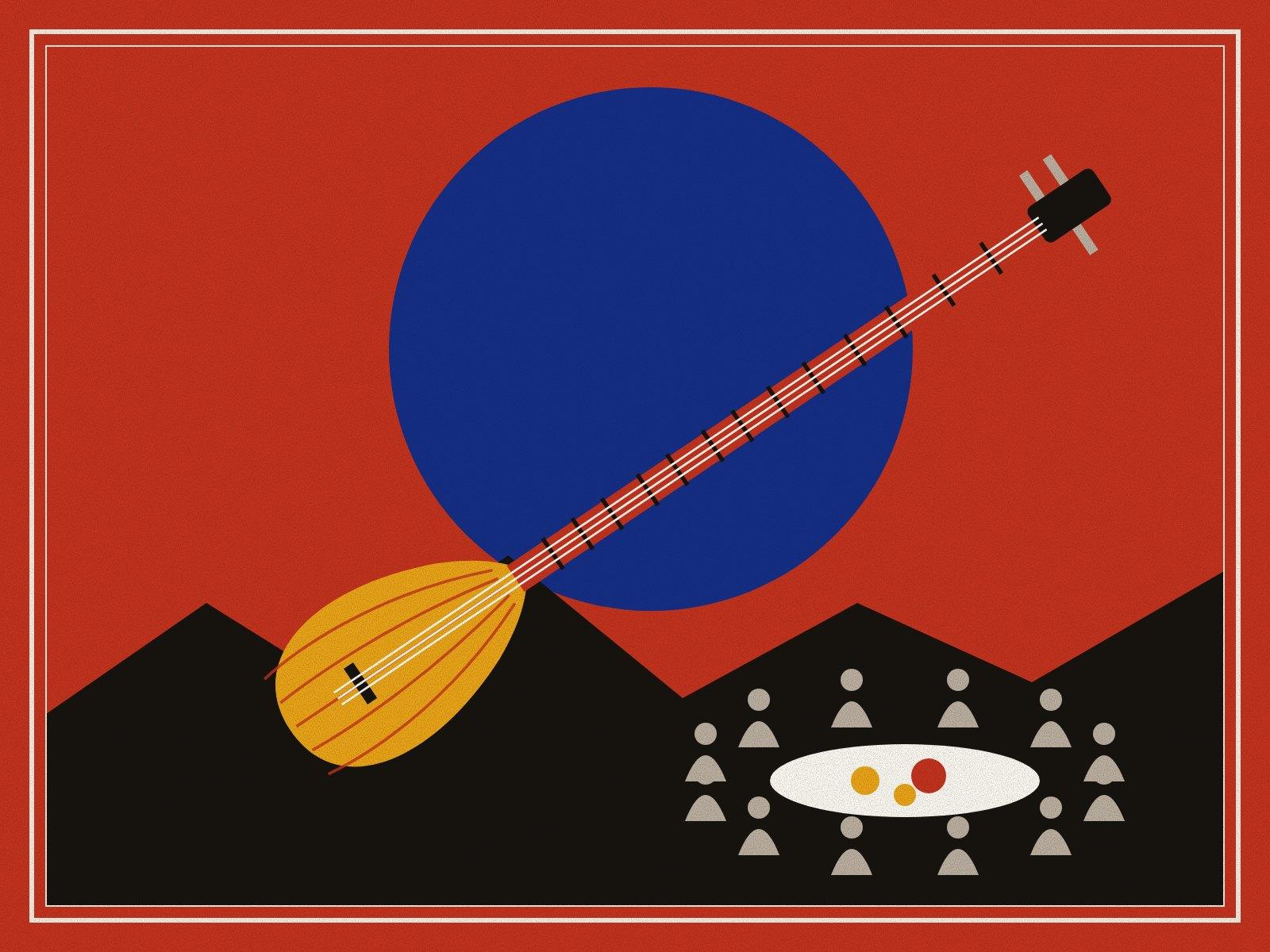
In the mountains of Kermanshah and Iraqi Kurdistan, the Yarsan keep a faith of divine manifestation, sacred music and gatherings around the long-necked tanbur.

On the banks of the Karun and the Tigris, the Mandaeans keep one of the last Gnostic religions, honouring John the Baptist and baptising in flowing water.
Between faith and denial lies a long Persian habit of asking and not being sure: in Khayyam’s quatrains, in the wine-house of Hafez, and in the private doubts of many Iranians today.

Some Iranians do not believe in God at all. Their tradition runs from medieval freethinkers known mostly through their critics to modern secular writers, and it meets very different laws across the Iranian world.
Many Iranians keep a spiritual life without a mosque, church or temple: in poetry, in the omens of Hafez, in nature and the old festivals, and in meditation and yoga from Tehran to Los Angeles.

Some Iranians believe deeply, some not at all, and many sit somewhere between. The customs of Nowruz and Yalda belong to all of them.