Gandoman Wetland
تالاب گندمانA reed marsh near Borujen, Iran's newest Ramsar wetland
The Gandoman Wetland lies in the uplands of Borujen County, south-west of the town of Borujen and close to Choghakhor. It is a marsh of reedbeds, open pools and wet grassland, covering about 1,070 hectares, fed by springs at the foot of the surrounding mountains. In 2024 it was designated a wetland of international importance under the Ramsar Convention, one of the most recent Iranian sites to join the list.
Gandoman is best known for its birds. In winter tens of thousands of waterbirds, including ducks, coots and herons, arrive from the north, and in spring and summer many species breed in the dense reeds. It has long been recognised by bird conservationists as an important bird area, and the wetland also supports fish and the meadow plants of the Zagros highlands.
Like Choghakhor, the marsh is closely tied to the life of the villages around it, whose people have grazed animals and cut reeds there for generations. Drought and the drawing of water for farms have put it under pressure, and its new international status is intended to strengthen its protection and to encourage careful sharing of the water it depends on.
For birdwatchers, a winter visit to Gandoman, with the mountains snow-capped behind the reeds, is one of the great sights of the central Zagros. Birdwatchers should bring binoculars and warm clothes, keep to the edges of the marsh and avoid disturbing the flocks. The best light is in the early morning, when the birds rise from the water and the mist lifts off the reeds.
Gandoman Wetland through time
Iranian historyThe Pahlavi century and afterدوران پهلوی و پس از آن
Two Pahlavi shahs built railways, universities and a centralised state, while poets, novelists and film-makers created a new Persian culture. The era ended with the revolution of 1979.
- Designated a Ramsar wetland
More in Chaharmahal and Bakhtiariچهارمحال و بختیاری
Zard Kuh
The range where the Karun and the Zayandeh rise
Choghakhor Wetland
A high mountain wetland of reeds and migrating birds
Chaleshtar Castle
A Bakhtiari khan's mansion of stone, inscriptions and courtyards
Stories from the regionداستانها

Bakhtiari
The Bakhtiari cross the high Zagros twice a year with their flocks. They are famous for that migration, for their part in the Constitutional Revolution, and for rugs laid out like gardens.
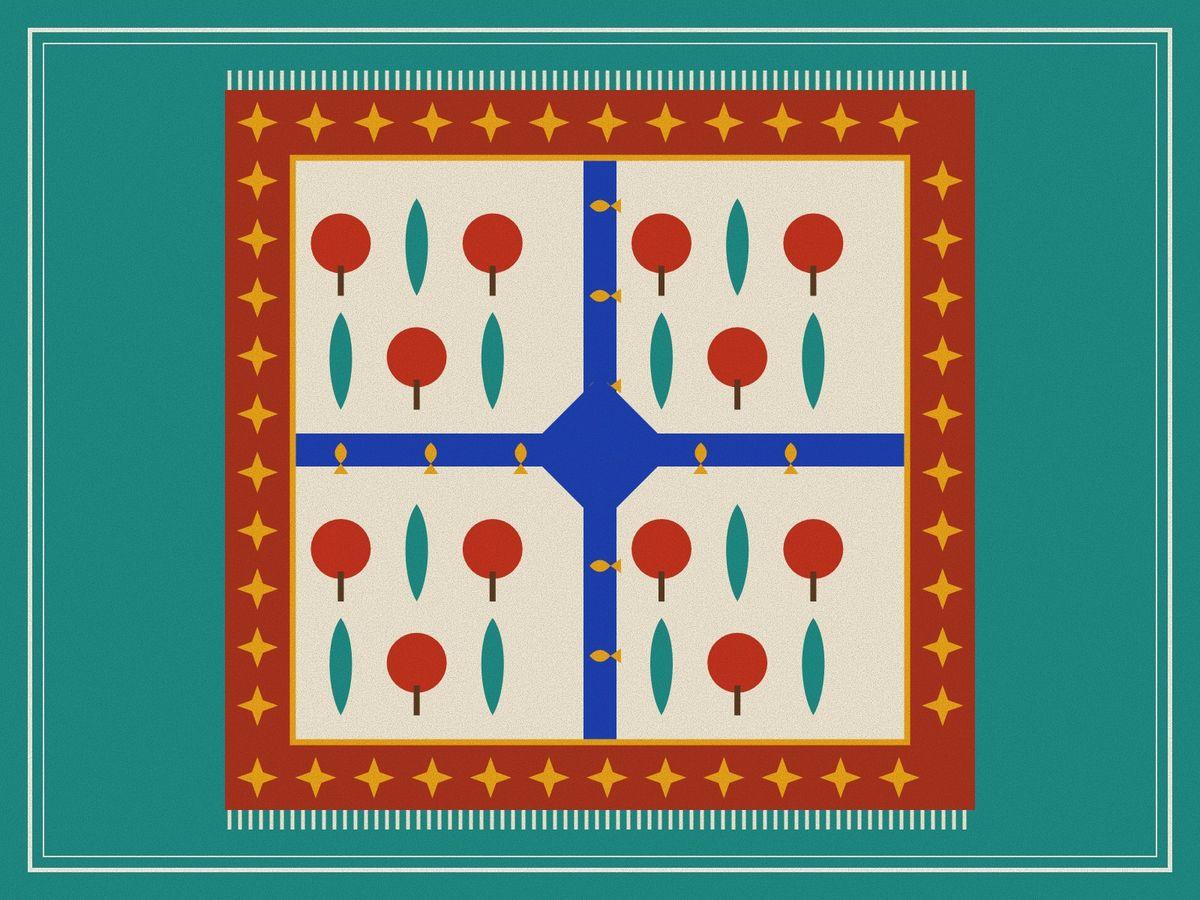
The garden carpet
Water channels, fish, cypresses and flowering trees: a garden carpet maps the Persian *chahar bagh* onto wool, seen from above and from the side at once.

Luri and Bakhtiari
Close cousins of Persian, the Luri varieties of the central Zagros, Bakhtiari among them, carry the songs, laments and migration routes of the Lur and Bakhtiari peoples.