Naqsh-e Rostam
نقش رستمRoyal rock tombs and Sasanian victory reliefs in one cliff
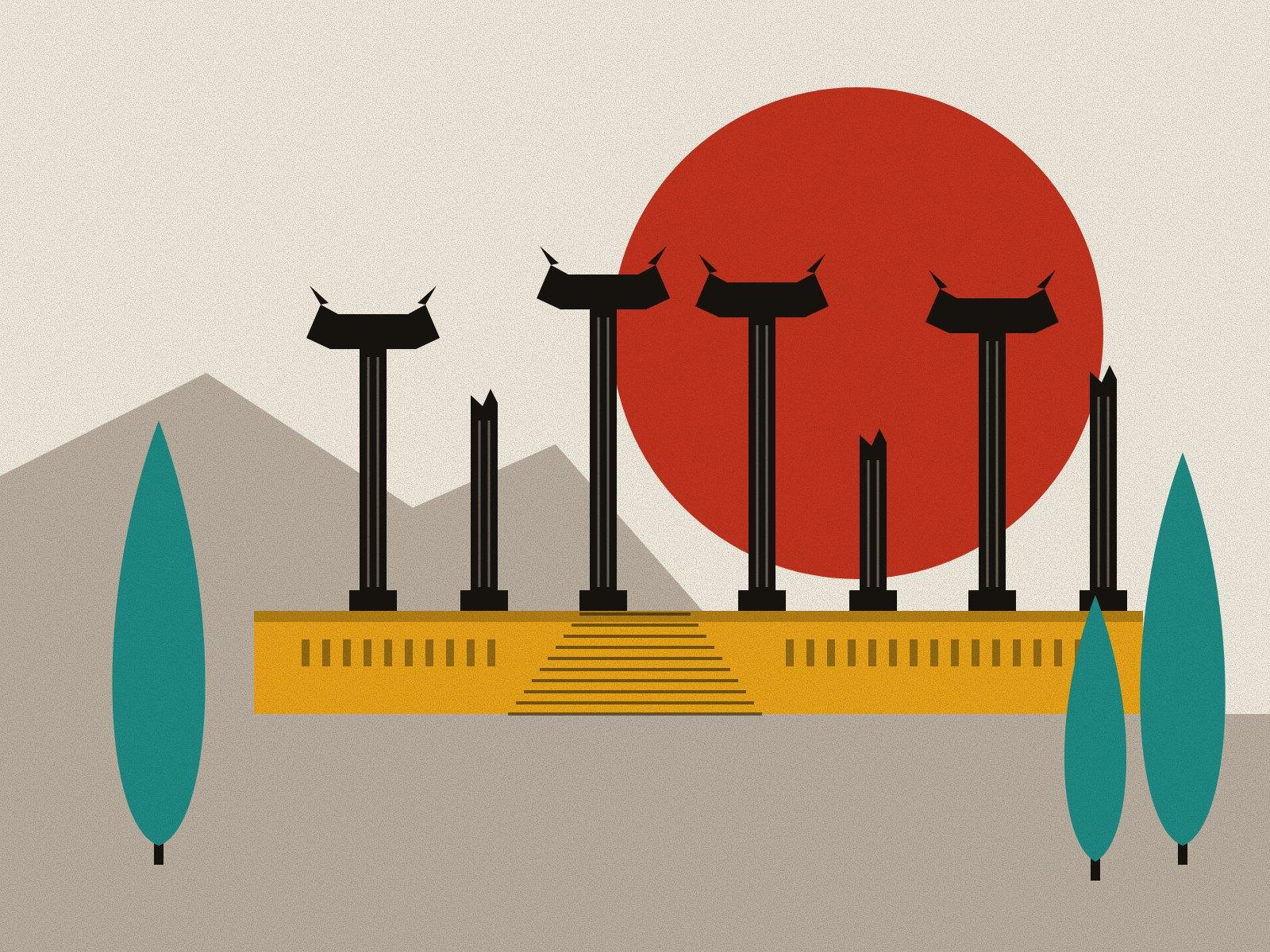
Naqsh-e Rostam is a sheer cliff of pale limestone about twelve kilometres north-west of Persepolis, and it holds a thousand years of Iranian royal history in a single face of rock. High up, four great tombs of Achaemenid kings are cut into the stone; lower down, Sasanian kings carved huge reliefs of their victories and coronations. The name means “picture of Rostam”: later Persians, who no longer knew who the figures were, took them for the hero of the Shahnameh, the Persian Book of Kings.
Each tomb has the same façade, a cross shape cut into the cliff. The central arm reproduces the front of a palace with four columns; above it, the king stands on a platform carried by figures representing the peoples of the empire, facing a fire altar under the winged symbol often identified with Ahura Mazda. Only one tomb is named by inscription, that of Darius I, who died in 486 BCE; the others are usually attributed to Xerxes I, Artaxerxes I and Darius II.
Seven centuries later the Sasanians, who also came from Fars, chose the same cliff to claim the Achaemenid legacy. One relief shows Ardashir I, founder of the dynasty, receiving the ring of kingship from Ahura Mazda, both on horseback. The most famous shows Shapur I on horseback while a Roman emperor kneels before him, usually identified as Philip the Arab, and another, Valerian, who was captured by Shapur in 260, stands held by the wrist.
Facing the cliff stands the Ka'ba-ye Zartosht, “the cube of Zoroaster”, a square stone tower of the Achaemenid period whose purpose is still debated. On its walls Shapur I had a long account of his wars carved in Middle Persian, Parthian and Greek, one of the most important historical documents of the Sasanian era.
Naqsh-e Rostam through time
Iranian historyThe Achaemenidsهخامنشیان
From Cyrus to Darius III, the first Persian empire stretched from the Aegean to the Indus and left behind Persepolis, the Cyrus Cylinder and a model of kingship the region would long remember.
- Death of Darius I, buried in the first rock tomb
- Shapur I captures the Roman emperor Valerian
More in Farsفارس
Persepolis
The ceremonial palace city of the Achaemenid kings
Tomb of Hafez
The poet's tomb in a garden in Shiraz
Pasargadae
The tomb of Cyrus the Great
Nasir al-Mulk Mosque
Shiraz's ‘pink mosque’, filled with coloured morning light
Stories from the regionداستانها
Elam and the first cities
Long before the Persians, the lowlands of Khuzestan and the highlands of Fars were home to Elam, a civilisation with its own language, gods and kings, centred on the city of Susa.

Persian
Spoken in Tehran, Kabul and Dushanbe under three names and written in two alphabets, Persian is one language with three national standards and a thousand years of shared poetry.
Persians
Persian speakers of Iran call themselves *Fars* or simply *Irani*. They are one people among many in Iran, and their language became a shared tongue for far more than themselves.