Shahr-e Gholghola
شهر غلغلهThe “city of screams”, a citadel destroyed by the Mongols in 1221
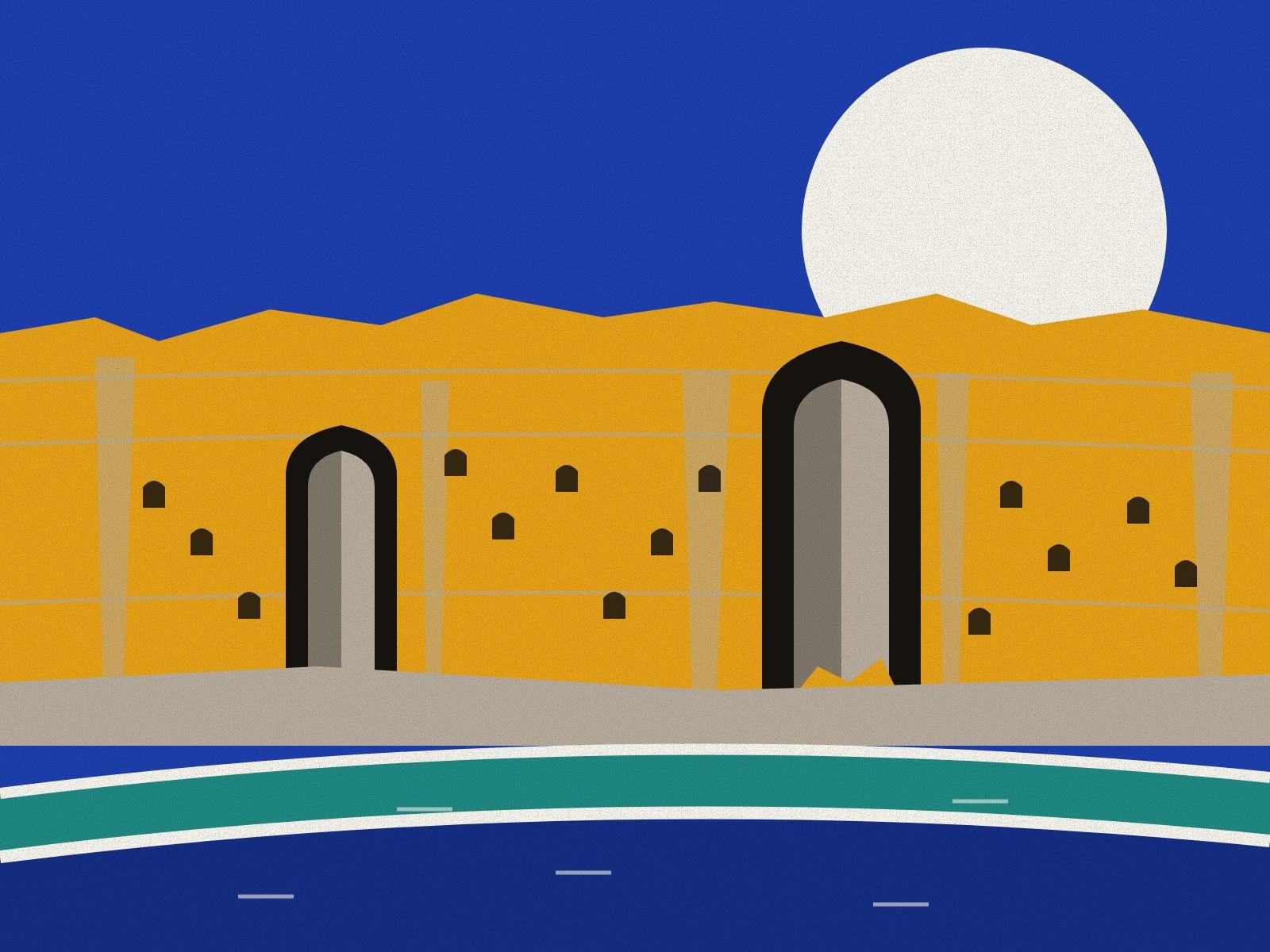
Shahr-e Gholghola, “the city of screams” or “the city of tumult”, is a ruined citadel on an isolated hill in the middle of the Bamiyan valley in central Afghanistan, facing the cliff where the great Buddhas once stood. Its slopes are covered with the remains of mud-brick walls, towers, houses and passages, climbing in terraces to a summit from which the whole valley can be seen.
The hill was fortified for many centuries, and in the eleventh and twelfth centuries it was a stronghold of the Shansabani rulers, the house that became the Ghurid dynasty. In 1221 the armies of Genghis Khan besieged it. Tradition holds that a grandson of Genghis was killed in the fighting at Bamiyan and that the khan ordered the whole valley laid waste; the name of the citadel is said to recall the cries of its inhabitants. A local legend adds that a princess betrayed the fortress to the Mongols, which historians treat as a story rather than a record.
In 2003 Shahr-e Gholghola was inscribed by UNESCO as part of the Cultural Landscape and Archaeological Remains of the Bamiyan Valley, together with the Buddha niches, the fortress of Shahr-e Zuhak and other sites. Archaeologists have since surveyed and excavated parts of the hill, and conservation work has aimed to stabilise its crumbling walls. At sunset the ruins turn the same colour as the cliffs of the valley around them.
Shahr-e Gholghola through time
Iranian historySeljuks, Mongols and Ilkhanidsسلجوقیان، مغولان و ایلخانان
Turkic and then Mongol conquerors took Iran in turn. The Seljuks built mosques and colleges; the Mongols brought catastrophe, then, as the Ilkhanids, became patrons of history-writing and art.
- Bamiyan and its citadel destroyed by the armies of Genghis Khan
- Inscribed by UNESCO with the Bamiyan valley
More in Bamiyanبامیان
Bamiyan niches
The empty niches of the giant Buddhas
Band-e Amir
A chain of deep-blue mountain lakes
Stories from the regionداستانها
Shia Islam in Iran
Twelver Shia Islam shapes the year for most Iranians: the mourning of Muharram, the shrines of Mashhad and Qom, the shared food of a vow fulfilled.
Hazaras
The Hazaras of central Afghanistan speak Hazaragi, a form of Persian, and are mostly Shia. Their homeland holds Bamiyan and Band-e Amir; their diaspora reaches Mashhad, Quetta and Australia.