Now reading: Homeland
Persiahaus

Languagesزبان‌ها

Persian is the language most outsiders hear, but the Iranian world speaks in many voices: Kurdish and Balochi, Azerbaijani Turkish and Arabic, Pashto and Ossetian, Armenian and Aramaic. Some are Iranian languages, cousins of Persian; others belong to quite different families. Persian is one language among them, and also the literary tongue that, for a thousand years, many of them have shared.

All of Languages

Three turquoise cypresses of different heights before a saffron halo inside a pointed arch, above an open book with plain ruled pages

Farsi, Dari, Tajik: one language, three standards

Persian

Spoken in Tehran, Kabul and Dushanbe under three names and written in two alphabets, Persian is one language with three national standards and a thousand years of shared poetry.

The Bisotun cliff inside a pointed arch: a smoothed panel cut with rows of abstract wedges and a small figure on a ladder copying it

The voice of the Achaemenid kings

Old Persian and the cuneiform inscriptions

Carved into cliffs and palace walls in a script of wedges, Old Persian is the oldest recorded form of the Persian language, and the key that unlocked the cuneiform world.

A fire burning in a brass urn before a red halo on black inside a pointed arch, with an open manuscript in front

The language of the Zoroastrian scriptures

Avestan

Known only from the sacred texts of Zoroastrianism, Avestan is one of the two oldest recorded Iranian languages, and it is still recited daily in fire temples in Yazd, Tehran and Mumbai.
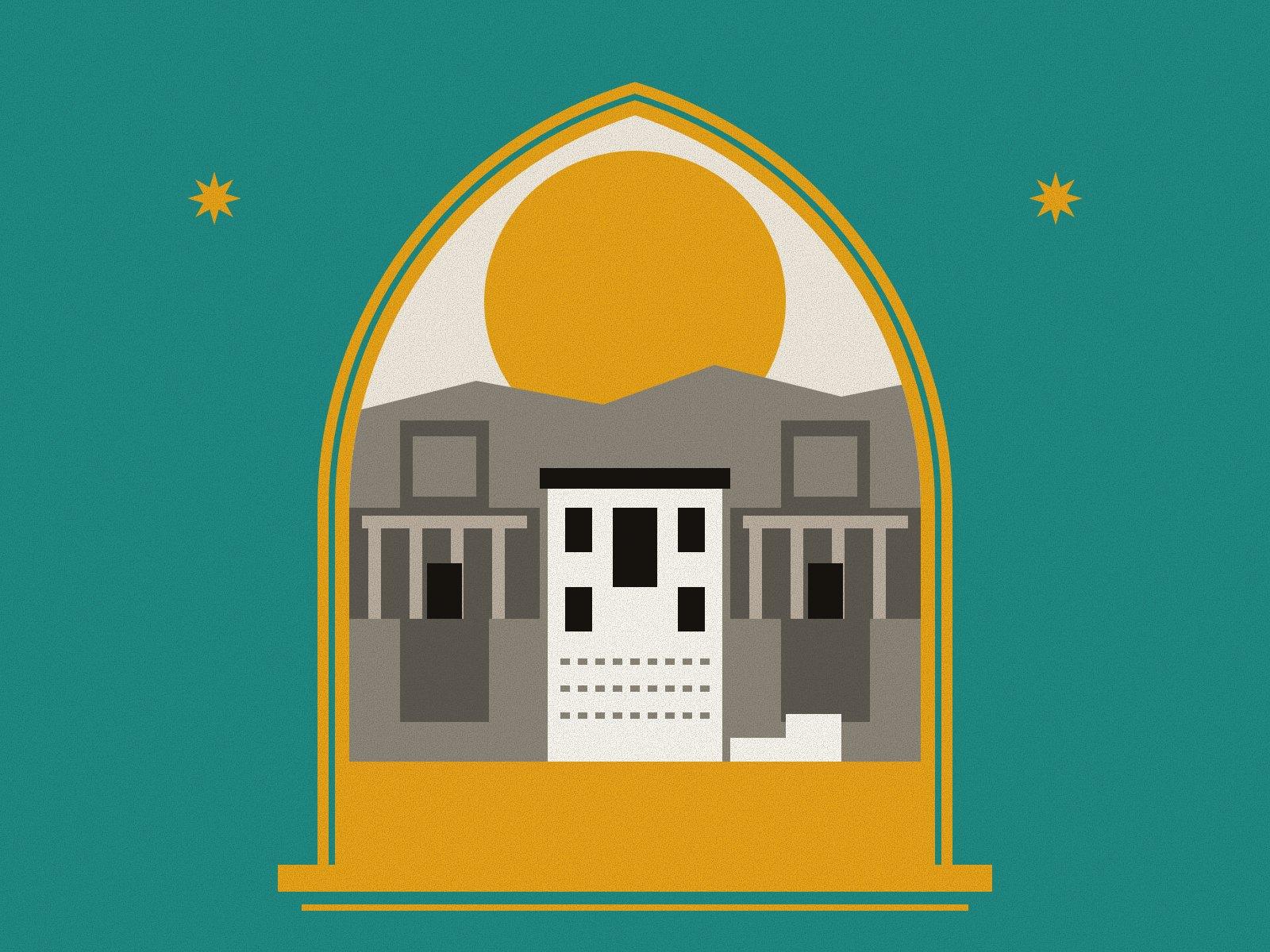
Naqsh-e Rostam inside a pointed arch: two cross-shaped tombs cut into grey rock and a white stone tower with three bands of marks

The language of the Sasanian empire

Middle Persian (Pahlavi)

Between Old Persian and the Persian of Rudaki stands Middle Persian, the language of Sasanian kings and Zoroastrian theologians, written in a script that famously says one word and means another.
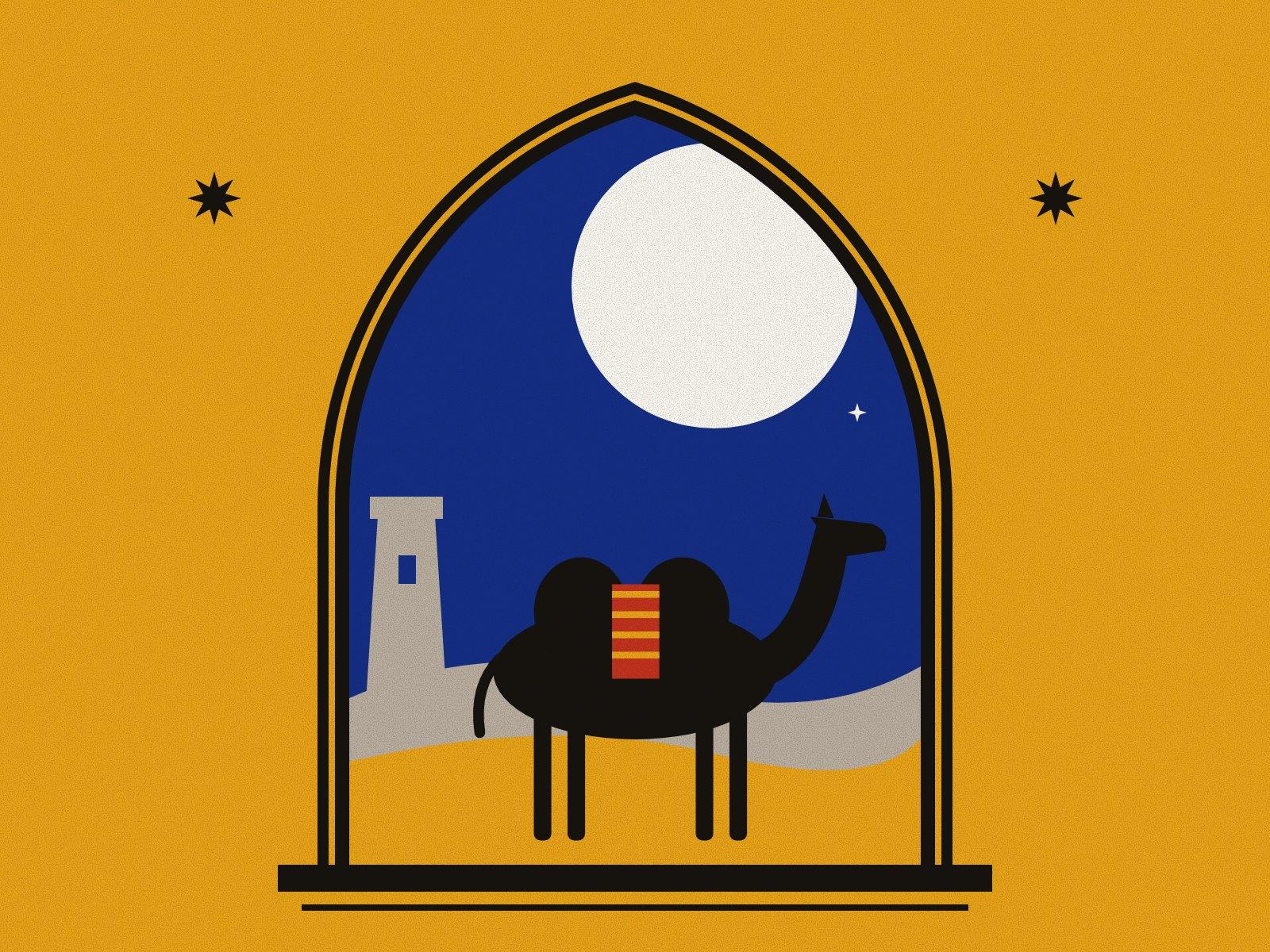
A two-humped camel with a red saddle cloth crossing the sand under a white moon, past a ruined watchtower, inside a pointed arch

Silk Road tongues of Samarkand, Balkh and Khwarazm

Sogdian, Bactrian and the lost eastern languages

Before Persian spread east, the cities of Central Asia and Afghanistan spoke their own Iranian languages. Most have fallen silent, but they left letters, inscriptions and one living descendant in a Tajik mountain valley.

Dark mountains with small fires on their slopes and saffron rings of song rising from the highest peak under a white moon, inside a pointed arch

Kurmanji, Sorani and Southern Kurdish

Kurdish

Spoken across the mountains where Iran, Iraq, Turkey and Syria meet, and far beyond, Kurdish is a family of closely related varieties with its own literature, written in more than one alphabet.

A long-necked saffron saz laid across a white halo on red inside a pointed arch, a snow-tipped mountain behind

Torki, Azərbaycan dili

Azerbaijani Turkish

The mother tongue of millions in north-western Iran and the official language of the Republic of Azerbaijan, Azerbaijani Turkish is a Turkic language with a deep Persian inheritance and a poetry all its own.
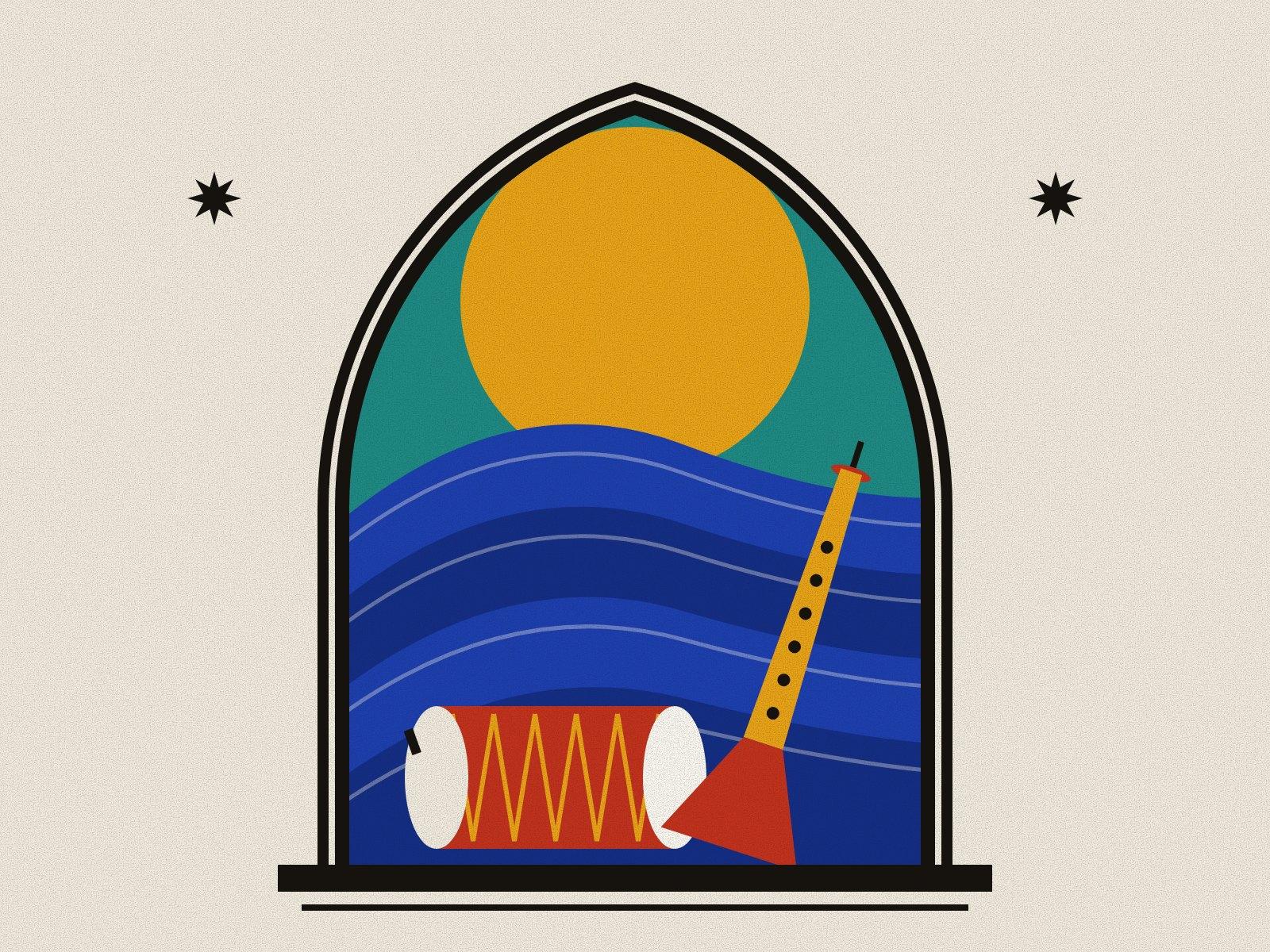
The folded blue ridges of the Zagros under a saffron halo, with a red laced dohol drum and a sorna shawm in front, inside a pointed arch

The speech of the Zagros

Luri and Bakhtiari

Close cousins of Persian, the Luri varieties of the central Zagros, Bakhtiari among them, carry the songs, laments and migration routes of the Lur and Bakhtiari peoples.
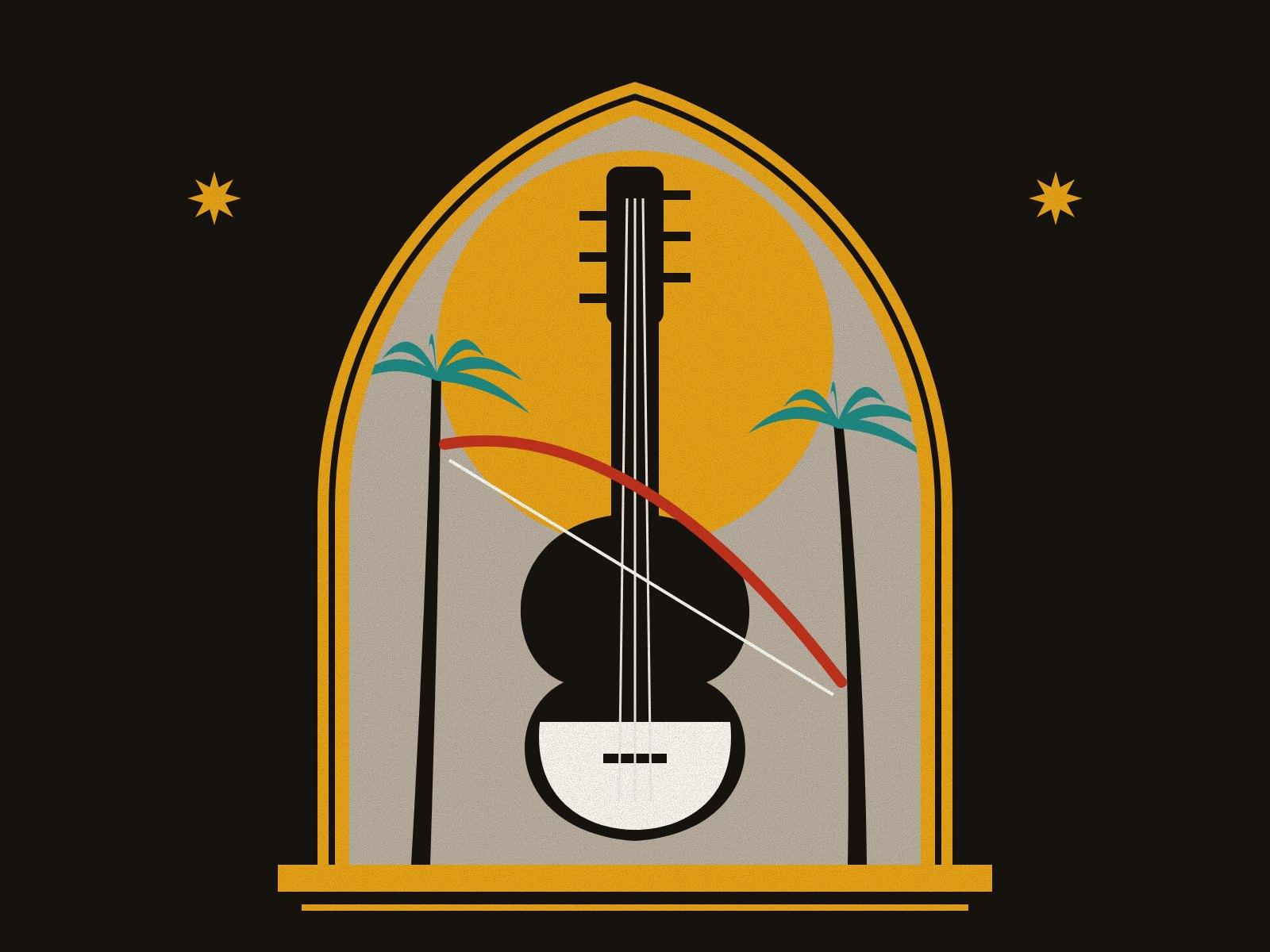
An upright black sorud fiddle with a red bow across it before a saffron halo, between two date palms, inside a pointed arch

From Makran to the Karakum

Balochi

Spoken across the dry lands where Iran, Pakistan and Afghanistan meet, and by communities from Turkmenistan to Oman, Balochi carries a long tradition of sung epic and romance.

Rain over grey mountains, turquoise forest, flooded rice paddies and a house with a steep saffron straw roof, inside a pointed arch

The Caspian languages

Gilaki and Mazandarani

Between the Alborz and the Caspian, in a green world of rice fields and forest, Gilaki and Mazandarani have been spoken for a thousand years, and have their own poets and their own medieval classic.

A saffron rubab with a white skin-covered body held at a slant before a red halo, dark mountains behind, inside a pointed arch

The language of the Pashtuns

Pashto

One of Afghanistan’s two official languages and a major language of Pakistan, Pashto is an Eastern Iranian language with a fierce literary tradition and a folk poem of just two lines.

Snow-capped Caucasus peaks under a blue halo, with a red cup between golden pies on a round three-legged table, inside a pointed arch

An Iranian language in the Caucasus

Ossetian

In the central Caucasus, far from the plateau, the Ossetians speak an Eastern Iranian language descended from the speech of the Alans and the Scythians, and keep the Nart sagas alive.
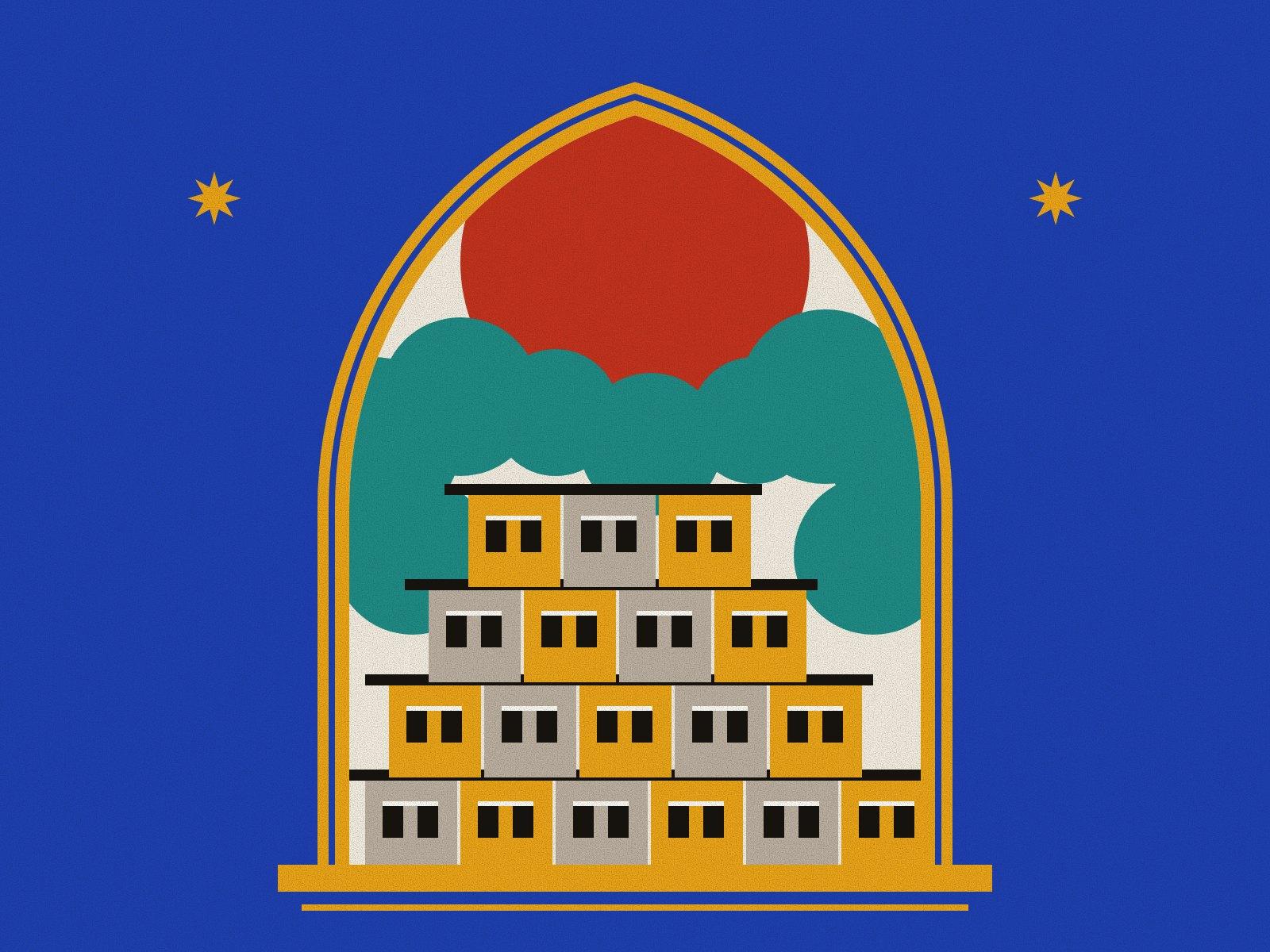
The stepped houses of Masuleh climbing a hillside among turquoise forest under a red halo, each roof the street of the row above, inside a pointed arch

Old voices of the north-west

Talysh and Tati

On the forested Caspian coast and in the villages of the north-western plateau, Talysh and the Tati dialects preserve some of the oldest Iranian speech of the region, much of it on the edge of disappearance.

An open manuscript on a folding wooden book-stand before a saffron halo, with date palms and river water behind, inside a pointed arch

A mother tongue, a sacred language and a source of Persian

Arabic in Iran

Arabic is spoken as a mother tongue in Khuzestan and along the Gulf coast, recited in every mosque, and woven so deeply into Persian that no sentence of literary Persian is free of it.

A pale facade of many small doors, round, pointed, gabled, stepped and square, each a different colour, inside a pointed arch

From New Julfa to Musandam

Armenian, Assyrian, Turkmen and other languages of Iran

Iran’s languages include ancient tongues of Christian and Jewish communities, Turkic languages of the north and south, and small languages found nowhere else, from the Armenian of New Julfa to the Kumzari of the Strait of Hormuz.

A reed pen finishing one long sweeping black stroke beside a small blue inkwell, before a red halo inside a pointed arch

Thirty-two letters and the hanging line

The Persian script

Persian adopted the Arabic alphabet, added four letters for its own sounds, and developed nastaliq, one of the most admired scripts in the world. In Tajikistan the same language is written in Cyrillic.