Vank Cathedral
کلیسای وانکThe Armenian cathedral of New Julfa, painted from floor to dome
Vank Cathedral, the Holy Saviour Cathedral of the Armenian Apostolic Church, is the heart of New Julfa, the Armenian quarter of Isfahan on the south bank of the Zayandeh. The quarter dates from the early seventeenth century, when Shah Abbas I moved the Armenian population of Julfa on the Aras River into the interior of Iran and settled them beside his new capital. Armenian merchants of New Julfa went on to build trading networks reaching from Venice and Amsterdam to India.
A small church stood on the site from the early years of the settlement. The present cathedral was built between 1655 and 1664 under Archbishop David. From outside it is plain brick, with a dome that could belong to a Persian mosque. Inside, every surface is covered: paintings of the life of Christ and the Last Judgement, with heaven above and the torments of hell below, framed by gilded and blue Persian-style floral work in which Armenian, Iranian and European traditions meet.
The cathedral grounds hold a museum and library. Among their treasures are manuscripts, the 1606 decree of Shah Abbas concerning New Julfa, and an early printing press, a reminder that the Armenians of New Julfa printed books here in the seventeenth century, among the first in Iran. In the courtyard a memorial commemorates the victims of the Armenian Genocide of 1915, and every April the community gathers there to remember them.
Today New Julfa remains a living neighbourhood, with Armenian schools, clubs and a dozen or so churches, alongside cafés popular with young Isfahanis of every background. The cathedral is open to visitors, and on Sundays and feast days it is still a place of worship.
Vank Cathedral through time
Iranian historyThe Safavidsصفویان
The Safavids made Twelver Shia Islam Iran's state religion and rebuilt Isfahan as one of the most admired cities in the world.
- New Julfa settled by Armenians from Julfa
- Building of the present cathedral begins
- Cathedral completed
More in Isfahanاصفهان
Naqsh-e Jahan Square
The royal square of Shah Abbas, more than five hundred metres long
Fin Garden
A Persian garden of running water outside Kashan
Si-o-se Pol
The bridge of thirty-three arches across the Zayandeh
Jameh Mosque of Isfahan
A thousand years of Iranian mosque building in one courtyard
Stories from the regionداستانها
Persians
Persian speakers of Iran call themselves *Fars* or simply *Irani*. They are one people among many in Iran, and their language became a shared tongue for far more than themselves.
Avaz: the classical voice
In Persian classical music the singer is the centre, and the song is a poem: a ghazal of Hafez, Saadi or Rumi, unfolded line by line in free rhythm and ornamented with the breaking voice of the *tahrir*.
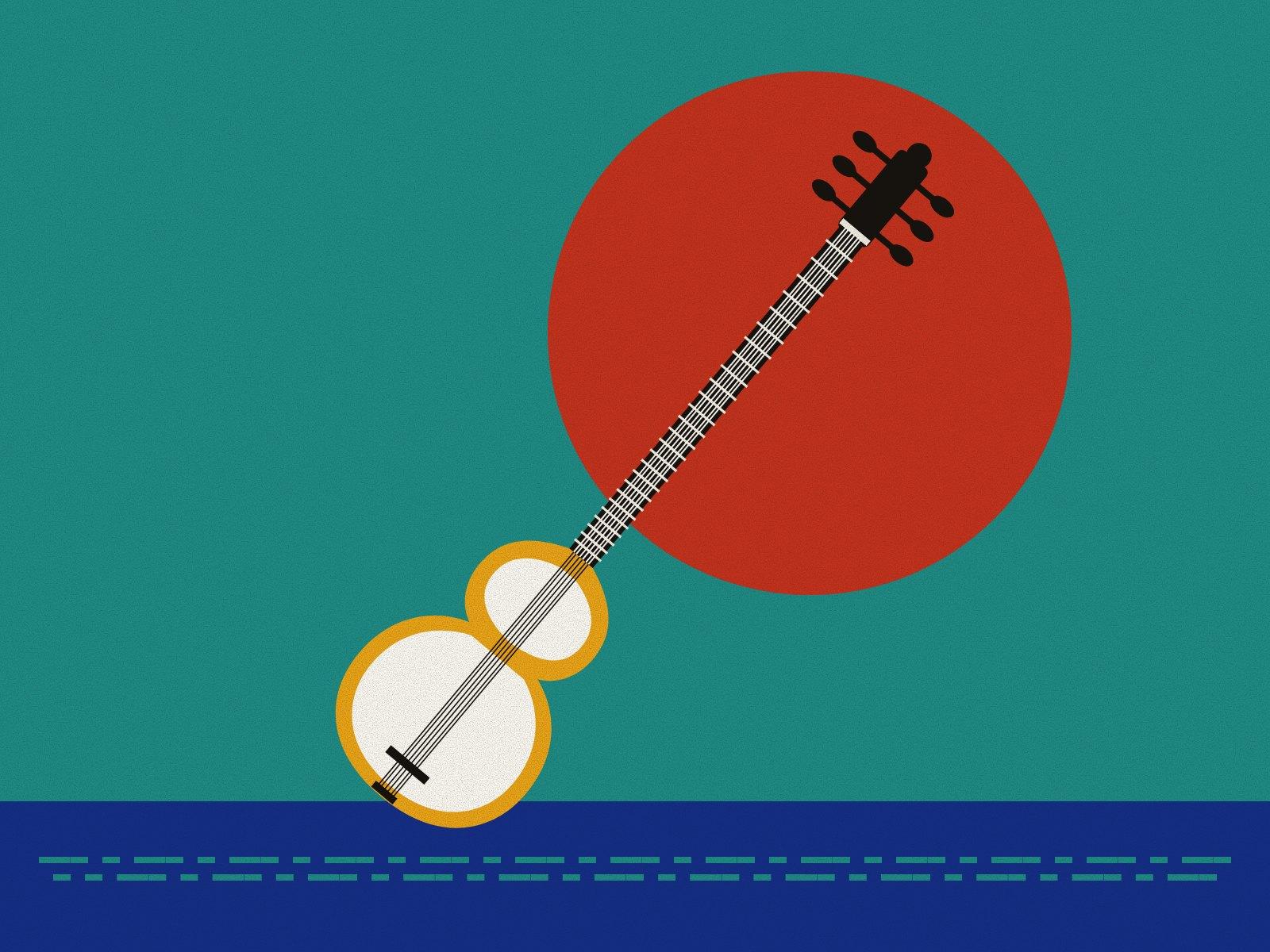
Tar
With its double-bowled mulberry body and skin face, the tar was the instrument on which the radif itself was codified. In the Caucasus a related tar has grown into a tradition of its own.