Avaz: the classical voice
آوازIn Persian classical music the singer is the centre, and the song is a poem: a ghazal of Hafez, Saadi or Rumi, unfolded line by line in free rhythm and ornamented with the breaking voice of the *tahrir*.
Avaz means simply ‘voice’ or ‘song’, but in Persian classical music it has a narrower sense: the unmetred, improvised singing of classical poetry within a mode of the radif. A singer and an instrumentalist, often a tar, setar, kamancheh or ney player, share the performance. The singer delivers a line or a couplet; the instrument answers, echoing and extending the phrase in a practice called javab-e avaz, ‘the answer to the voice’. The rhythm is free, following the metre and sense of the poem rather than a regular beat.
The texts are poems, and above all ghazals, the short lyric form of Persian literature. Hafez, Saadi and Rumi are sung most often, along with Attar, Iraqi, Khwaju and later poets. A singer chooses a poem to suit the mode and the occasion, and may move through several couplets or stay on one, repeating a hemistich to draw out its meaning. Listeners who know the poem by heart hear it anew; those who do not learn it, as generations of Iranians have, by ear.
Listeners who know the poem by heart hear it anew; those who do not learn it, as generations of Iranians have, by ear.
The tahrir
The signature ornament of the Persian voice is the tahrir: a rapid, rippling break between registers, rather like a yodel compressed into a quaver, that the singer places on long vowels at the height of a phrase. Different schools of tahrir are associated with different cities, Isfahan and Tehran among them, and a skilled ear can place a singer by it. It is not decoration for its own sake. It is the moment when the voice leaves the words and becomes pure line, before returning to the poem.
Singers
Early recordings in the first decades of the twentieth century preserved singers such as Seyyed Hossein Taherzadeh and Eqbal Azar. Qamar ol-Moluk Vaziri became, in the 1920s, one of the first women to sing unveiled in a public concert in Iran, and her recordings made her famous across the country. The radio era of the mid-century brought Gholam-Hossein Banan and many others to a national audience, and Mohammad-Reza Shajarian (1940–2020) became, for many listeners, the defining classical voice of the late twentieth century. Younger singers continue the tradition inside Iran and abroad, and the old recordings remain the school in which many of them first learned.
The art is also a link across borders. Tajik and Afghan singers have their own classical traditions of setting the same poets, and in Kabul, Herat, Dushanbe and Bukhara a ghazal of Hafez or Bidel may be sung in styles quite different from Tehran’s, each of them a local answer to a shared literature.
Poetsشاعران

Hafez
حافظThe supreme master of the ghazal, whose Divan is found in nearly every Iranian home.

Saadi
سعدیThe moralist of Shiraz, whose Golestan has taught Persian prose to every generation since.

Rumi
مولاناJalal al-Din, called Mowlana in Iran, the mystic poet of Konya and one of the most read poets in any language.

Attar
عطارDruggist of Nishapur and author of The Conference of the Birds, the great allegory of the soul's journey.
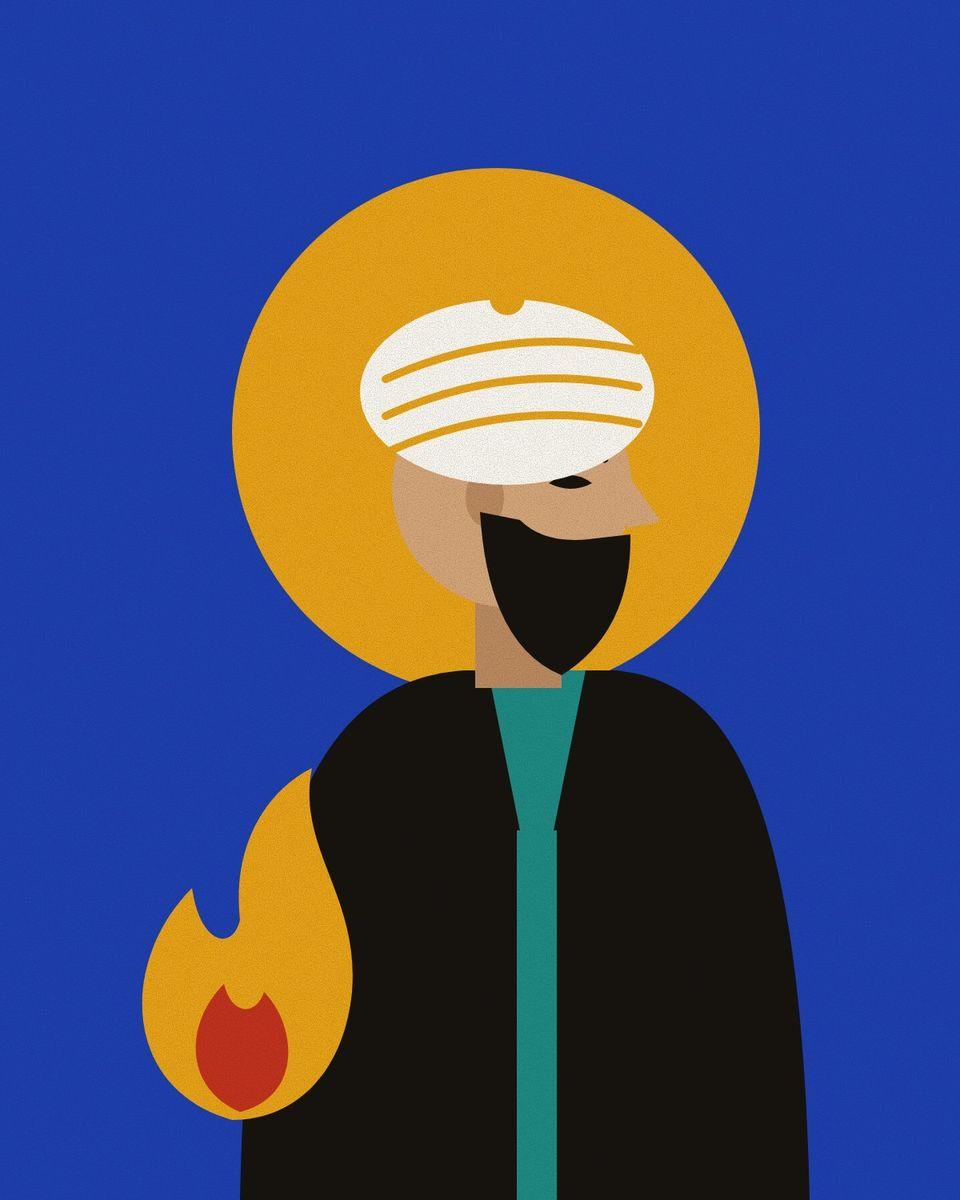
Fakhr al-Din Iraqi
فخرالدین عراقیWandering Sufi poet of Hamadan whose ghazals sing of a love that is both human and divine.
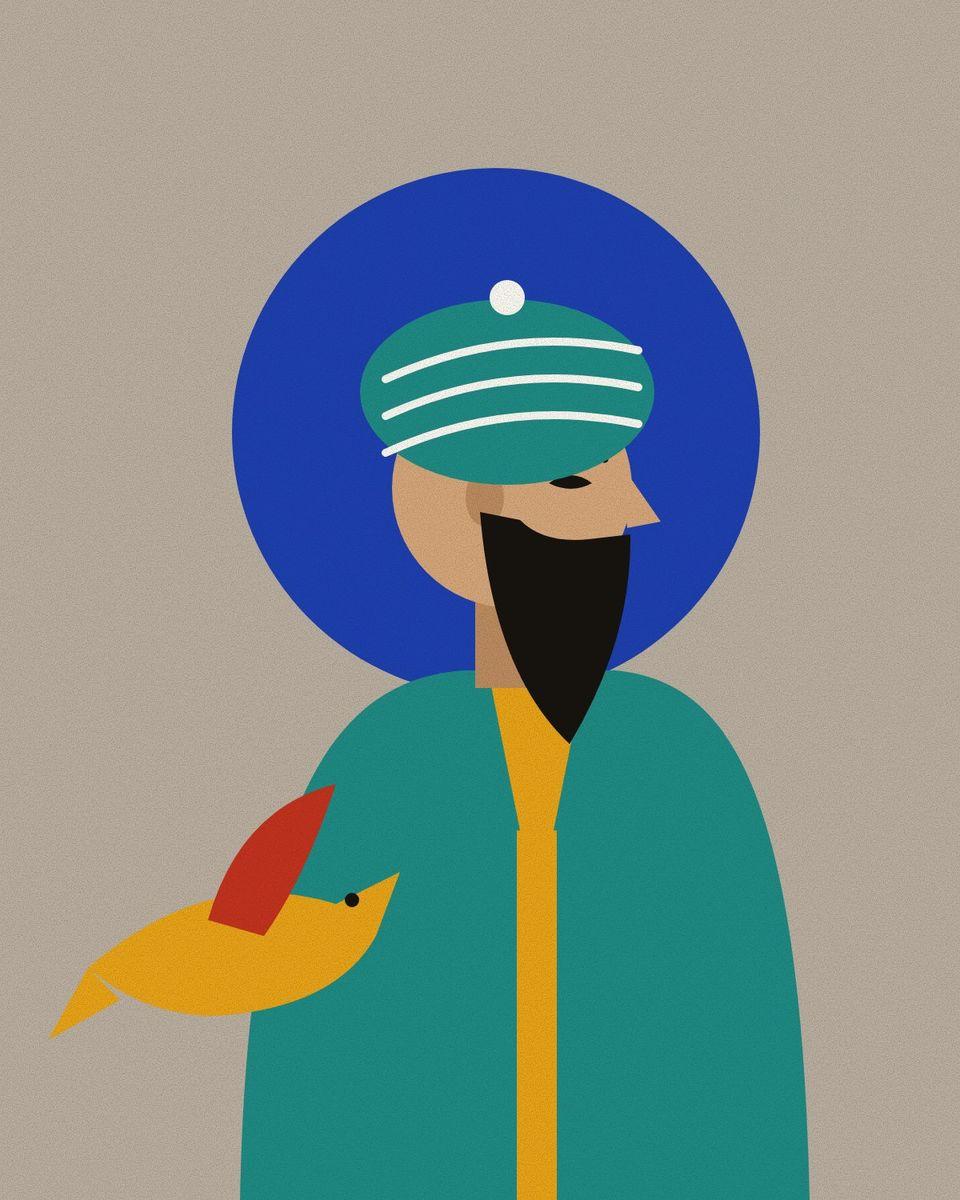
Khwaju Kermani
خواجوی کرمانیPoet of Kerman and Shiraz, author of verse romances and of ghazals that Hafez knew and echoed.
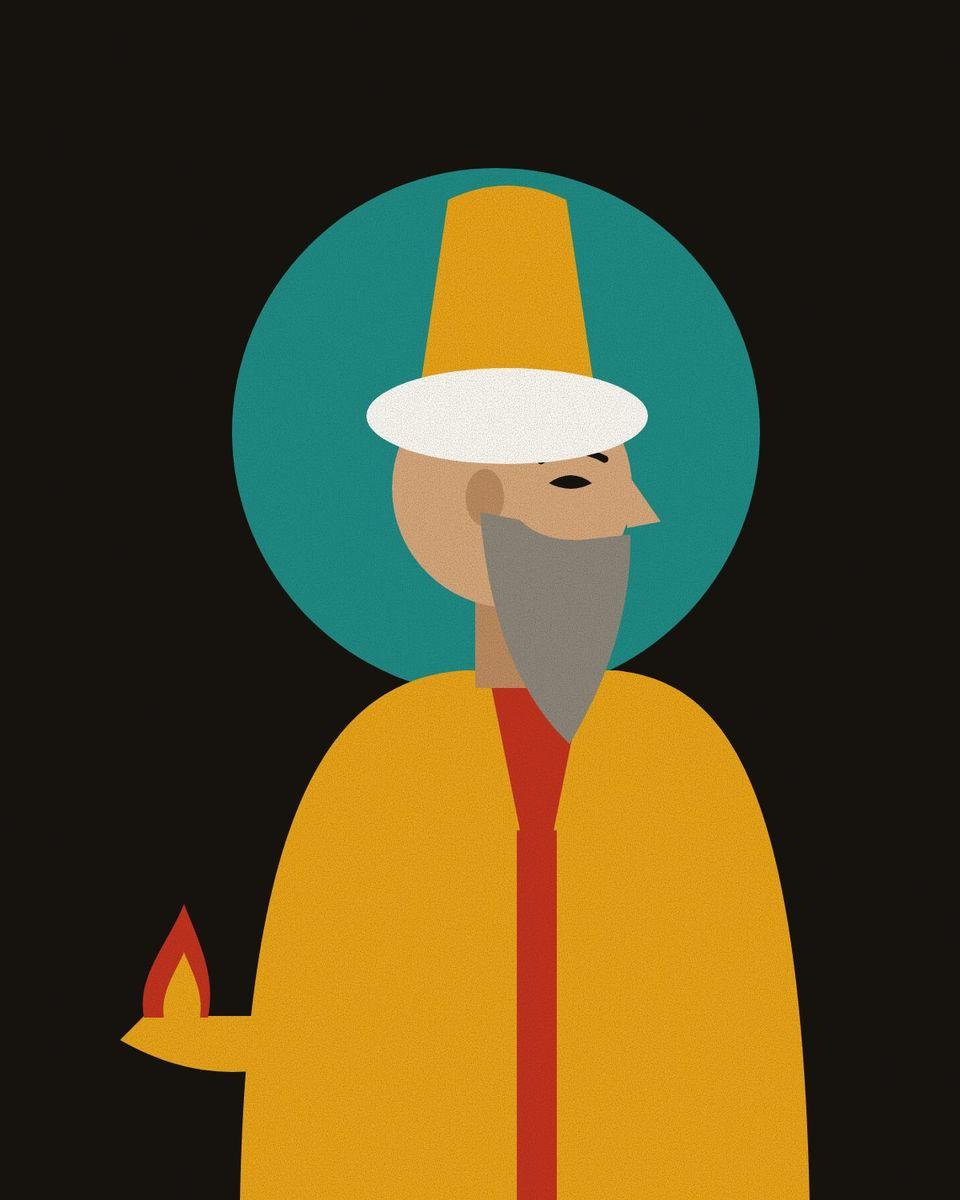
Bidel Dehlavi
بیدل دهلویPersian poet of Mughal India, master of the late Indian style, loved above all in Afghanistan and Central Asia.
Across Cultureپیوندها

Languages
Persian
Spoken in Tehran, Kabul and Dushanbe under three names and written in two alphabets, Persian is one language with three national standards and a thousand years of shared poetry.
Music
The radif and the dastgah
Persian classical music is not written down as compositions but held in the *radif*, a body of melodies passed from master to pupil and arranged into twelve modal systems.
More from Musicموسیقی
The radif and the dastgah
Persian classical music is not written down as compositions but held in the *radif*, a body of melodies passed from master to pupil and arranged into twelve modal systems.
Barbad and the Sasanian court
Barbad, minstrel to Khosrow II, is the most famous musician in Persian memory. Little about him can be proved; much about him has been loved, retold and painted for fourteen centuries.
Tar
With its double-bowled mulberry body and skin face, the tar was the instrument on which the radif itself was codified. In the Caucasus a related tar has grown into a tradition of its own.