Hazaras
هزارههاThe Hazaras of central Afghanistan speak Hazaragi, a form of Persian, and are mostly Shia. Their homeland holds Bamiyan and Band-e Amir; their diaspora reaches Mashhad, Quetta and Australia.
In the high mountains at the centre of Afghanistan lies the Hazarajat, the land of the Hazaras: Bamiyan, Daykundi, the highlands of Ghazni and Wardak and the valleys around them. The Hazaras, Hazāra in their own speech, speak Hazaragi, a variety of Persian with its own vocabulary, some of it Mongolic and Turkic in origin. Most are Twelver Shia Muslims; there are also Ismaili and Sunni Hazaras. The name is often explained from Persian hazār, ‘thousand’, perhaps a military unit of Mongol times, but the origin of the people is debated, and the Hazaras’ own accounts point to deep local roots as well as to the Mongol and Turkic past.
Bamiyan and Band-e Amir
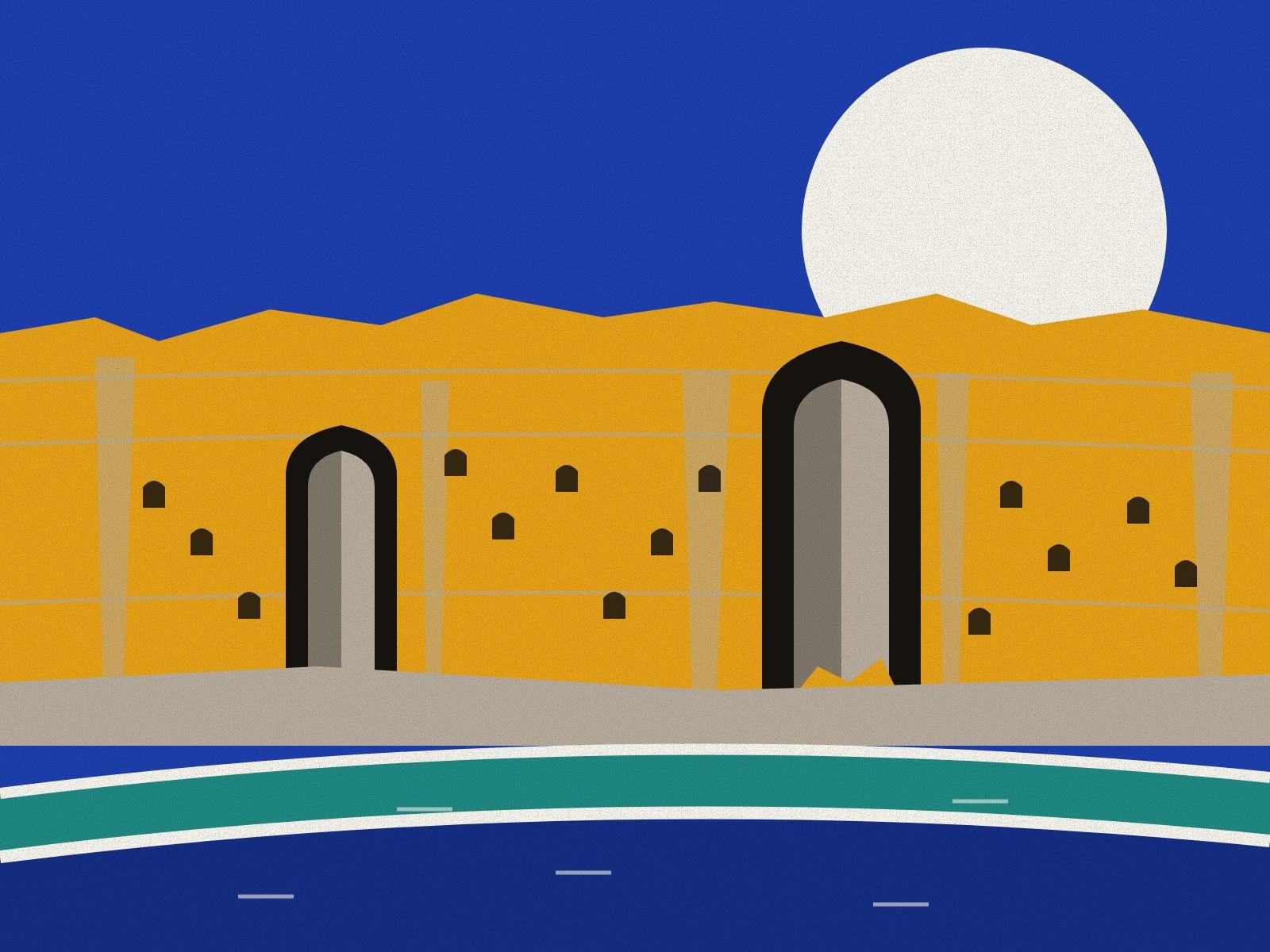
The valley of Bamiyan, on the old route between Central Asia and India, was a great Buddhist centre in the first millennium. Its two colossal standing Buddhas, carved into the cliff, were destroyed by the Taliban in March 2001; the cultural landscape and archaeological remains of the valley became a UNESCO World Heritage site in 2003. Nearby, the deep blue lakes of Band-e Amir, held back by natural travertine dams, became Afghanistan’s first national park in 2009. Both are part of how Hazaras picture home.
A hard history
In the 1890s the Afghan ruler Abdur Rahman Khan waged a campaign against the Hazarajat; historians record mass killings, enslavement and the seizure of land that pushed many Hazaras into exile in Quetta and Mashhad. In the twentieth century Hazaras faced discrimination in Afghanistan, and in 1998 Taliban forces killed large numbers of Hazara civilians in Mazar-i Sharif, as documented by Human Rights Watch. Since 2001, and again since 2021, the UN Assistance Mission in Afghanistan and Human Rights Watch have documented repeated attacks on Hazara schools, mosques and neighbourhoods, among them the bombing of the Sayed ul-Shuhada girls’ school in Kabul in May 2021; many such attacks have been claimed by the Islamic State’s Khorasan branch.
Both are part of how Hazaras picture home.
What is kept
Hazara music is carried by the dambura, a long-necked two-stringed lute, and by singers whose songs of exile, love and the mountains are known throughout the diaspora. Dobaiti, the folk quatrain, is sung at work and at weddings. Hazara embroidery, felt-making and the rugs and gelims of the highlands are made by women, and Nowruz and the Shia calendar give shape to the year. In Kabul the neighbourhood of Dasht-e Barchi has become a centre of Hazara education and life.
Persecution has made the Hazaras one of the most scattered peoples of the Persian-speaking world. Large communities live in Iran, especially in Mashhad and Tehran, many of them refugees or their children; in Quetta, Pakistan; in Europe; and in Australia, where Hazaras are among the most visible of Afghan communities. Wherever they are, the dambura and the quatrain go with them.
Across Cultureپیوندها
Faiths
Shia Islam in Iran
Twelver Shia Islam shapes the year for most Iranians: the mourning of Muharram, the shrines of Mashhad and Qom, the shared food of a vow fulfilled.

Languages
Persian
Spoken in Tehran, Kabul and Dushanbe under three names and written in two alphabets, Persian is one language with three national standards and a thousand years of shared poetry.
More from Peoplesمردمان
Persians
Persian speakers of Iran call themselves *Fars* or simply *Irani*. They are one people among many in Iran, and their language became a shared tongue for far more than themselves.
Azerbaijanis
Iran’s Azerbaijanis, who often call themselves *Türk*, speak a Turkic language in a land named after an Iranian satrap. North of the Aras, the Republic of Azerbaijan is a separate nation that defines itself.

Kurds
Kurds live across the Zagros and Taurus in Iran, Iraq, Turkey and Syria. In Iran they speak several Kurdish languages, keep several faiths, and light Newroz fires that every Iranian knows.