Sizdah Bedar
سیزدهبدرOn the thirteenth day of the new year, families leave their homes for parks, rivers and hillsides, throw the sabzeh from the haft-sin into running water and knot blades of grass for a wish. In Iran it is officially Nature Day.

Sizdah Bedar falls on 13 Farvardin, the thirteenth day of the new year, and closes the Nowruz holidays. The name is usually taken to mean 'thirteen out of doors', or 'driving out the bad luck of the thirteenth', because staying indoors on this day is said to invite misfortune. The dictionary-maker Dehkhoda offered another reading, 'to the valley and the plain'. Whatever the words once meant, the day itself is simple: almost everyone goes outside. Families pack food and rugs and head for parks, rivers, orchards and hillsides.
A day outdoors
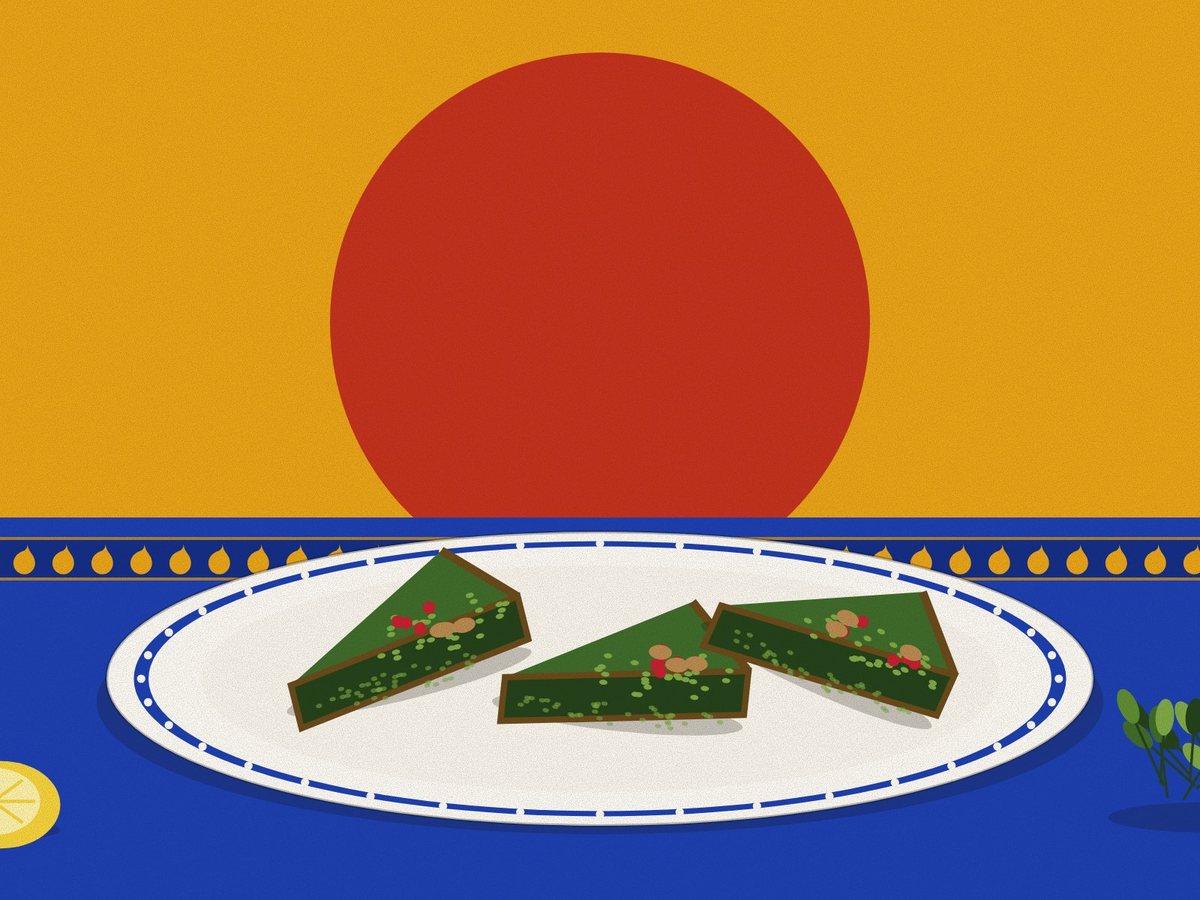
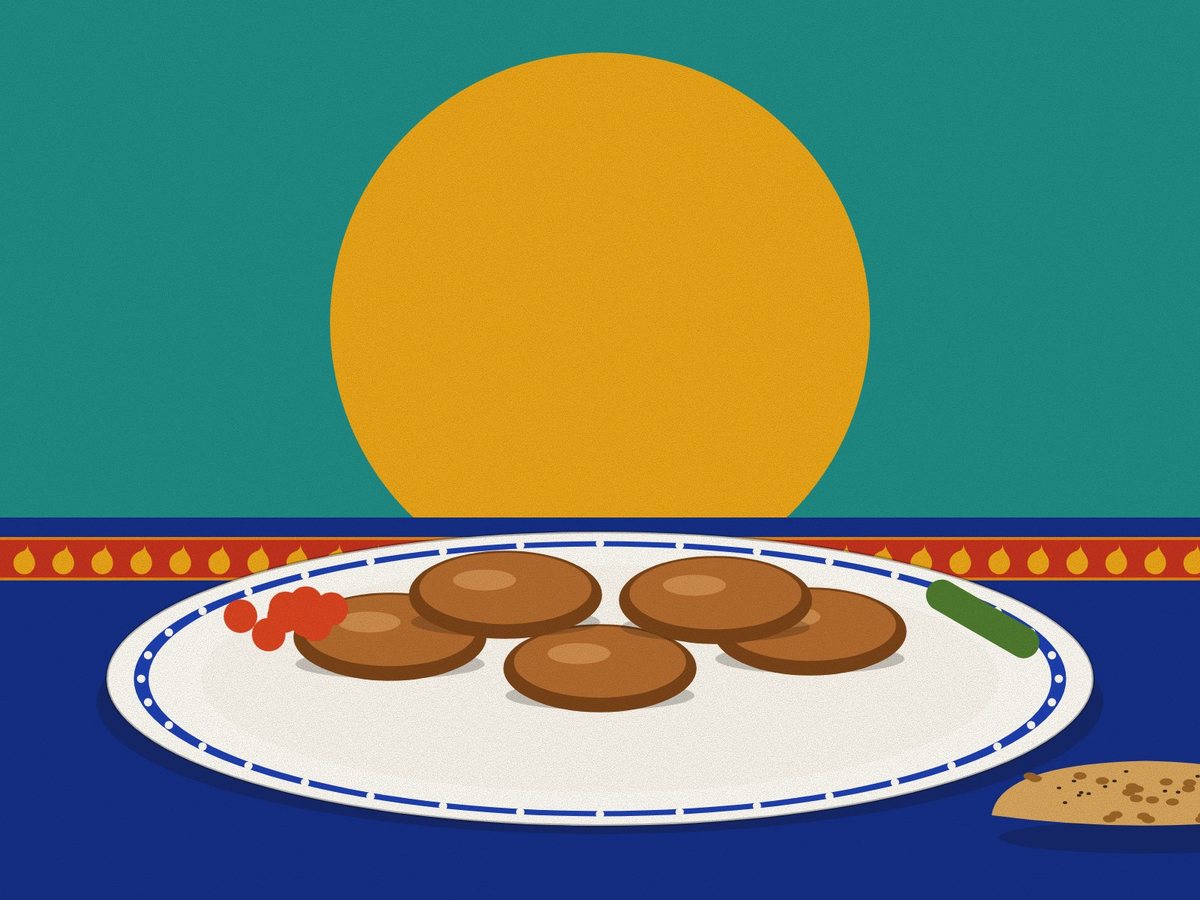
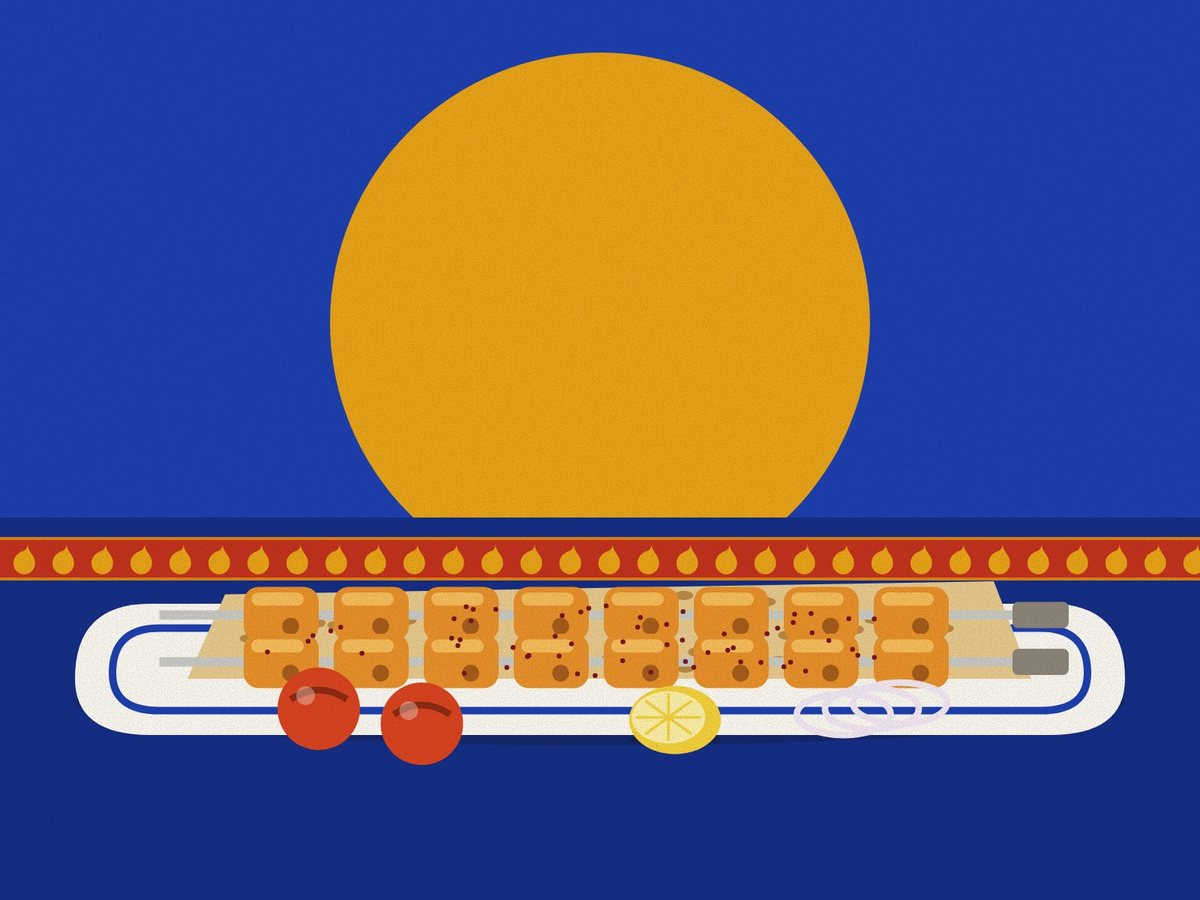
The food is generous and varies by region and family. Ash-e reshteh, the thick noodle soup, is a common choice, as are kebabs grilled on the spot and lettuce leaves dipped in sekanjabin, a syrup of vinegar and honey, sometimes flavoured with mint, which some take as a promise of good health for the year ahead. In Ardabil, ash-e doogh, a yoghurt soup, belongs to the day. There are games for children and adults: in East Azerbaijan and Ardabil a stick game called chilling aghaj is played, and in Lur and Kurdish areas people throw thirteen stones into a river, making a wish with each.
Before the day ends, the sabzeh, the dish of sprouted grain that has stood on the haft-sin since the new year, is carried to running water and thrown in, taking the household's ill luck and sickness away with it. Zoroastrian families take theirs to streams and rivers with the wish for a blessed year. Before letting it go, many people knot two blades of grass together and make a wish. It is a custom above all of young unmarried people, especially young women, who traditionally wish to be married by the next Sizdah Bedar, though anyone may knot a blade for any wish. One explanation links the knot to Mashya and Mashyana, the first human couple of Iranian myth. In some families the day is also one for pranks, the dorugh-e sizdah, 'the lie of the thirteenth', which writers often compare to April Fool's Day, since 13 Farvardin usually falls on 1 or 2 April.
Where the day comes from
For all its popularity, Sizdah Bedar has a thin written history. Older books do not describe it directly, and the first detailed accounts come from the Qajar period, in the memoirs of Abdollah Mostowfi, in Naser al-Din Shah's own travel diary and in the account of the Austrian physician Jakob Eduard Polak, who wrote that people left the city by its gates for the gardens. The scholar Mehrdad Bahar saw the public outings of the Safavid era as close to it. Some look further back. In the Zoroastrian calendar the thirteenth day of every month is Tir day, sacred to Tishtrya, the star who brings the rain, and some writers see in the day a prayer for rain on the new year's crops. There is also a popular belief that each of the twelve days after Nowruz stands for one month of the year, so that the thirteenth falls outside the count. None of these explanations is settled.
Nature Day
After the 1979 revolution, calendars in Iran gave the day a new official name, Ruz-e Tabiat, Nature Day, and it is a public holiday. State media prefer that name, partly because of the bad-luck associations of the number thirteen, and some clerics have criticised the customs; in 2014 the Tehran Friday prayer leader Ahmad Khatami called the belief that the thirteenth day is unlucky superstitious. Under either name, the day is still spent out of doors.
Beyond Iran the day travels with the Persian calendar. Iranians in India have thrown their sabzeh into the Ganges and the Yamuna, and in Afghanistan families in Kabul spend the first weeks of the year picnicking in the green valleys of Istalif and Charikar, where the Judas trees flower. In the diaspora, where the thirteenth often falls on a working day, communities usually gather in a park on the nearest weekend, with the same rugs, the same soup and the same knotted grass.
When it fallsکی
In the Persian calendar it keeps its day; in the Gregorian calendar the day moves a little from year to year.
Friday, 2 April 2027
Saturday, 1 April 2028
Sunday, 1 April 2029
At the tableسفره
In the Shahnamehشاهنامه
Across Cultureپیوندها

Mythology
Kayumars and the first kings
In Ferdowsi's Shahnameh, history begins on a mountainside with a king in a leopard skin, and the gifts of civilisation are won one by one: fire, iron, tamed animals, writing.
Faiths
Zoroastrianism
Good thoughts, good words, good deeds: the faith of Zarathushtra, kept by its followers in Yazd, Kerman, Tehran, Mumbai and far beyond.
Peoples
Lurs
Lurs speak Luri, a close cousin of Persian, in the valleys of Lorestan, Kohgiluyeh and the southern Zagros. Their country holds the Luristan bronzes, black tents and the old seasonal migration.

Peoples
Kurds
Kurds live across the Zagros and Taurus in Iran, Iraq, Turkey and Syria. In Iran they speak several Kurdish languages, keep several faiths, and light Newroz fires that every Iranian knows.
Peoples
Azerbaijanis
Iran’s Azerbaijanis, who often call themselves *Türk*, speak a Turkic language in a land named after an Iranian satrap. North of the Aras, the Republic of Azerbaijan is a separate nation that defines itself.
More from Festivalsجشنها

Nowruz
The Persian new year, Nowruz, 'new day', begins at the moment of the March equinox. Homes are cleaned, the haft-sin is laid, and families visit one another across Iran, Afghanistan, Central Asia, the Caucasus and the diaspora.

Tirgan
A midsummer festival of water on Tir day of the month of Tir. People splash one another, tie a rainbow cord round the wrist, and remember Tishtrya, the star who brings rain, and the arrow of Arash.

Mehregan
The autumn feast of Mehr, or Mithra, god of covenants and friendship. For centuries it stood beside Nowruz as one of the two great feasts of the Persian year; Zoroastrians and Tajiks keep it still.