The Shahnameh atlas · The mythical age · The reign of Kayumars
Kayumars and the death of Siyamak
کیومرث و مرگ سیامکThe first king loses his son to a demon, and his grandson takes revenge
The world is young. The sun has just entered Aries, the sign of spring, and the first king lives on a mountain. His name is Kayumars, and according to the old book that Ferdowsi follows, it was he who first brought the custom of throne and crown into the world. He and his people dress in leopard skins, and new ways of clothing and of eating begin with him. He reigns for thirty years, shining on his seat like a full moon over a cypress. Wild beasts and tame ones come to rest near him and bow before his throne as if in prayer.
Kayumars has a son, Siyamak, handsome, skilled and eager for a name. The father's heart lives through him, and he weeps for love of him, afraid of the day they will be parted. The king has no enemy in the world but one: Ahriman, the spirit of evil, who watches with envy. Ahriman has a son, a div (demon) like a great wolf, who gathers an army and wants the throne for himself. The angel Sorush comes in the shape of a pari (fairy), dressed in leopard skin, and reveals what the enemy is plotting against the king.
When the news reaches Siyamak, his heart boils. He gathers his men and goes out to fight wearing only a leopard skin, for no one yet knows armour or the ways of war. He comes forward bare and grapples with the son of Ahriman. The Black Div bends the prince double, throws him to the ground and tears his body open with his claws. The army is left without a leader.
He comes forward bare and grapples with the son of Ahriman.
Kayumars comes down from his throne wailing and tears his hair and face. The soldiers dress in blue and stand weeping at his gate, and the birds and beasts go crying to the mountain. For a year they mourn. Then Sorush returns with a message from God: mourn no more, gather an army and clear the earth of that div.
Siyamak has left a son, Hushang, whom his grandfather has raised as his own. Kayumars tells him everything. 'I am leaving,' he says, 'and you will be the new commander.' He gathers an army of pari, leopards, lions, wolves and tigers, with birds and beasts, and takes the rear himself while Hushang leads. The Black Div comes on, throwing dust to the sky, but the roar of the beasts saps his strength. Hushang seizes him like a lion, strips the skin from his body, cuts off his head and tramples him underfoot.
With the vengeance done, Kayumars's time runs out. He dies, and the throne passes to Hushang. Ferdowsi closes the reign with a thought that returns again and again in the poem: the world is only a tale, and neither good nor bad stays with anyone.
From the poemاز شاهنامه
Ferdowsi's words, with the English of Arthur and Edmond Warner's translation (1905–1925).
چنین گفت کآیین تخت و کلاه
کیومرث آورد و او بود شاه
And tales of paladins, saith Gaiumart
Invented crown and throne, and was a Shah.
بزد چنگ وارونه دیو سیاه
دوتا اندر آورد بالای شاه
That horrible Black Div
Clutched at, bent down that prince of lofty stature
And rent him open.
کشیدش سراپای یکسر دوال
سپهبد برید آن سر بیهمال
Then flayed him, lopping off his monstrous head,
In Mythologyاسطوره
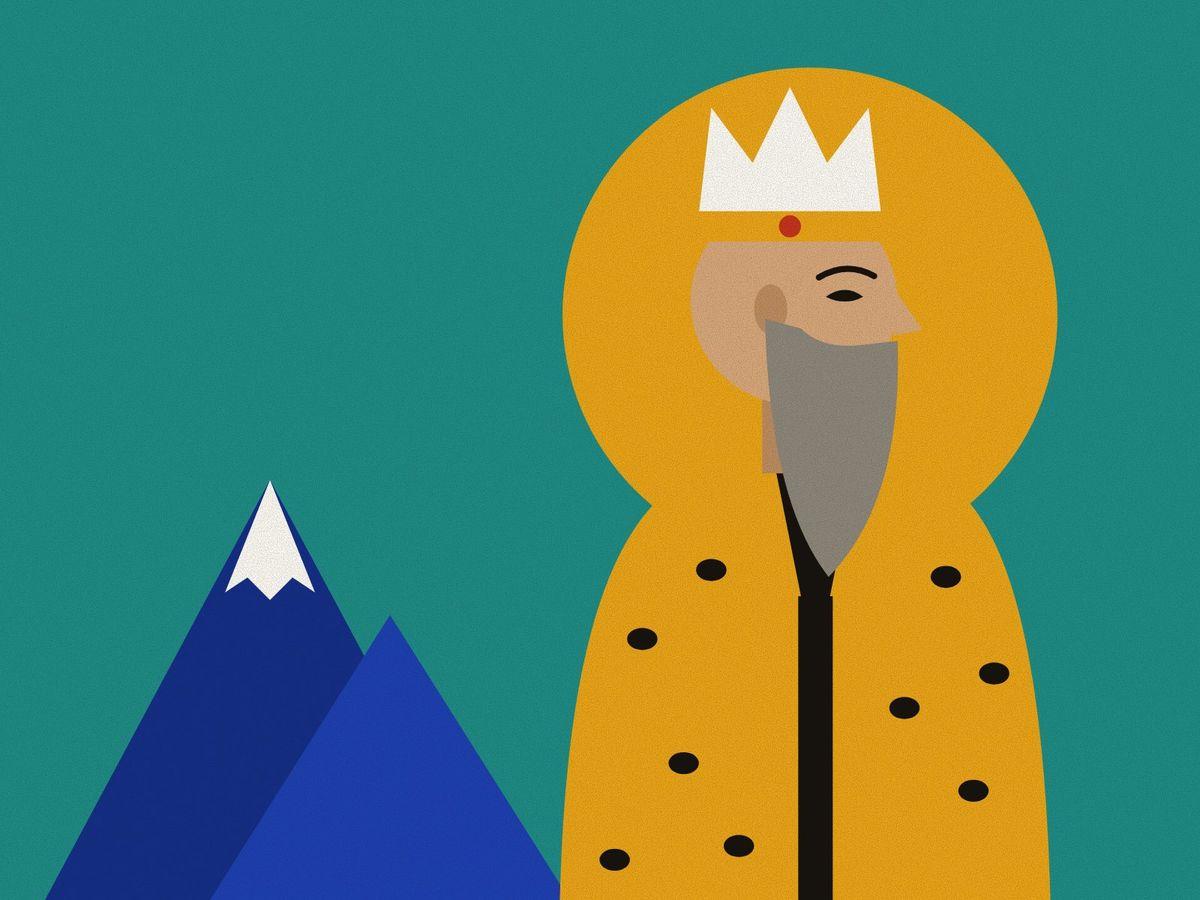
Kayumars and the first kings
In Ferdowsi's Shahnameh, history begins on a mountainside with a king in a leopard skin, and the gifts of civilisation are won one by one: fire, iron, tamed animals, writing.
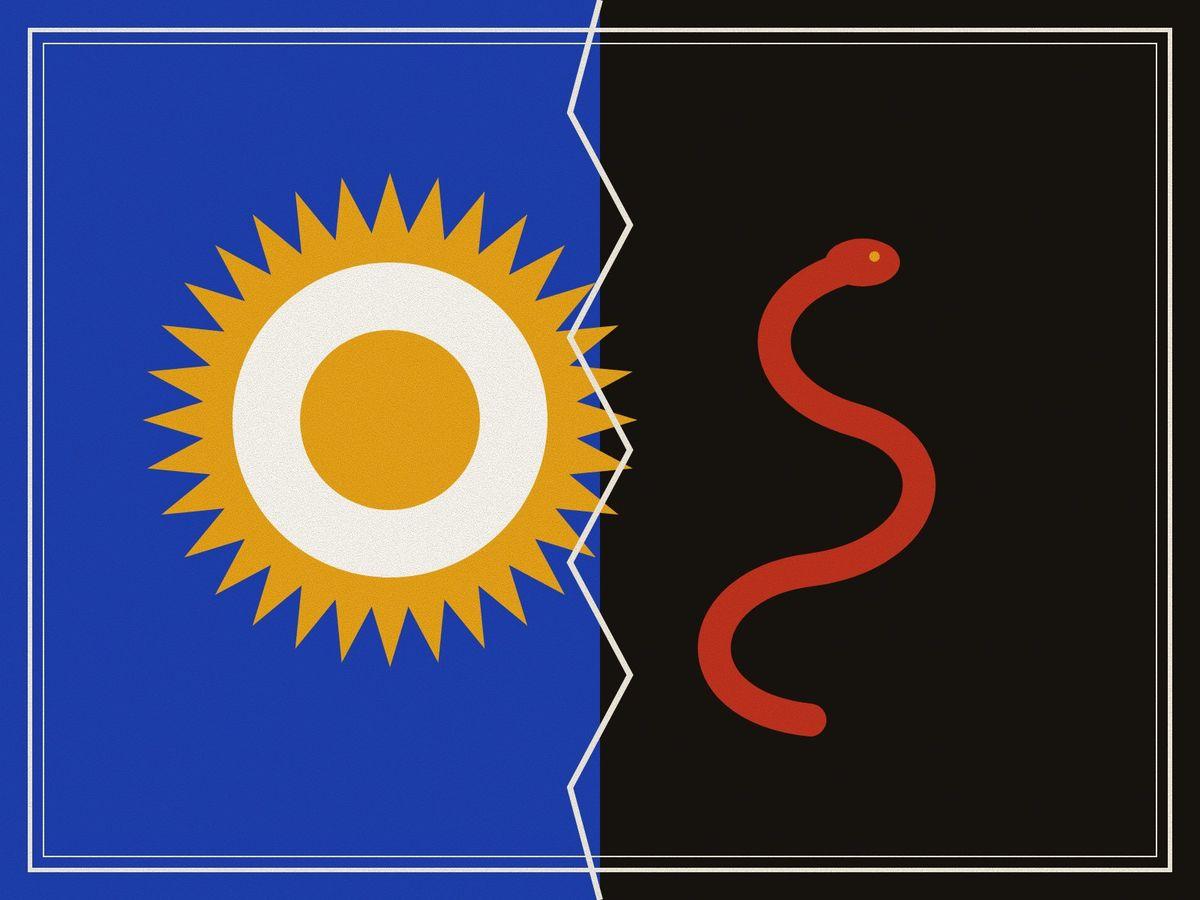
Ahura Mazda and Ahriman
The Wise Lord and the Hostile Spirit: the oldest Iranian account of a world in which every person takes a side, and the moral heart of a faith still practised today.