Arabs of Iran
عربهای ایرانIran’s Arabs live mainly in Khuzestan and along the Gulf coast. Their Arabic dialects, tribal poetry, coffee and date palms are as old in Iran as any city on the plain.
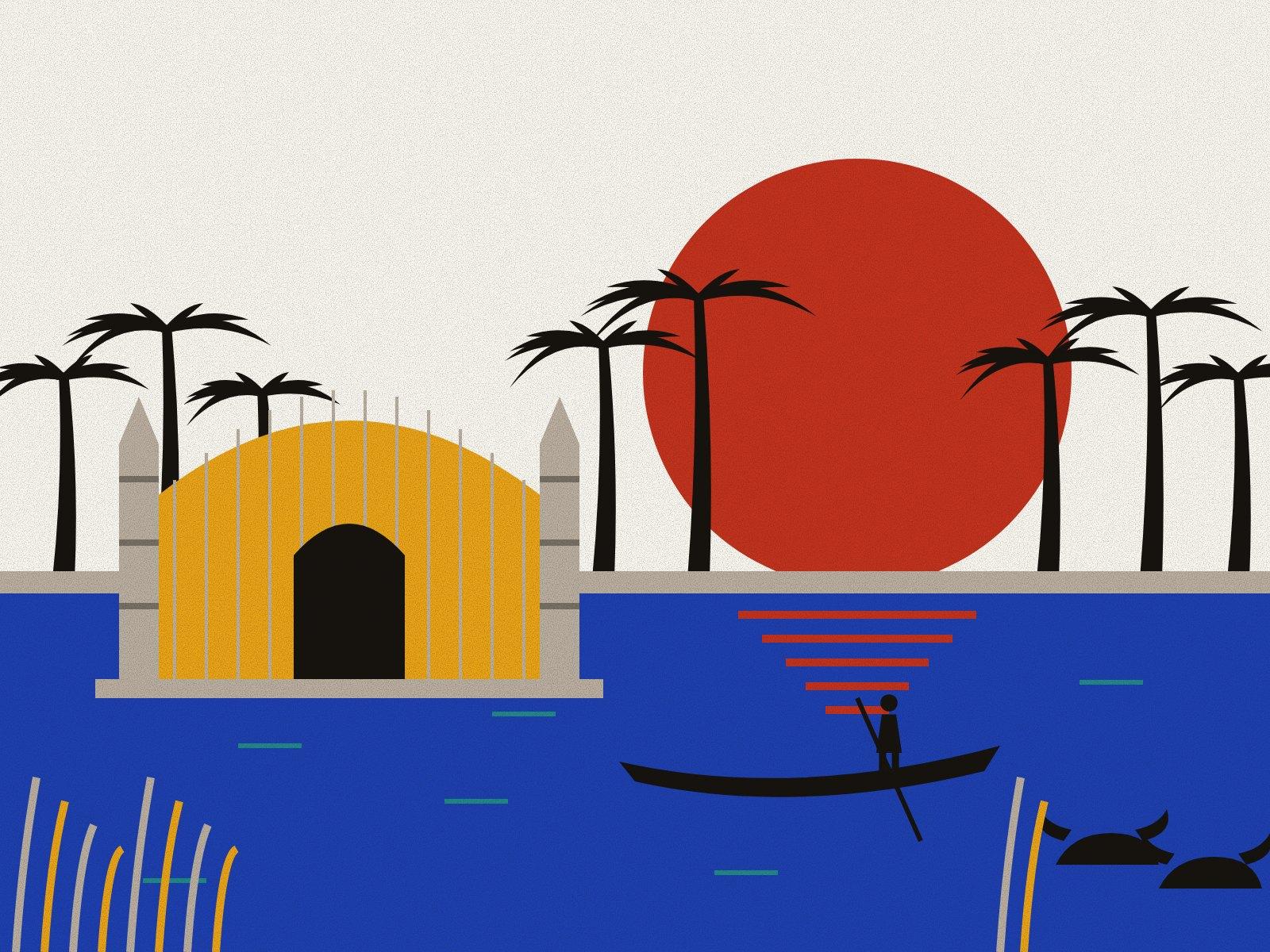
Arabic has been spoken on the Iranian side of the Gulf for as long as there are records. Iran’s Arabs, who call themselves simply ‘Arab, and in Khuzestan often Ahvazi, live mainly in the lowlands of Khuzestan, around Ahvaz, Hoveyzeh, Susangerd, Shadegan, Abadan and Khorramshahr, and in towns along the coast of Bushehr and Hormozgan. They are Iranians and Arabs at once, and most see no contradiction in that.
Two worlds
The Arabs of Khuzestan speak a dialect close to the Arabic of southern Iraq and belong to tribes such as the Bani Ka’b, Bani Turuf and Bani Tamim; most are Shia Muslims, and Ashura in Ahvaz is kept with Arabic elegies. The marshes of Hoor al-Azim, shared with Iraq’s Hawizeh marshes, still hold villages of reed houses and water buffalo. Further south, the coastal Arabs of the Gulf, including the Huwala, who moved between both shores for centuries, speak Gulf Arabic and are mainly Sunni. Their towns, like Bandar Lengeh, face Dubai and Bahrain as much as Shiraz, and Persian-speaking families from the same coast, the ‘Ajam, have long lived on the Arab shore in turn.
History
Arab tribes have lived in Khuzestan since before Islam. In the nineteenth century the Bani Ka’b sheikhs became powerful on the Shatt al-Arab, and Sheikh Khaz’al of Mohammerah, today’s Khorramshahr, ruled the region with wide autonomy until Reza Shah removed him in 1925. The discovery of oil made Khuzestan the industrial heart of Iran, and Abadan’s refinery for decades one of the largest in the world. In the war of 1980–1988 Khuzestan was the front line: Khorramshahr fell to Iraqi forces in October 1980 and was retaken in May 1982. Many Arab Iranians fought and died defending it, and many lost their homes.
What is kept
Hospitality is measured in coffee: bitter cardamom gahwa poured in small cups, refilled until the guest shakes the cup. Tribal poetry is recited and improvised, from the hosa, a rousing chant at weddings and funerals, to the abudhiya, a sad four-line song. Men wear the dishdasha and headcloth, women the ‘abaya. The kitchen is built on fish, rice and dates: Khuzestan’s palm groves along the Karun and the Arvand Rud (Shatt al-Arab) were once among the largest in the world, and the dishes of Ahvaz, from fish with tamarind to falafel and samboseh sold at night, are loved across Iran.
They are Iranians and Arabs at once, and most see no contradiction in that.
Amnesty International, Human Rights Watch and UN Special Rapporteurs have documented discrimination against Arab Iranians in education, employment and land, limits on Arabic-language schooling, and harsh responses to protests, including over water shortages in July 2021. Environmental damage, from drained marshes to dust storms, falls heavily on Khuzestan. Yet Arab Iranian culture, its poets, cooks, musicians and footballers, is as much a part of Iran as the oil fields, and far older.
Across Cultureپیوندها

Languages
Arabic in Iran
Arabic is spoken as a mother tongue in Khuzestan and along the Gulf coast, recited in every mosque, and woven so deeply into Persian that no sentence of literary Persian is free of it.

Faiths
Mandaeans of Khuzestan
On the banks of the Karun and the Tigris, the Mandaeans keep one of the last Gnostic religions, honouring John the Baptist and baptising in flowing water.
Music
Music of the south
Bagpipes, cymbals and great drums, the rhythms of bandari dance and the healing ceremonies of the *ahl-e hava*: the music of Iran’s Gulf coast carries the sea, and the Arab and African worlds across it.
More from Peoplesمردمان
Persians
Persian speakers of Iran call themselves *Fars* or simply *Irani*. They are one people among many in Iran, and their language became a shared tongue for far more than themselves.
Azerbaijanis
Iran’s Azerbaijanis, who often call themselves *Türk*, speak a Turkic language in a land named after an Iranian satrap. North of the Aras, the Republic of Azerbaijan is a separate nation that defines itself.

Kurds
Kurds live across the Zagros and Taurus in Iran, Iraq, Turkey and Syria. In Iran they speak several Kurdish languages, keep several faiths, and light Newroz fires that every Iranian knows.