Qashqai
قشقاییهاThe Qashqai are a Turkic-speaking tribal confederation of Fars, famous for one of Iran’s longest migrations, for their gabbehs and kilims, and for women’s dress of many coloured skirts.
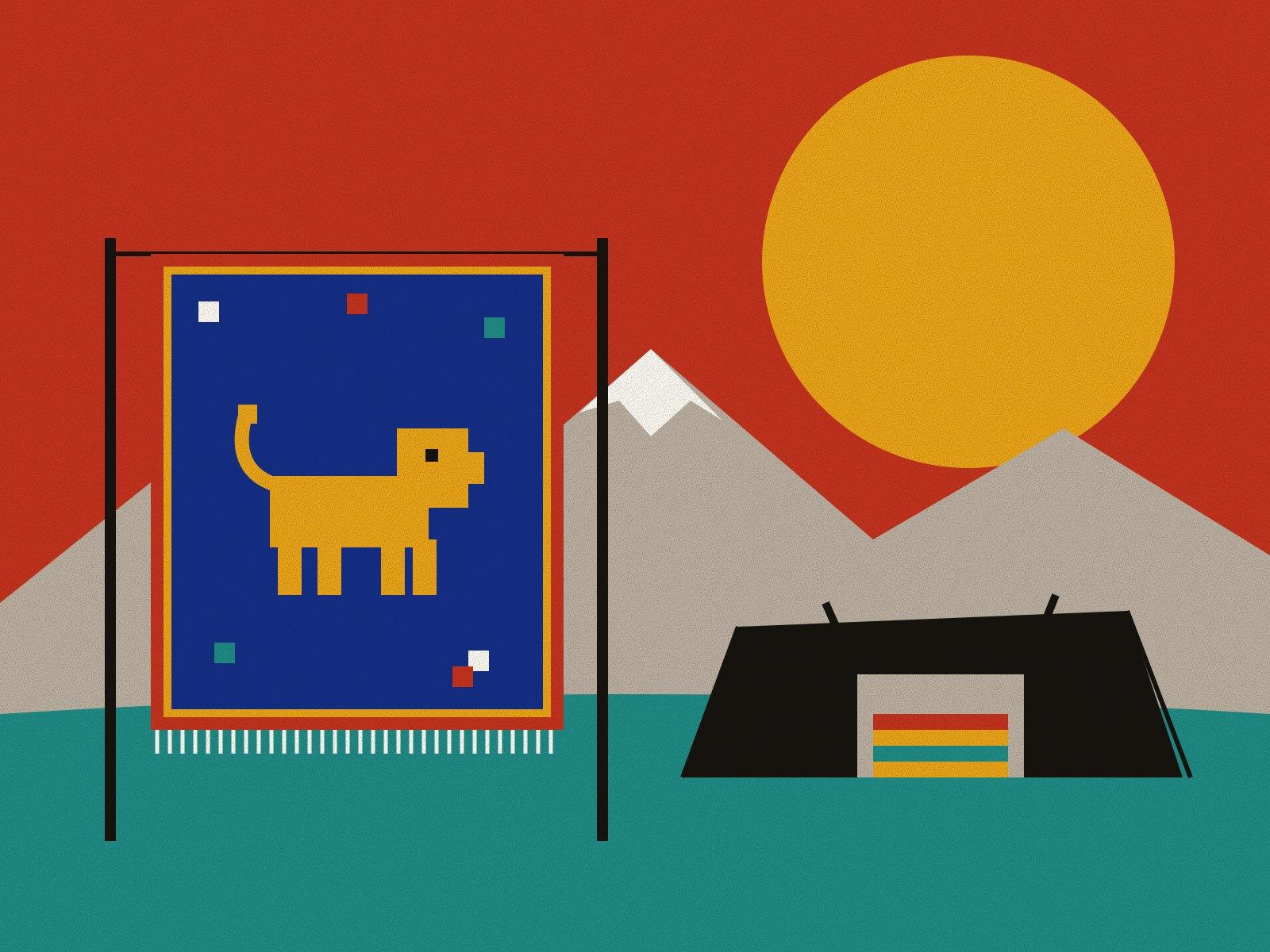
Fars is the province that gave Persian its name, and it is also home to one of Iran’s great Turkic-speaking peoples. The Qashqai, Qashqāyi, are a confederation of tribes who speak a Turkic language of the Oghuz family, close to Azerbaijani, and who move each year between winter pastures in the low country towards the Persian Gulf, around Firuzabad, Farashband and Kazerun, and summer pastures in the high Zagros around Semirom and the Dena range, hundreds of kilometres to the north. Qashqai is mostly a spoken language, and nearly all Qashqai also speak Persian.
The confederation formed in the eighteenth and early nineteenth centuries from many groups, mostly Turkic but also including Lurs, Kurds and Arabs, around the leadership of the Shahilu family; the Qajar shahs recognised its chief as ilkhan. The major tribes include the Kashkuli, Darrehshuri, Farsimadan, Amaleh and Shesh Boluki. Origins are told in different ways, and the Qashqai’s own accounts trace their arrival from the north to the Turkic migrations of the Middle Ages.
In the twentieth century
Like the Bakhtiari, the Qashqai were forced to settle under Reza Shah in the 1930s and returned to migration when he abdicated in 1941. Their khans were major regional powers; after 1953 the leading brothers of the ilkhani family went into exile and returned after the 1979 revolution. A Qashqai educator, Mohammad Bahmanbeygi, built a remarkable network of tent schools from the 1950s, training teachers from the tribes themselves so that children could learn as they migrated.
A Qashqai educator, Mohammad Bahmanbeygi, built a remarkable network of tent schools from the 1950s, training teachers from the tribes themselves so that children could learn as they migrated.
What is kept
Qashqai weaving is among the most admired in Iran. The gabbeh, a thick, loosely knotted rug with a few bold shapes on an open field, was once a humble tent rug and is now prized around the world; Qashqai kilims, saddlebags and tent bands carry geometric designs and the occasional lion. Most are woven by women on horizontal ground looms that can be taken down and carried on the migration, usually from memory rather than from a drawn design, which is why no two pieces are quite alike. Women’s dress is unmistakable: many layered skirts in bright colours, a long tunic and a light scarf held by a band, worn on the move as well as on feast days. Men wear a two-flapped felt hat, the dogushi.
Music belongs to the ashiq and to wedding bands with sorna and dohol, and Qashqai songs and dances are performed at festivals in Shiraz. Like other peoples of Iran, most Qashqai are Shia Muslims and celebrate Nowruz, often in the middle of the spring migration. Many now live in Shiraz, Firuzabad and Semirom; the migration continues for some families, in trucks and on foot, and remains the centre of how the Qashqai tell their own story.
More from Peoplesمردمان
Persians
Persian speakers of Iran call themselves *Fars* or simply *Irani*. They are one people among many in Iran, and their language became a shared tongue for far more than themselves.
Azerbaijanis
Iran’s Azerbaijanis, who often call themselves *Türk*, speak a Turkic language in a land named after an Iranian satrap. North of the Aras, the Republic of Azerbaijan is a separate nation that defines itself.

Kurds
Kurds live across the Zagros and Taurus in Iran, Iraq, Turkey and Syria. In Iran they speak several Kurdish languages, keep several faiths, and light Newroz fires that every Iranian knows.