Bidel Dehlavi
بیدل دهلوی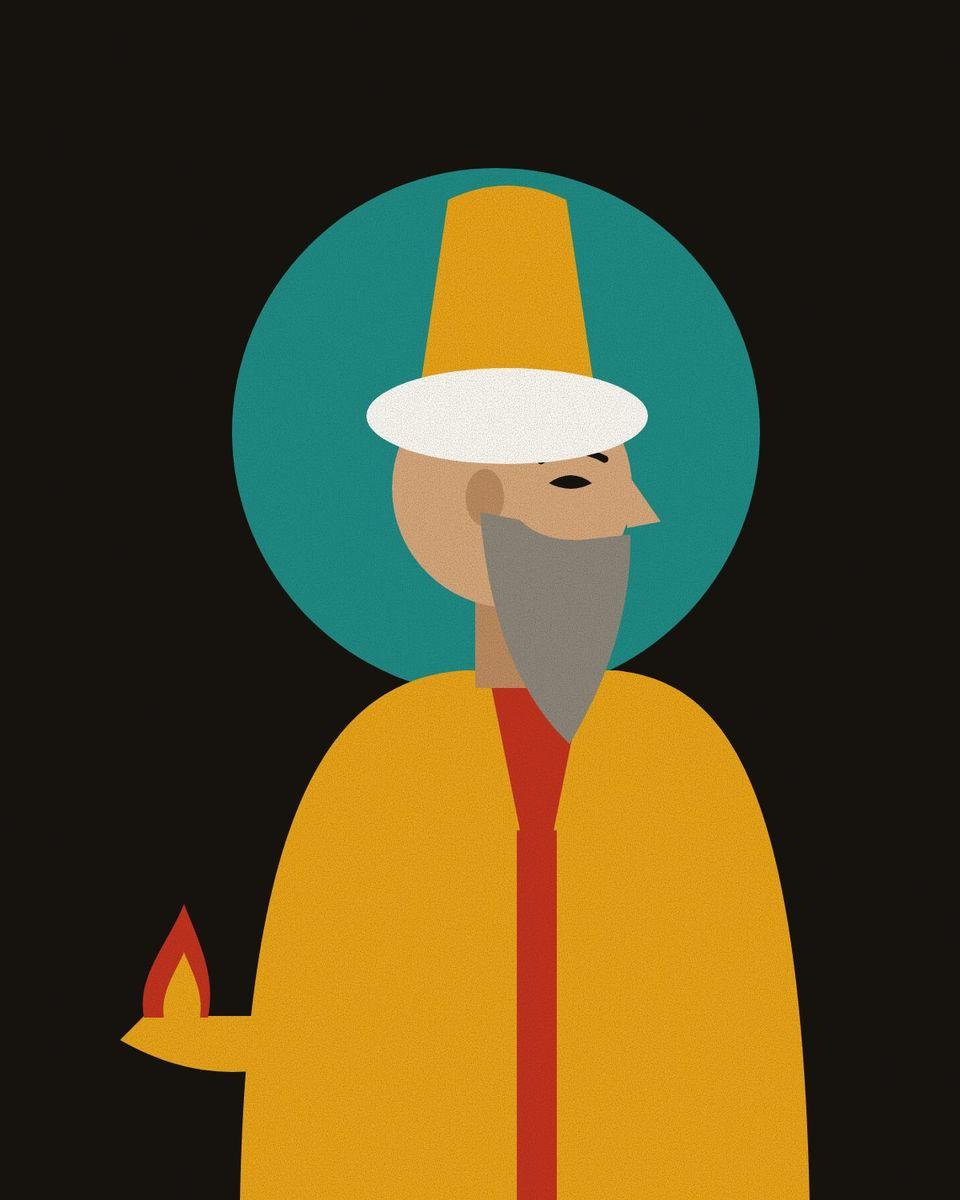
Persian poet of Mughal India, master of the late Indian style, loved above all in Afghanistan and Central Asia.
- Known for
- Ghazals in the Indian style and the Chahar Onsor
- Forms
- Ghazal, Masnavi, Prose and verse
- Collection
- The Greats
Mirza Abd al-Qader Bidel was born in 1642 in Azimabad (Patna), in eastern India, into a family of Central Asian Turkic origin. After a youth spent in Sufi circles and a short time in the service of a Mughal prince, he settled in Delhi, where he lived until his death in 1720.
Bidel is the best-known poet of the late Indian style and among the most difficult. His ghazals build long chains of abstract images, of mirrors, colour, breath and bewilderment, and his prose works include the Chahar Onsor (The Four Elements), part memoir and part meditation. Long less read in Iran, he has been loved for generations in Afghanistan and Central Asia, where circles still meet to read his poetry.
Booksکتابها
The principal works of Bidel Dehlavi.
The Divan of Bidel
دیوان بیدلBidel's ghazals, numbering in the thousands, form the heart of his Kolliyat, or collected works. Dense, abstract and full of paradox, they are the high point of the Indian style and are still read and sung in Afghanistan and Tajikistan.
Read 3 poemsThe Four Elements (Chahar Onsor)
چهار عنصرA work of rhythmic prose mixed with verse, in four parts named after the four elements, in which Bidel recalls his youth, the Sufis he met and his own spiritual experiences, alongside reflections on the nature of the world.
Knowledge (Erfan)
عرفانBidel's longest masnavi, a philosophical and mystical poem on creation, the soul and knowledge, with many inset stories.
Poems by Bidel Dehlaviشعرها
In the original Persian, beside an English translation.
آیینه بر خاک زد صنع یکتا
تا وانمودند کیفیت ما
The one Maker struck the mirror against the dust
so that what we are might be shown.
The Maker Struck the Mirror on the Dust
بی نشان بود این چمن گر وسعتی میداشت دل
رنگ می بیرون نشست از بس که مینا تنگ بود
Had the heart held any breadth, this meadow would have left no trace;
the wine’s colour seeped outside because the flask was so narrow.
The Narrow Flask
ای خیال قامتت آه ضعیفان را عصا
بر رخت نظاره ها را لغزش از جوش صفا
O you, the thought of whose stature is a staff for the sighs of the weak,
before whose face our gazes slip on the gloss of its purity;
The Thought of Your Stature
Bidel Dehlavi in Iranian history
Iranian historyThe Safavidsصفویان
The Safavids made Twelver Shia Islam Iran's state religion and rebuilt Isfahan as one of the most admired cities in the world.