The Shahnameh atlas · The heroic age
Zabulistan
زابلستانThe homeland of Zal and Rostam, traditionally placed in Sistan
- Traditionally placed here · Sistan and Baluchestan in the Atlas
- Zal, Rostam, Sam, Esfandiyar, Siyavash, Simorgh, Rakhsh
In the Shahnameh, Zabulistan, often paired with Sistan and Nimruz, is the hereditary land of Sam, Zal and Rostam. It is almost a second kingdom inside Iran: its lords serve the shah but are not his servants, and the poem returns there between wars as if coming home. Rostam is born and raised there, and he in turn raises the prince Siyavash there, away from his father's court.
Rostam and Esfandiyar
The most tragic episode set in Zabulistan is the last great battle of Rostam's life. King Goshtasp sends his son Esfandiyar, the champion of Zoroaster's faith, to bring Rostam to court in chains, promising him the throne in return. Esfandiyar camps by the Hirmand, the Helmand river. Rostam begs him to accept hospitality instead of bonds; Esfandiyar refuses, and they fight. Wounded, Rostam goes home and Zal burns the Simorgh's feather. The bird heals Rostam and Rakhsh and shows Rostam a tamarisk branch, to be shaped into a double-pointed arrow and aimed at Esfandiyar's eyes. Rostam wins, and knows that whoever kills Esfandiyar will be cursed.
Rostam begs him to accept hospitality instead of bonds; Esfandiyar refuses, and they fight.
Historically, Zabulistan was the name of a region in what is now eastern Afghanistan, around Ghazni, and Afghanistan's Zabul province still bears it. The epic's Zabulistan merges with Sistan in the lower Helmand basin, and that is where tradition locates it. The Iranian city of Zabol, near the Afghan border, took its name from the epic land in the twentieth century. It is a dry, windswept country today, suffering from the shrinking of the Hamun wetlands, but its people speak of Rostam as one of their own.
In Mythologyاسطوره

The Simorgh
The great bird who raised an abandoned prince in her nest, delivered Rostam into the world, and later became Persian poetry's image of the divine.
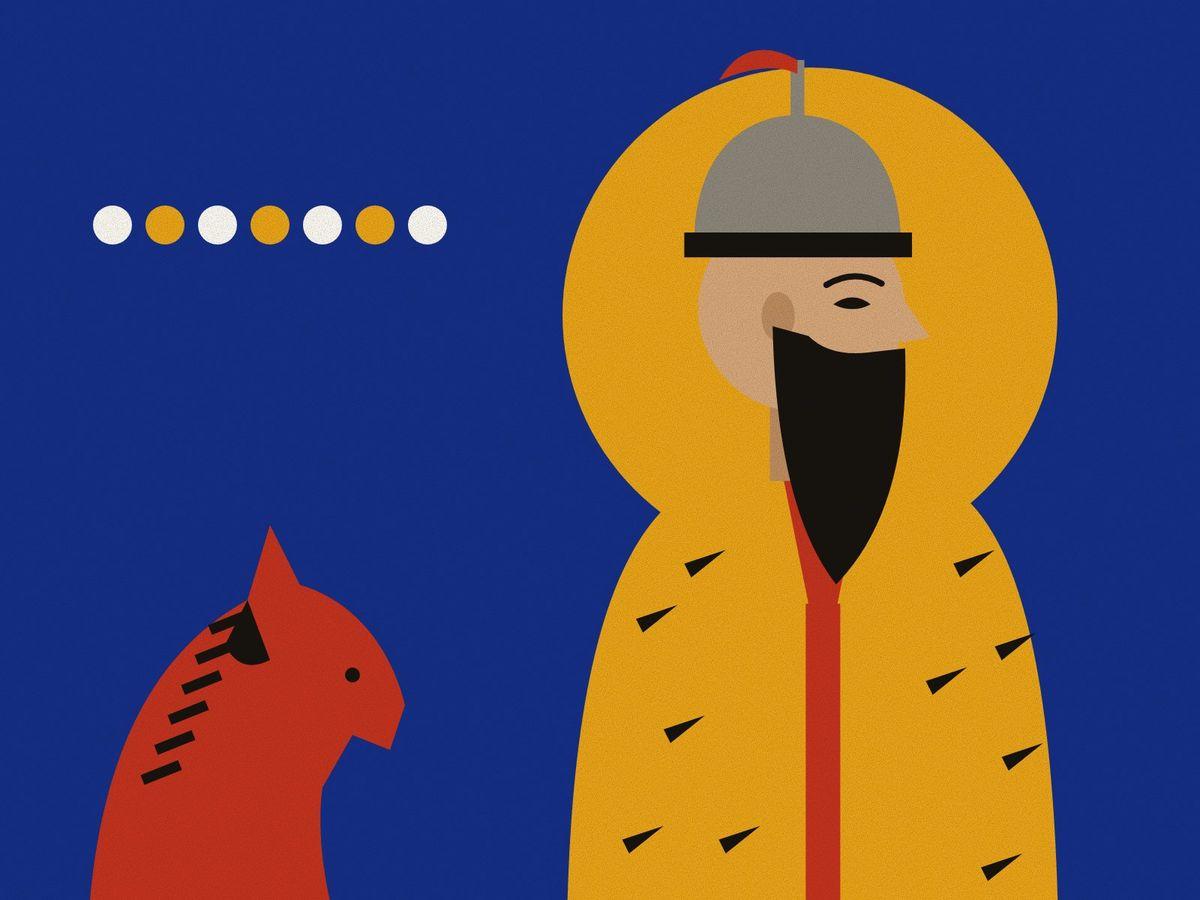
Rostam, Rakhsh and the seven labours
Iran's greatest hero and his matchless horse take the short, deadly road to rescue a foolish king: a lion, a desert, a dragon, a witch and the White Div.
More from the heroic ageشاهنامه
Mount Alborzالبرز کوه
On the heights of the Alborz the Simorgh raises Zal, the white-haired child his father abandoned. The poem's Alborz is a mountain at the edge of the world, traditionally identified with the range north of Tehran.
Kabulکابل
Kabul frames the life of Rostam. His mother Rudabeh is a princess of Kabul, and it is in the hunting grounds of a later king of Kabul that Rostam is betrayed and killed.
Kuh-e Khwajaکوه خواجه
A flat-topped black hill rising from the Hamun wetlands, crowned with the ruins of a Parthian and Sasanian palace that local people call Rostam's castle. It is the closest thing Rostam has to a home on the map.
Amol and Arash's shotآمل
Amol appears in the Shahnameh as a seat of the early kings. The highlands around it, the old Tabaristan, are where medieval writers set the story of Arash the archer, whose arrow fixed the border between Iran and Turan.