The Shahnameh atlas · The heroic age
Kabul
کابلRudabeh's city, and the place where Rostam meets his end
- A real place the poem names · Kabul in the Atlas
- Zal, Rudabeh, Mehrab, Rostam, Shaghad, Rakhsh
Kabul enters the Shahnameh with a love story. Zal, now a young prince of Zabulistan, visits Mehrab, the king of Kabul, and hears of his daughter Rudabeh. She hears of him. Her maids arrange a meeting, and in the poem's best-known image Rudabeh lets down her long hair from the palace roof for Zal to climb. He kisses it and uses his lasso instead. The match is opposed at first, because Mehrab descends from Zahhak, and King Manuchehr threatens war on Kabul, but the astrologers foresee a great hero from the marriage and it goes ahead. Their son is Rostam.
Shaghad's pit
Kabul also ends Rostam's story. His half-brother Shaghad, raised at the Kabul court, conspires with its king, who resents paying tribute to Zabulistan. They dig pits in the royal hunting ground and line them with spears and swords, covering them with earth. Rostam and Rakhsh ride out to hunt. Rakhsh smells the fresh earth and balks, and Rostam, for once, strikes his horse. Rakhsh leaps forward and falls into a pit, and Rostam with him. Dying, Rostam asks Shaghad for his strung bow, and when his brother hides behind a tree, he shoots an arrow through the trunk and pins him to it.
Rakhsh smells the fresh earth and balks, and Rostam, for once, strikes his horse.
Kabul is real and very old. It was a crossroads of Buddhist, Hindu and Iranian cultures long before Islam, and became the capital of Afghanistan in the late eighteenth century. Persian, as Dari, is still the city's common language, and the Shahnameh is read and recited there as one of Afghanistan's own classics. The Shahnameh's Kabul is a court, a hunting ground and a landscape rather than a mapped city, but readers on both sides of the border have always pictured it here.
In Mythologyاسطوره
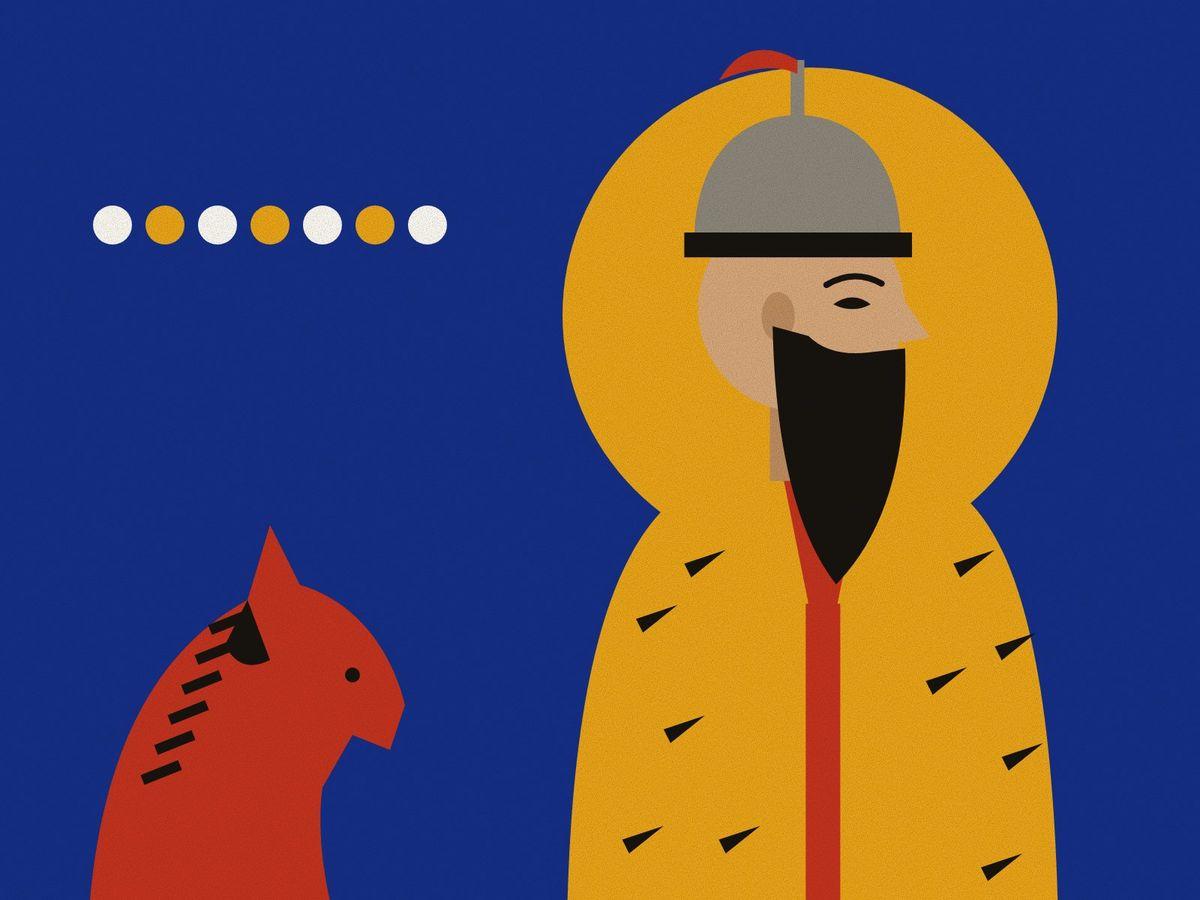
Rostam, Rakhsh and the seven labours
Iran's greatest hero and his matchless horse take the short, deadly road to rescue a foolish king: a lion, a desert, a dragon, a witch and the White Div.
More from the heroic ageشاهنامه
Mount Alborzالبرز کوه
On the heights of the Alborz the Simorgh raises Zal, the white-haired child his father abandoned. The poem's Alborz is a mountain at the edge of the world, traditionally identified with the range north of Tehran.
Zabulistanزابلستان
Zabulistan is the realm of the house of Sam: the court where Zal rules, Rostam is raised, and Esfandiyar comes to put Rostam in chains. Tradition places it in Sistan, around today's Zabol.
Kuh-e Khwajaکوه خواجه
A flat-topped black hill rising from the Hamun wetlands, crowned with the ruins of a Parthian and Sasanian palace that local people call Rostam's castle. It is the closest thing Rostam has to a home on the map.
Amol and Arash's shotآمل
Amol appears in the Shahnameh as a seat of the early kings. The highlands around it, the old Tabaristan, are where medieval writers set the story of Arash the archer, whose arrow fixed the border between Iran and Turan.