The Shahnameh atlas · The heroic age · The reign of Kay Kavus
Kay Kavus and the song of Mazandaran
کاووس و سرود مازندرانA demon's song lures Kay Kavus into Mazandaran, where he is struck blind
Kay Kavus inherits a world that serves him: thrones, torques, emerald crowns, Arab horses. One day he sits drinking in a garden palace, on a golden throne with crystal feet, when a div (demon) disguised as a minstrel comes to the chamberlain. He is a fine singer from Mazandaran, he says, and asks to play for the king. He is seated among the musicians, tunes his barbat (lute), and sings of his home.
In Mazandaran, he sings, the gardens are always in flower and the mountains covered in tulips and hyacinths. The air is neither hot nor cold, and it is always spring. Nightingales sing, deer pace the valleys, the streams run like rose-water, and in every month of the year the ground is full of tulips. The country is rich in brocade and gold, its servants wear golden crowns, and its nobles golden belts.
Kavus decides at once to take it. They have been too fond of feasting, he tells his champions; he surpasses Jamshid, Zahhak and Kay Qobad in fortune and must surpass them in deeds. They turn pale. Tus, Gudarz, Giv and the rest say they are his servants, then meet in secret. Jamshid, who commanded divs and birds, never went near Mazandaran, nor did Fereydun or Manuchehr. They send a fast rider to Zal in Nimruz.
Zal's warning
Zal comes and speaks carefully. Manuchehr, Zav, Nozar and Kay Qobad, with all their armies, never marched on Mazandaran. It is the house of sorcerous divs, bound with spells; it cannot be taken by the sword, bought with gold or won by cunning. Do not plant a tree, he says, whose fruit will be curses. Kavus answers that he has more men, more heart and more gold than any of them, and that Zal should stay with Rostam and guard Iran. Zal gives way: Kavus is king, and they are his servants. He wishes that Kavus may never have cause to remember his advice, and rides home.
Kavus leaves Milad in charge of Iran and marches. He sets up his throne before Mount Asperuz and sends Giv ahead with two thousand men to burn and kill. Giv spares no one, women, children or old men, and finds a city like paradise, full of gold and servants. For a week the Iranians plunder. Whoever said Mazandaran was paradise, Kavus exclaims, was right.
The king of Mazandaran sends the div Sanjeh to the White Div. That night a cloud comes over the Iranian camp. The White Div spreads a tent of smoke and pitch above it, and at dawn Kavus and two-thirds of his army are blind. Their treasure is taken, and twelve thousand divs guard them on rations just large enough to keep them alive. On the eighth day the White Div mocks the king: a tree that bears no fruit, who wanted Mazandaran for his pasture and now has what he asked for.
The air is neither hot nor cold, and it is always spring.
Kavus sends a messenger to Zal: he did not listen to Zal's counsel, and his own lack of wisdom has brought this on him. Zal tells Rostam that God raised him for this day. There are two roads: the long one Kavus took, and a short one of fourteen stages, full of divs, lions and darkness. Take the short one, Zal says, and see wonders. Rostam answers that no one walks into hell by choice, but he is girded already: count him gone. He puts on his coat of tiger-skin (babr-e bayan). Rudabeh weeps, and Rostam tells her he did not choose this road; it is what fate has given him.
From the poemاز شاهنامه
Ferdowsi's words, with the English of Arthur and Edmond Warner's translation (1905–1925).
که مازندران شهر ما یاد باد
همیشه بر و بومش آباد باد
"Mazandaran, my native land !
May I forget it never,
And may its fields and fells abide
As populous as ever,
هوا خوشگوار و زمین پرنگار
نه گرم و نه سرد و همیشه بهار
"The landscape is fulfilled with charm,
The atmosphere is pleasant,
And there is neither heat nor cold,
But spring is ever present.
یکی خیمه زد بر سر او دود و قیر
سیه شد جهان چشمها خیره خیر
The White Div spread
Above their heads a tent of pitchy smoke,
Air dusked and eyes were darkened.
In Mythologyاسطوره
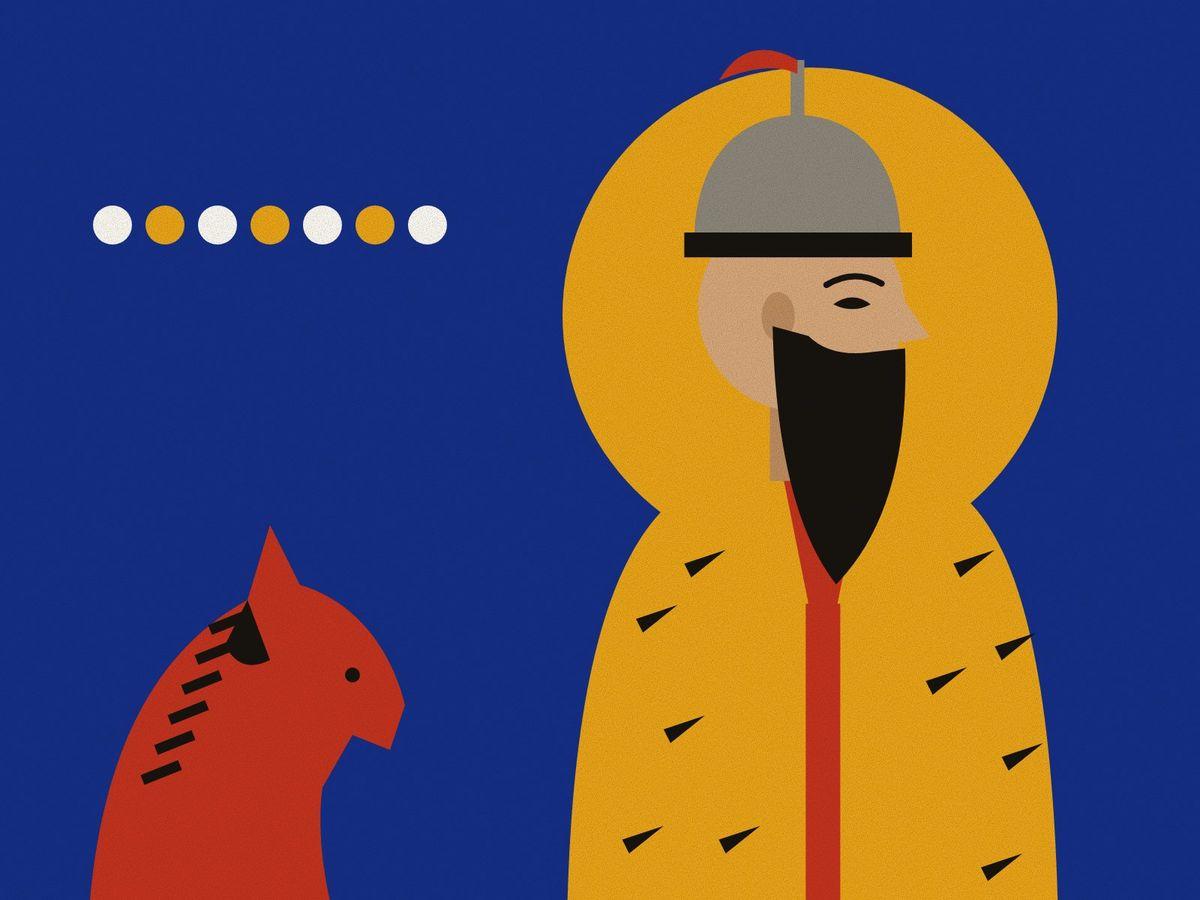
Rostam, Rakhsh and the seven labours
Iran's greatest hero and his matchless horse take the short, deadly road to rescue a foolish king: a lion, a desert, a dragon, a witch and the White Div.