The Shahnameh atlas · The heroic age · The reign of Manuchehr
Zal and the Simorgh
زال و سیمرغA white-haired baby is left on a mountain, and a great bird raises him
Sam, the great champion of King Manuchehr, has no son. When at last one of his wives gives birth, the child is as bright as the sun, with no flaw in him but one: all his hair is white. For a week the women dare not tell Sam. Then the baby's nurse goes to him boldly and gives him the news, white hair and all.
Sam goes behind the curtain, sees an old man's head on a newborn body, and despairs. He prays to be forgiven whatever sin has earned this, and then asks the question that decides everything: what will he say when the nobles ask him what this child of a div (demon) is? He orders the baby carried far from the land and left on a mountain where the Simorgh, the great bird, has her home.
Ferdowsi pauses to set the beasts against the man. Even a lion, he says, tells its cub that it would give it its heart's blood and ask no thanks. The child lies on the hot rock, naked, with the dust for a nurse and the sun overhead. The Simorgh, hunting for her hungry young, sees him, swoops, and carries him to her nest on Alborz for them to eat. But God takes pity on him. The bird and her chicks look at the weeping child and are filled with love. She brings him the tenderest prey, and he drinks blood in place of milk.
Even a lion, he says, tells its cub that it would give it its heart's blood and ask no thanks.
The father's dreams
Years pass. The boy grows into a man like a cypress, and word of him spreads. Sam dreams that a rider from India brings him news of his son. His mobeds (priests and counsellors) give him no comfort: lions and leopards, fish and crocodiles all cherish their young, they say, and he threw his away. A second dream is harsher. A man rebukes him: if a bird will do as the boy's nurse, what use is a champion for a father? And if white hair is a blemish, Sam's own beard has turned as white as a willow.
Sam rides to the mountain. Its peak is among the Pleiades, and on it stands a nest like a palace, propped on ebony, sandalwood and aloe, with no path up to it. He lays his face on the ground and prays: if this youth is truly his son, and not of Ahriman's seed, let him reach him.
The Simorgh tells the young man that his father has come for him. He does not want to go. 'Your nest is my shining throne,' he tells her, 'and your two wings are my crown.' She answers that he should try the world and its crowns, and gives him one of her feathers: if he is ever in trouble he is to burn it, and she will come at once. Then she carries him down to Sam, his hair reaching to his chest. Sam weeps, bows to the bird, and swears never again to harden his heart against his son.
King Manuchehr receives them, his astrologers foretell a famous champion, and Sam is confirmed in rule over Zabolestan, Kabul and the lands to the Indus. When Sam rides off to war he leaves the young man in charge. Zal protests that he was born guilty, and that he has only just been given back to his father; must they part again? Sam goes anyway, and Zal sits on the ivory throne, gathering mobeds, astrologers and warriors around him until he shines like a star. The poem calls him both Zal and Dastan, and the Simorgh's feather will be burned more than once.
From the poemاز شاهنامه
Ferdowsi's words, with the English of Arthur and Edmond Warner's translation (1905–1925).
فرود آمد از ابر سیمرغ و چنگ
بزد برگرفتش از آن گرم سنگ
But swooped down from the clouds and with her talons
Took up the infant from the heated rocks,
نشیم تو رخشنده گاه من است
دو پرّ تو فرّ کلاه من است
Thy nest is unto me a shining throne,
Thy pinions are my glorious diadem,
بر آتش برافگن یکی پرّ من
ببینی هم اندر زمان فرّ من
Then burn the feather and behold my might,
In Mythologyاسطوره
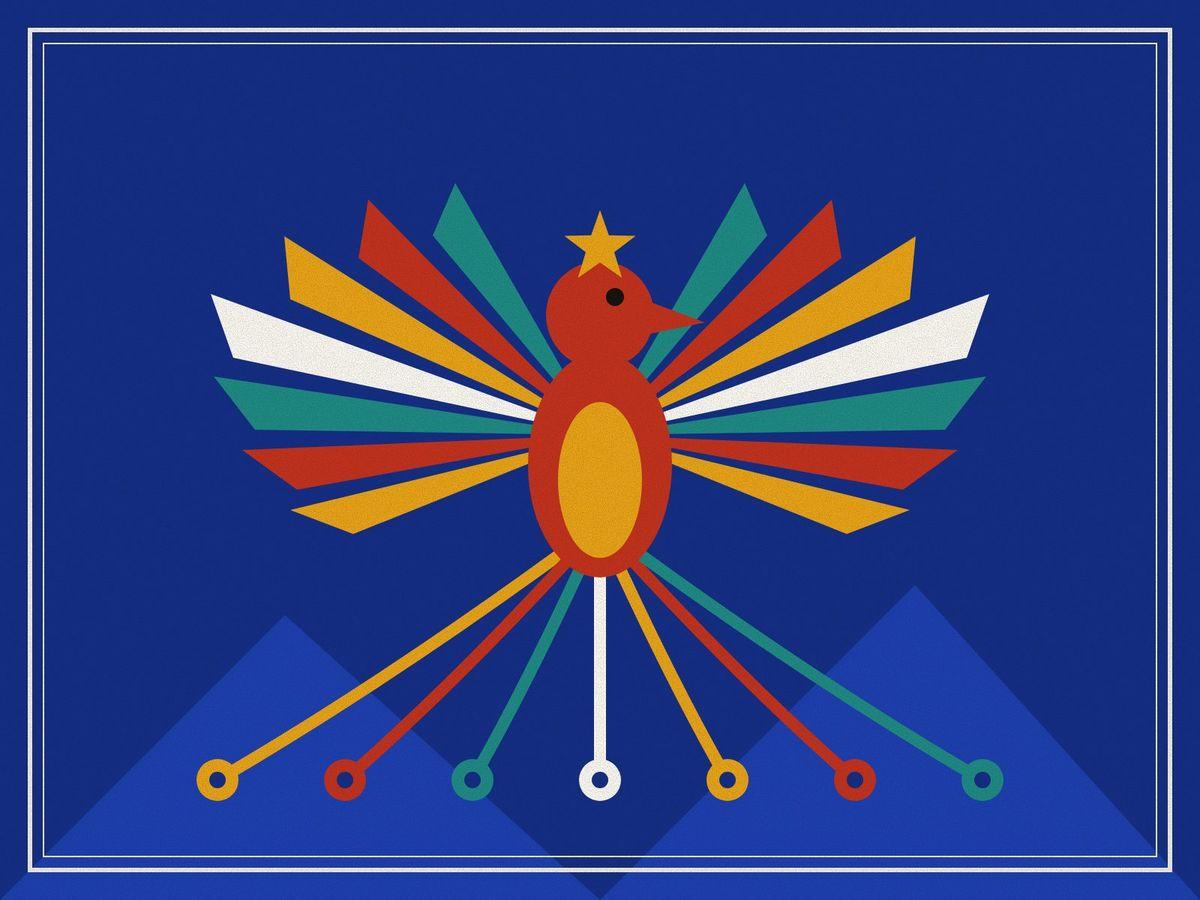
The Simorgh
The great bird who raised an abandoned prince in her nest, delivered Rostam into the world, and later became Persian poetry's image of the divine.