The Shahnameh atlas · The heroic age · The reign of Kay Kavus
Rostam avenges Siyavash
کینخواهی رستمRostam kills Sudabeh and carries the war of vengeance deep into Turan
Word reaches Kay Kavus that the lord of Turan has cut off Siyavash's head as if he were a bird. The Shah tears his clothes and falls from his throne into the dust, and Tus, Gudarz, Giv and the other heroes dress in black and blue and throw dust on their heads. In Zabolestan Rostam faints at the news, and Zal claws his cheeks. After a week of mourning Rostam gathers troops from Kashmir and Kabul. On the way to court he tears his robes and swears by God never to take off his armour or wash the dust from his head until he has had his revenge.
He comes before Kavus with dust on his head and does not spare him. The king has sown a bad nature, he says, and its seed has come to fruit. His love for Sudabeh has taken the crown from his head. Siyavash was lost through a woman's words, and for a leader of men a shroud is better than doing a woman's bidding. Kavus, ashamed, says nothing and weeps. Rostam goes straight to the women's quarters, drags Sudabeh out by her hair and cuts her in two with his dagger, and Kavus does not stir from his throne.
Kavus, ashamed, says nothing and weeps.
The war of vengeance
A week later Rostam calls the heroes together. He would rub his face and eyes in the golden basin where Gorui poured out Siyavash's blood, he says, if it would ease his grief. Let them turn the earth into a Jayhun of blood. The army marches under the banner of Kaveh, with Rostam's son Faramarz in the vanguard.
At the border Faramarz kills Varazad, king of Sepijab: "the first head of vengeance", he calls it. Then he unhorses Afrasiab's son Sorkheh and brings him in bound. Sorkheh pleads that he was Siyavash's friend and has wept for him every day, and Tus is moved, but Rostam answers that Afrasiab should feel the pain that Kavus feels. Zavareh takes the basin and the dagger, and Sorkheh is killed as Siyavash was killed.
Afrasiab comes in grief and fury to avenge his son. In the battle Rostam spears the young champion Pilsam from his saddle and throws his body down before the Turanian ranks. Then he meets Afrasiab himself, spears his horse and has him on the ground, but Human strikes Rostam on the shoulder with a mace, and while Rostam looks round the king escapes.
Afrasiab flees towards the sea of Chin, and Rostam sits on his throne, shares out the treasures of Turan, and gives Tus, Gudarz and Fariborz lands and crowns there. When Zavareh comes upon Siyavash's old hunting ground, his grief stirs Rostam to fresh destruction, until the country from Turan to Saqlab (the land of the Slavs) and Rum lies in ruins. At last the nobles remind him that six years have passed without one happy day, and that old Kavus sits on his throne without a guide. Rostam goes home. Afrasiab returns to a burned land and raids Iran in revenge, and for seven years no rain falls.
From the poemاز شاهنامه
Ferdowsi's words, with the English of Arthur and Edmond Warner's translation (1905–1925).
بدو گفت خوی بد ای شهریار
پراگندی و تخمت آمد ببار
The noxious weeds that thou hast sown, O king!
Are fruiting now!
به خنجر به دو نیم کردش به راه
نجنبید بر جای کاووس شاه
Asunder with his dagger in the street
While Shah Kaus sat passive on his throne;
ز دلها همه ترس بیرون کنید
زمین را ز خون رود جیحون کنید
Banish all dismay,
And make the earth run like Jihun with blood.
In Mythologyاسطوره
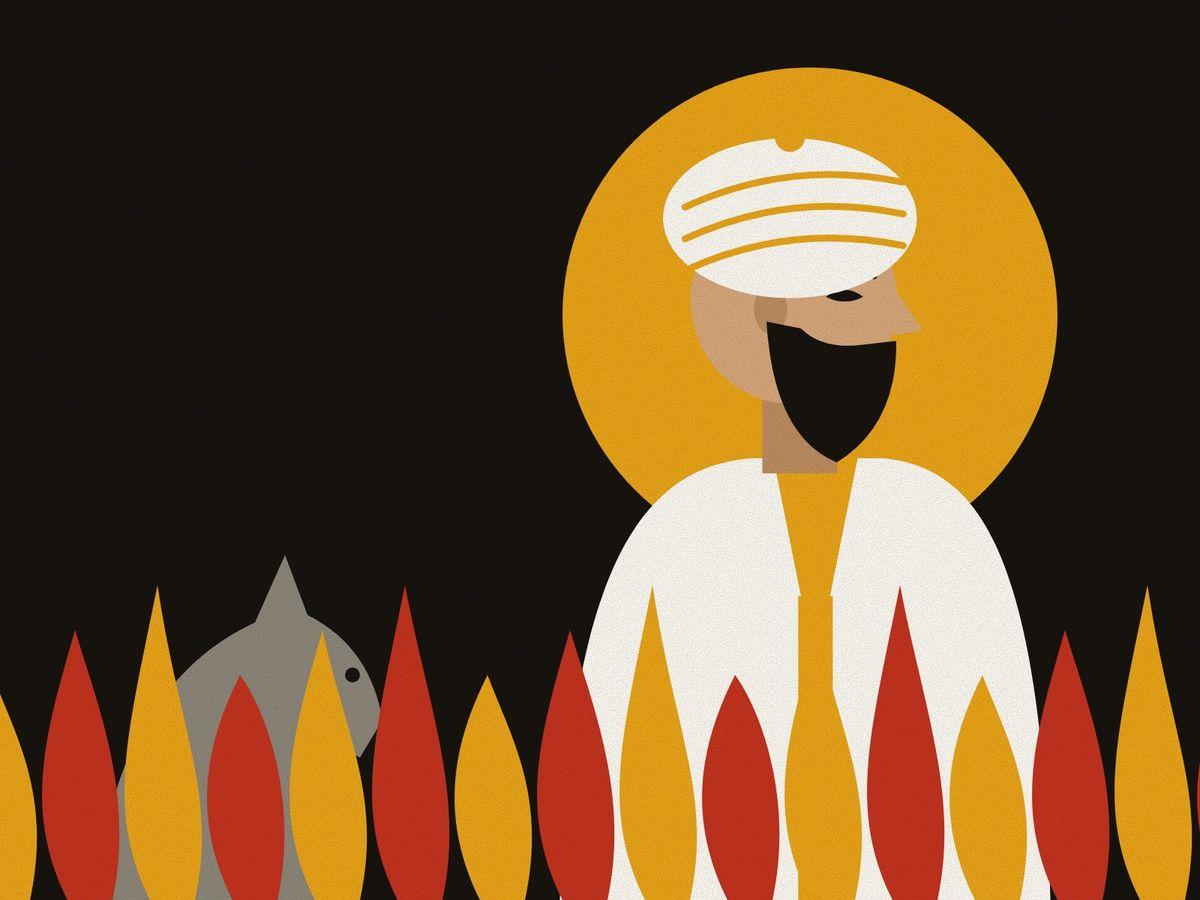
Siyavash and the trial by fire
The innocent prince who rode through fire to prove his honour, kept his word at the cost of his life, and was mourned for centuries in Central Asia.