The Shahnameh atlas · The heroic age · The reign of Goshtasp
Rostam and Esfandiyar
رستم و اسفندیارTwo heroes who admire each other fight because a king wants one of them dead
Esfandiyar comes home from the Brazen Hold and asks for the crown he has been promised again and again. Goshtasp has asked Jamasp about his son's stars and learned that Esfandiyar will die in Zabolestan, at Rostam's hand. So he sets one more task: go to Sistan, bind Rostam, and bring him to court on foot. Esfandiyar objects. Rostam has served every king since Manuchehr, and to bind him is wrong. Goshtasp answers that a covenant made with kings who strayed from God's way, like Kay Kavus, counts for nothing. Katayun begs her son not to go. He goes, with his sons and his brother Pashutan. When the leading camel lies down at a fork in the road, he has its head cut off so that the bad omen falls on the camel, and camps by the Hirmand.
He sends his son Bahman to Rostam with a message: come in chains of your own accord, and I will plead for you with the king. Bahman finds Rostam hunting, a roasted wild ass in front of him, and rolls a boulder down the hill to kill him. Rostam kicks it away with his heel. He will come to Esfandiyar unarmed, open his treasuries to him and ride with him to the king to ask why he deserves chains. But no one has ever seen chains on his feet.
On the bank of the Hirmand
The two meet by the river and take to each other at once. Rostam says Esfandiyar's face reminds him of Siyavash; Esfandiyar says Rostam reminds him of Zarir. Esfandiyar asks for the chains, promising to free him before nightfall and to put the world in his hands when he is king. Rostam asks him home as his guest. Neither will give way, and the warmth goes. Esfandiyar does not call Rostam to his meal; Rostam comes anyway, refuses the seat on the prince's left, and is given a golden chair. They trade insults about each other's ancestors, grip hands until the nails bleed, drink, and agree to fight in the morning.
They fight alone. Lances shatter, then swords, then maces, and they wrestle by the belt without shifting each other. Meanwhile Zavareh brings up the Zabol men, and in the fighting Esfandiyar's sons Nushazar and Mehrnush are killed by Zavareh and by Rostam's son Faramarz. Rostam swears he never ordered it and offers to hand both over in chains. Esfandiyar refuses: he will not spill a snake's blood to avenge a peacock. He takes up his bow. His arrows pierce Rostam's armour and wound Rakhsh, but Rostam's arrows do nothing to the man the poem calls ruyin-tan, brazen-bodied. Bleeding, Rostam climbs a hill, asks for a truce until morning, and Esfandiyar grants it.
The tamarisk arrow
At home Zal burns one of the Simorgh's feathers. The bird comes, draws four arrowheads from Rostam and six from Rakhsh, and heals them with her feather. She reminds Rostam that Esfandiyar killed her mate, and warns him: whoever sheds Esfandiyar's blood will be hounded by fate in this world and the next. If he will first try once more for peace, she will show him a way. She leads him to the shore of a sea and to a tamarisk; he cuts a straight branch, straightens it in fire, fits an old arrowhead, and she tells him to aim at Esfandiyar's eyes.
In the morning Rostam pleads once more, offering treasure and his own service on the road to the king; anything but chains. Esfandiyar answers only: chains first. Rostam asks God not to punish him for what he is about to do, and shoots. The arrow strikes Esfandiyar in the eyes and he falls from his horse. Dying, he forgives Rostam. Not Rostam nor the Simorgh nor the bow has killed him, he says, but his father. He gives his son Bahman to Rostam to raise, and Zavareh warns that the boy will one day want revenge. Rostam sends the body home in an iron coffin. Pashutan and Esfandiyar's sisters accuse Goshtasp to his face, and for a year, the poem says, there was mourning in every quarter of Iran.
Not Rostam nor the Simorgh nor the bow has killed him, he says, but his father.
From the poemاز شاهنامه
Ferdowsi's words, with the English of Arthur and Edmond Warner's translation (1905–1925).
نبیند مرا زنده با بند کس
که روشن روانم برینست و بس
No one shall see me bound while I survive:
My life on that.
بزد تیر بر چشم اسفندیار
سیه شد جهان پیش آن نامدار
He struck Asfandiyar full in the eyes,
And all the world grew dark before that chief;
بهانه تو بودی پدر بد زمان
نه رستم نه سیمرغ و تیر و کمان
Not Rustam or Simurgh or bow and arrow
Have robbed my body of its life in battle,
For that hath been the doing of Gushtasp,
In Mythologyاسطوره
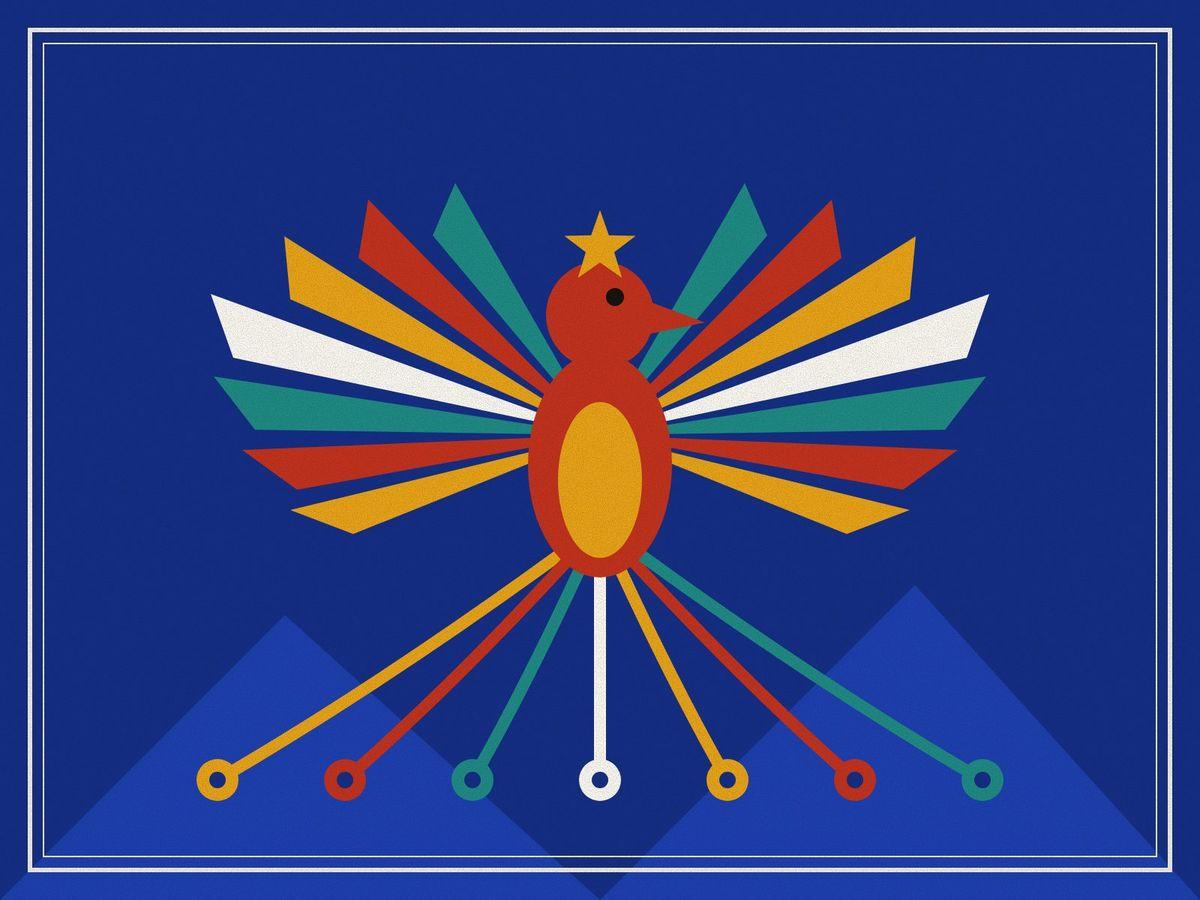
The Simorgh
The great bird who raised an abandoned prince in her nest, delivered Rostam into the world, and later became Persian poetry's image of the divine.