The Shahnameh atlas · The mythical age · The reign of Zahhak
Fereydun binds Zahhak in Damavand
بند کردن ضحاک در دماوندFereydun swims the Tigris, takes the serpent king's palace and chains him in a mountain
Fereydun sets out on the day of Khordad under good stars, his brothers Kianush and Purmayeh riding beside him, the army's provisions loaded on elephants and buffaloes. He travels stage by stage, his head full of vengeance and his heart full of justice, until he reaches the Arvand. If you do not know the old tongue, Ferdowsi adds, call it by its Arabic name, the Dejla: the Tigris.
He asks the river guards for boats. The guard refuses: the king has ordered that not even a gnat may cross without a pass and a proper seal. Fereydun, angry and unafraid of the deep water, girds himself, mounts his rose-coloured horse and rides into the river. His companions follow, their horses swimming saddle-deep, until they come out on dry land. They turn towards Beyt al-Moqaddas, the city that in the old tongue was called Kang Dezhhukht, where Zahhak's palace stands.
From a mile away Fereydun sees the palace, rising higher than Saturn as if it would touch the stars. Whoever built such a thing, he tells his men, may have some secret of the world on his side; better to strike at once. He rides in with his mace raised, and the guards flee. He throws down the talisman Zahhak raised to the sky, kills the sorcerers and divs (demons) in the hall and sits on the tyrant's throne. Then he brings Shahrnaz and Arnavaz out of the women's quarters and has them washed clean of Zahhak's teaching. They tell him Zahhak has gone to India to shed the blood of the innocent and bathe in it, hoping to cheat the prophecy.
Zahhak's steward Kondrow comes in, finds a new king on the throne, bows, and lays on a feast at his command. Then he rides to his master. Three men have come with an army, he reports, and the youngest has a mace like a lump of mountain; he sits on your throne. 'A guest,' says Zahhak. 'Let him enjoy himself.' 'A guest with an ox-headed mace,' Kondrow answers, 'who sits with your wives?' Zahhak curses him and turns for home.
He comes by a back way with an army of divs, but the city rises against him. People throw bricks from the walls and stones from the roofs, and a cry goes up from the fire temple: we would take a wild beast as king before this serpent-shouldered one. Zahhak covers himself in iron so no one will know him, climbs the palace by a lasso and sees Shahrnaz beside Fereydun. Mad with jealousy, he drops into the hall with a dagger. Fereydun strikes him with the ox-headed mace and breaks his helmet.
The mountain
Then the angel Sorush arrives in haste. 'Do not strike,' he says. 'His time has not come. Bind him and take him to a place where two mountains close in.' Fereydun ties him with a lasso of lion's hide, tells the people to go back to their own work, and leaves the city with the captive tied across a camel. At Shirkhan, among the mountains, he means to throw Zahhak down headlong, but Sorush comes again and tells him to take the prisoner on to Damavand.
There Fereydun finds a narrow place, a cave whose bottom cannot be seen. He drives in heavy nails, not where they would reach the brain, and fixes Zahhak's hands to the rock, so that he will hang there in long torment, his heart's blood dripping to the ground. Zahhak's name turns to dust, and the world is cleansed of him. The poem leaves him there, alive. Zoroastrian books say he will break free at the end of time; the Shahnameh says only that he is bound.
The poem leaves him there, alive.
From the poemاز شاهنامه
Ferdowsi's words, with the English of Arthur and Edmond Warner's translation (1905–1925).
سرش تیز شد کینه و جنگ را
به آب اندر افگند گلرنگ را
Plunged with his rose-red charger in the flood,
بیآمد سروش خجسته دمان
مزن گفت کاو را نیامد زمان
"Strike not," cried blest Surush, who hurried thither,
"His time hath not yet come,
بیآورد ضحاک را چون نوند
به کوه دماوند کردش به بند
He bore Zahhak as one that rideth post
And fettered him upon Mount Damawand;
In Mythologyاسطوره
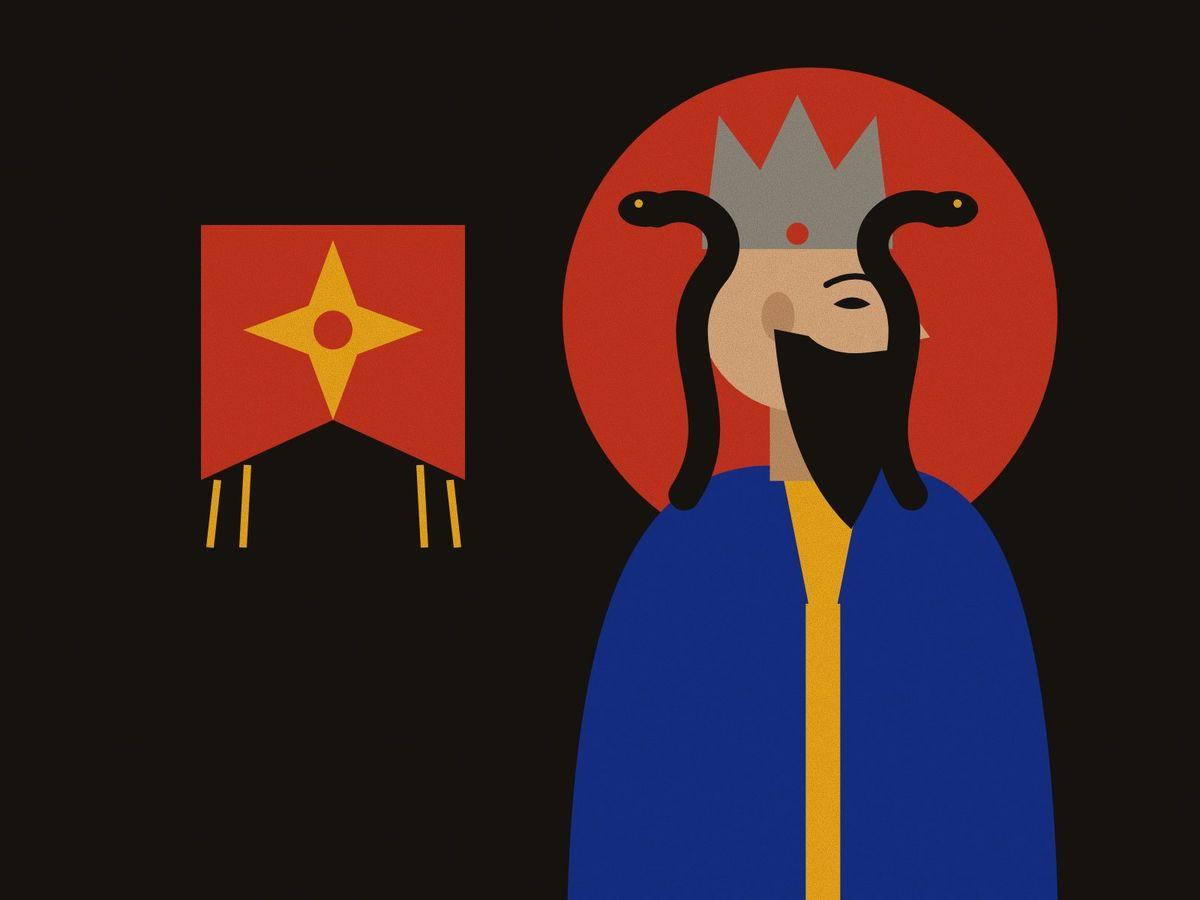
Zahhak and Kaveh the blacksmith
A king with serpents growing from his shoulders, and the blacksmith who raised his leather apron on a spear and brought him down.
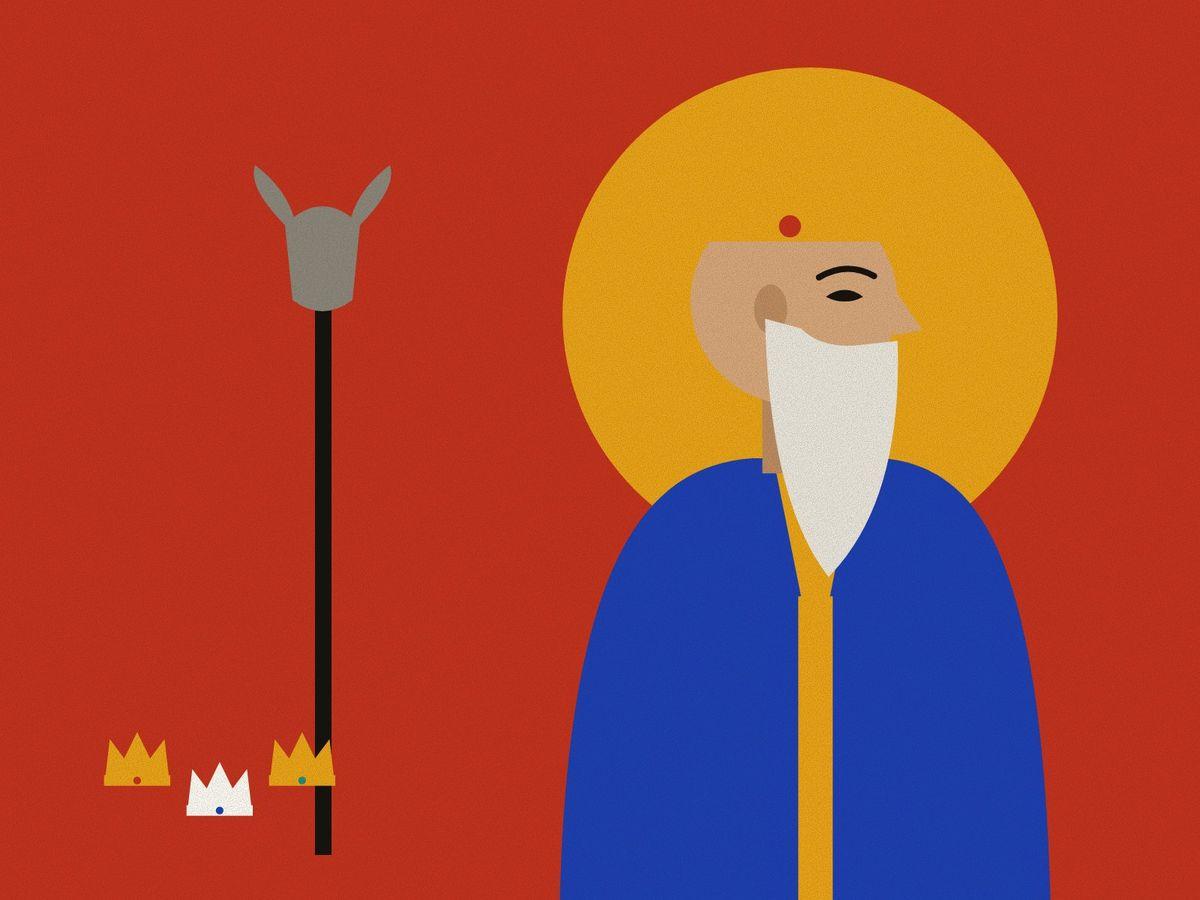
Fereydun and his three sons
The king who freed Iran from Zahhak divided the world between his sons, and in doing so, Ferdowsi says, began the long feud between Iran and Turan.