The Shahnameh atlas · The mythical age
Tamisheh
تمیشهFereydun's seat on the Caspian shore, where a Sasanian wall still runs
- A real place the poem names · Golestan in the Atlas
- Fereydun, Iraj, Salm, Tur, Manuchehr
Having freed the world from Zahhak, Fereydun settles down to rule. The Shahnameh says he went from Amol to Tamisheh and made his seat in its famous woods, adding that people called the place Kus. The poem gives Fereydun's long and just reign a home here, on the edge of the Caspian forests. It is in that reign that the quarrel between his sons Salm, Tur and Iraj begins, the quarrel that sets Iran and Turan against each other for the rest of the epic.
Tamisheh was a real place. Medieval geographers knew it as a town on the border between Tabaristan and Gorgan, at the point where the Alborz forests come down almost to the Caspian. That narrow passage made it a natural barrier, and in the Sasanian period a defensive wall was built here, running from the mountains towards the sea, alongside the much longer Wall of Gorgan to the east.
Its name, kept in the wall and in the verses of the poem, still marks the spot where the mythical age of the Shahnameh draws to a close.
The place today
The Tammisheh wall can still be traced west of the village of Sarkalateh, between Bandar Gaz and Kordkuy in Golestan province; its northern end now lies under the waters of the Caspian. Archaeologists from Iran and Britain surveyed it alongside the Gorgan wall in the 2000s. The town of Tamisheh itself has vanished. Its name, kept in the wall and in the verses of the poem, still marks the spot where the mythical age of the Shahnameh draws to a close.
In Mythologyاسطوره
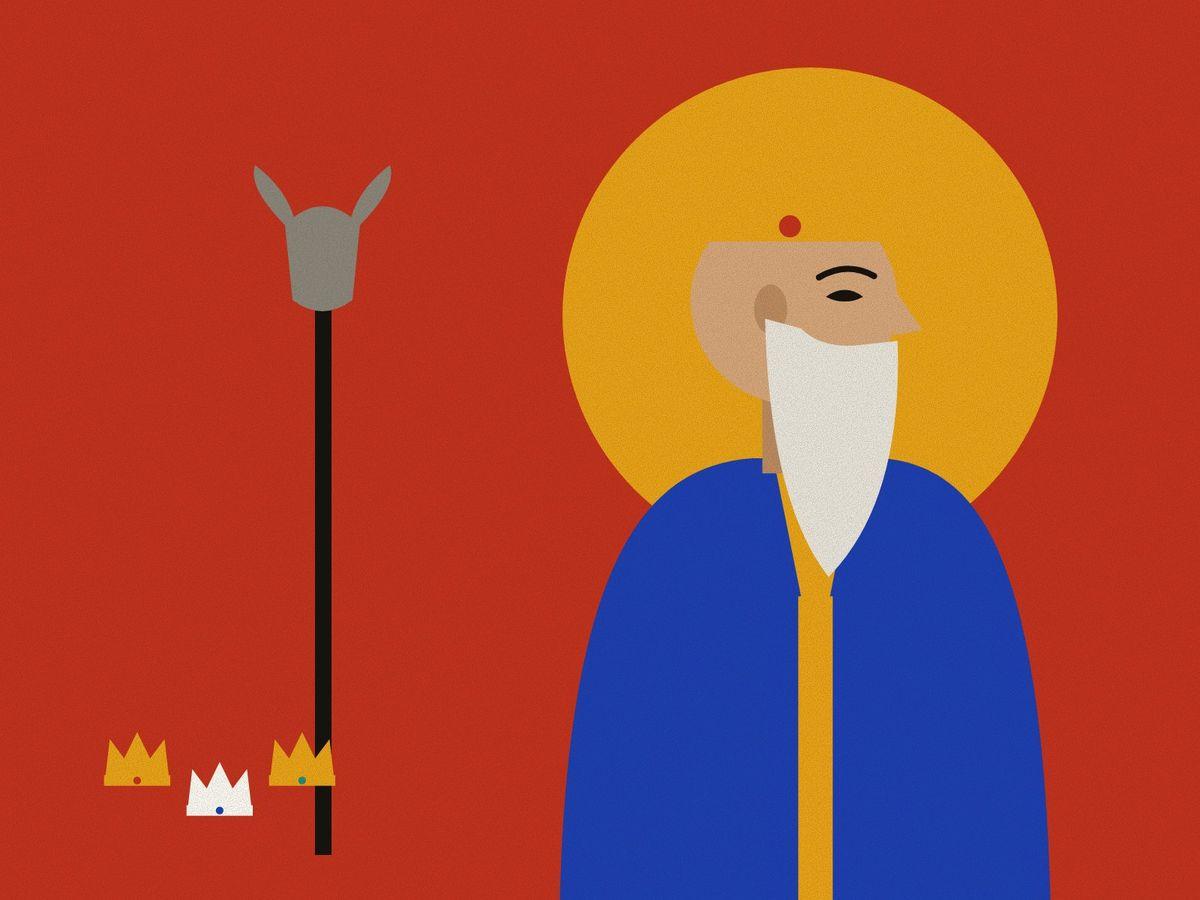
Fereydun and his three sons
The king who freed Iran from Zahhak divided the world between his sons, and in doing so, Ferdowsi says, began the long feud between Iran and Turan.
More from the mythical ageشاهنامه
Takht-e Jamshid (Persepolis)تخت جمشید
Persian tradition gave the ruins of Persepolis to Jamshid, the radiant king of the Shahnameh's golden age. The poem never names the site; the connection was made by the people who lived beside it.
The Arvand (Tigris)اروند
On his way to overthrow Zahhak, Fereydun reaches the Arvand, which Ferdowsi explains is the river the Arabs call the Dejla, the Tigris. When the ferryman refuses him, he rides straight into the water.
Kang Dezhhukhtکنگ دژهوخت
Zahhak rules the world from a palace city that the poem calls Kang Dezhhukht, adding that in Ferdowsi's own day it was known as Beyt al-Moqaddas, Jerusalem. Here Fereydun frees Jamshid's daughters and confronts the tyrant.
Mount Damavandکوه دماوند
Iran's highest mountain is the prison of the serpent-shouldered tyrant Zahhak. Fereydun chains him in a cave inside it, and folk tradition still hears him in the mountain's rumbles.