The Shahnameh atlas · The mythical age
The Arvand (Tigris)
اروندThe river Fereydun crossed on horseback; the point is approximate
- A real place the poem names · Mesopotamia in the Atlas
- Fereydun, Kaveh
After Kaveh the blacksmith raises his leather banner, Fereydun marches against Zahhak. In the Shahnameh his road leads west to a great river, the Arvand. Ferdowsi pauses to gloss the name for his readers: if you do not know the old tongue, he says in effect, call the Arvand by its Arabic name, the Dejla, which is the Tigris. It is one of the moments where the poet ties the mythical age to a map his audience knew.
Fereydun asks the river guard for boats. The guard answers that the king has ordered that no one may cross without a sealed pass. Fereydun does not argue. He tightens his belt, urges his horse into the flood, and his companions follow, the horses swimming neck-deep until they reach the far bank. Beyond the river lies the city where Zahhak keeps his palace.
Fereydun does not argue.
The river today
The Tigris rises in the mountains of eastern Anatolia and flows through Mosul and Baghdad before joining the Euphrates in southern Iraq. The poem does not say where along its course Fereydun crossed, so the point here is placed near Baghdad only as a marker. In modern Iran, the name Arvand Rud is used for the Shatt al-Arab, the joint channel of the Tigris and Euphrates that forms part of the border between Iran and Iraq. Ferdowsi's Arvand is the Tigris itself, the river of Ctesiphon, which reappears in the historical age of the poem as the river of the Sasanian capital.
In Mythologyاسطوره
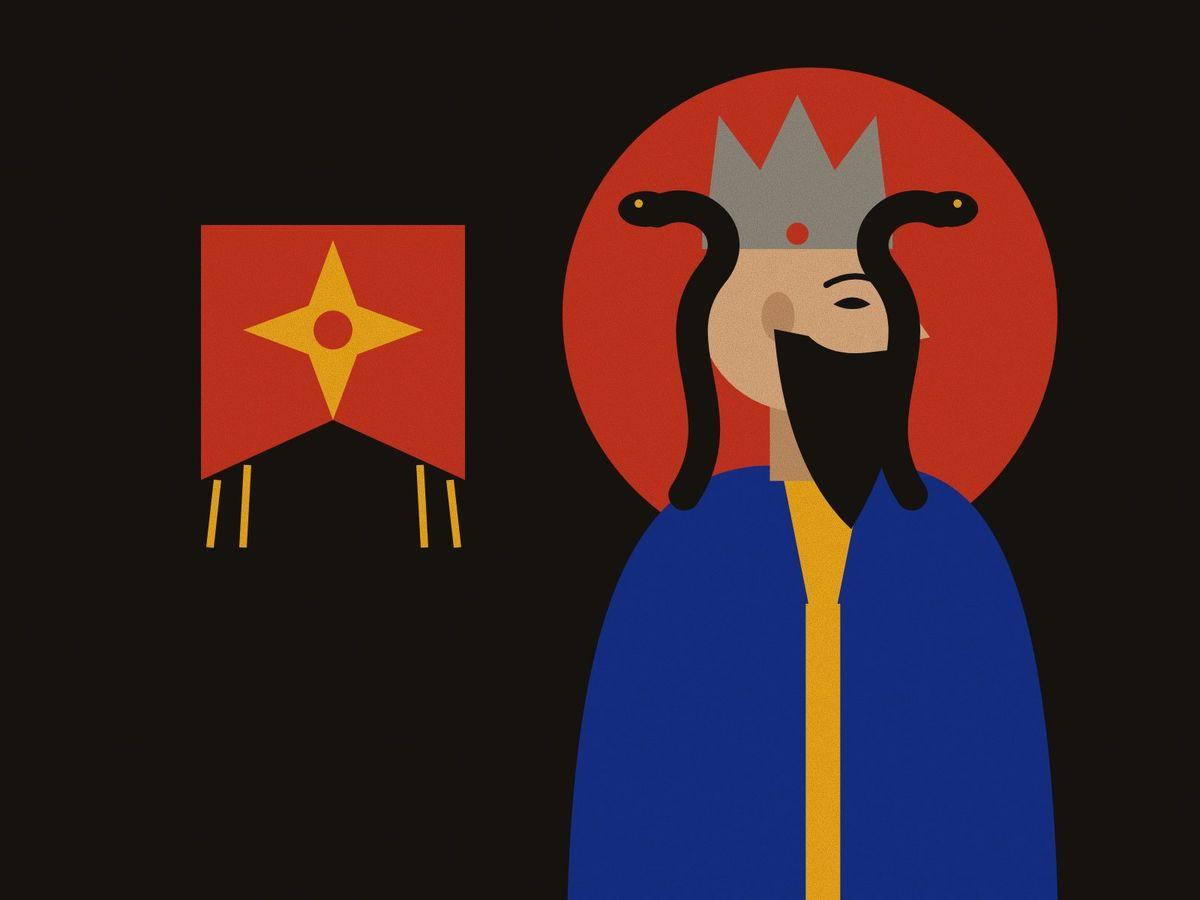
Zahhak and Kaveh the blacksmith
A king with serpents growing from his shoulders, and the blacksmith who raised his leather apron on a spear and brought him down.
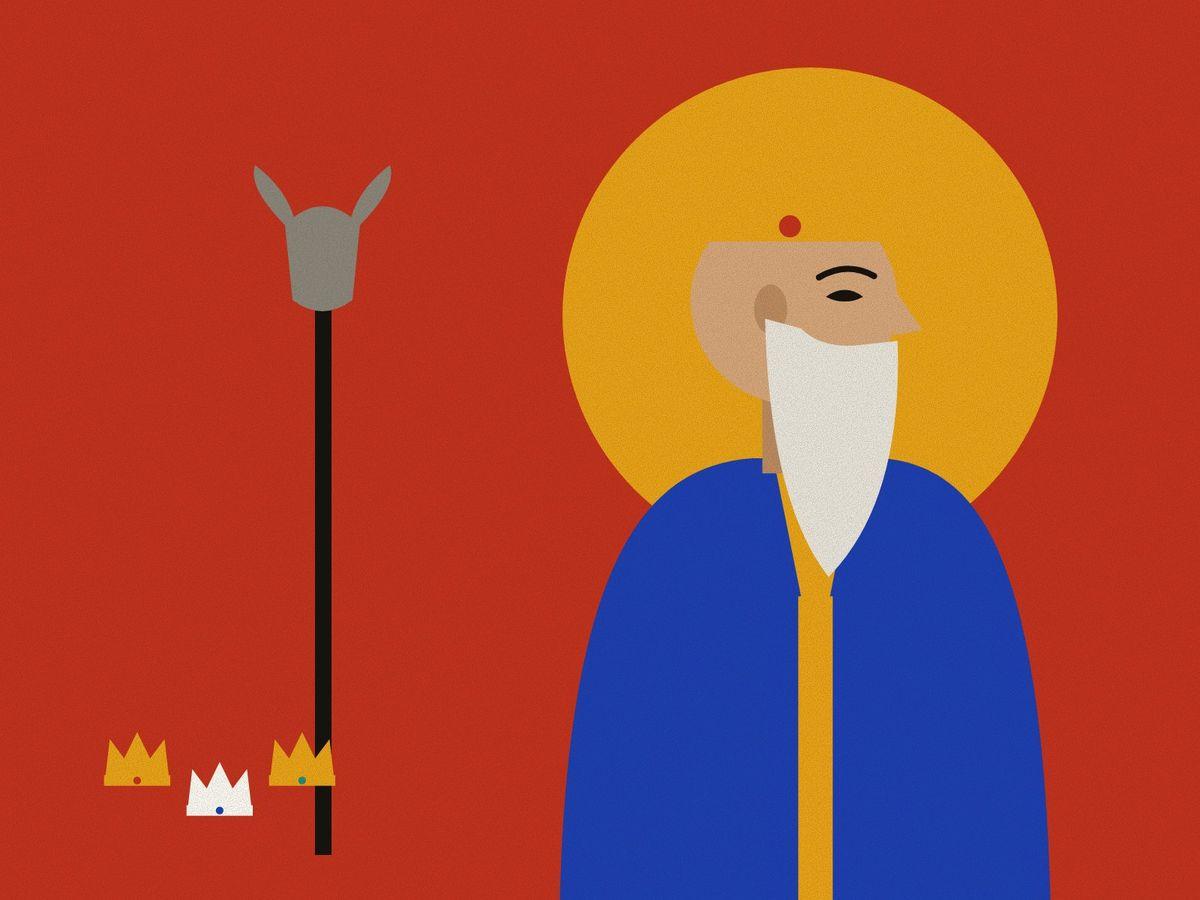
Fereydun and his three sons
The king who freed Iran from Zahhak divided the world between his sons, and in doing so, Ferdowsi says, began the long feud between Iran and Turan.
More from the mythical ageشاهنامه
Takht-e Jamshid (Persepolis)تخت جمشید
Persian tradition gave the ruins of Persepolis to Jamshid, the radiant king of the Shahnameh's golden age. The poem never names the site; the connection was made by the people who lived beside it.
Kang Dezhhukhtکنگ دژهوخت
Zahhak rules the world from a palace city that the poem calls Kang Dezhhukht, adding that in Ferdowsi's own day it was known as Beyt al-Moqaddas, Jerusalem. Here Fereydun frees Jamshid's daughters and confronts the tyrant.
Mount Damavandکوه دماوند
Iran's highest mountain is the prison of the serpent-shouldered tyrant Zahhak. Fereydun chains him in a cave inside it, and folk tradition still hears him in the mountain's rumbles.
Tamishehتمیشه
After his victory, Fereydun moves his court from Amol to Tamisheh, at the eastern end of the Caspian forests. The name survives in a long Sasanian defensive wall near the coast of Golestan.