The Shahnameh atlas · The mythical age
Mount Damavand
کوه دماوندThe volcano where Zahhak is chained until the end of time
- Traditionally placed here · Mazandaran in the Atlas
- Zahhak, Fereydun, Sorush
In the Shahnameh, Fereydun leads the captive Zahhak away from his palace. The poem has him first ready to kill the tyrant on the road, until the angel Sorush tells him to go on to Damavand. There, in a deep cave in the mountain, Zahhak is bound with heavy nails driven into the rock, his hands fixed so that he cannot move. He is not killed. Evil in this story is contained, not destroyed, and it hangs in the dark until the end of time.
Zoroastrian books in Middle Persian tell a related story of the dragon Azhi Dahaka chained on the same mountain, who will break free at the end of the world before being finally overcome. The Shahnameh keeps the image of the chained tyrant and leaves the ending open. Later tellings of the archer Arash also set his famous shot on Damavand, which shows how the mountain gathered stories to itself.
Evil in this story is contained, not destroyed, and it hangs in the dark until the end of time.
The mountain today
Damavand is a dormant volcano in the Alborz, about 60 kilometres north-east of Tehran, rising to about 5,610 metres. It is the highest peak in Iran and the highest volcano in Asia, and on clear days its snow cap can be seen from the capital. Near the summit, fumaroles still breathe out sulphurous gas, and local people have long joked that it is Zahhak's breath, or that the rumbles are the tyrant straining at his chains. Climbers reach the top by the southern route from the village of Polur every summer, and the mountain has been registered by Iran as a national natural monument.
In Mythologyاسطوره
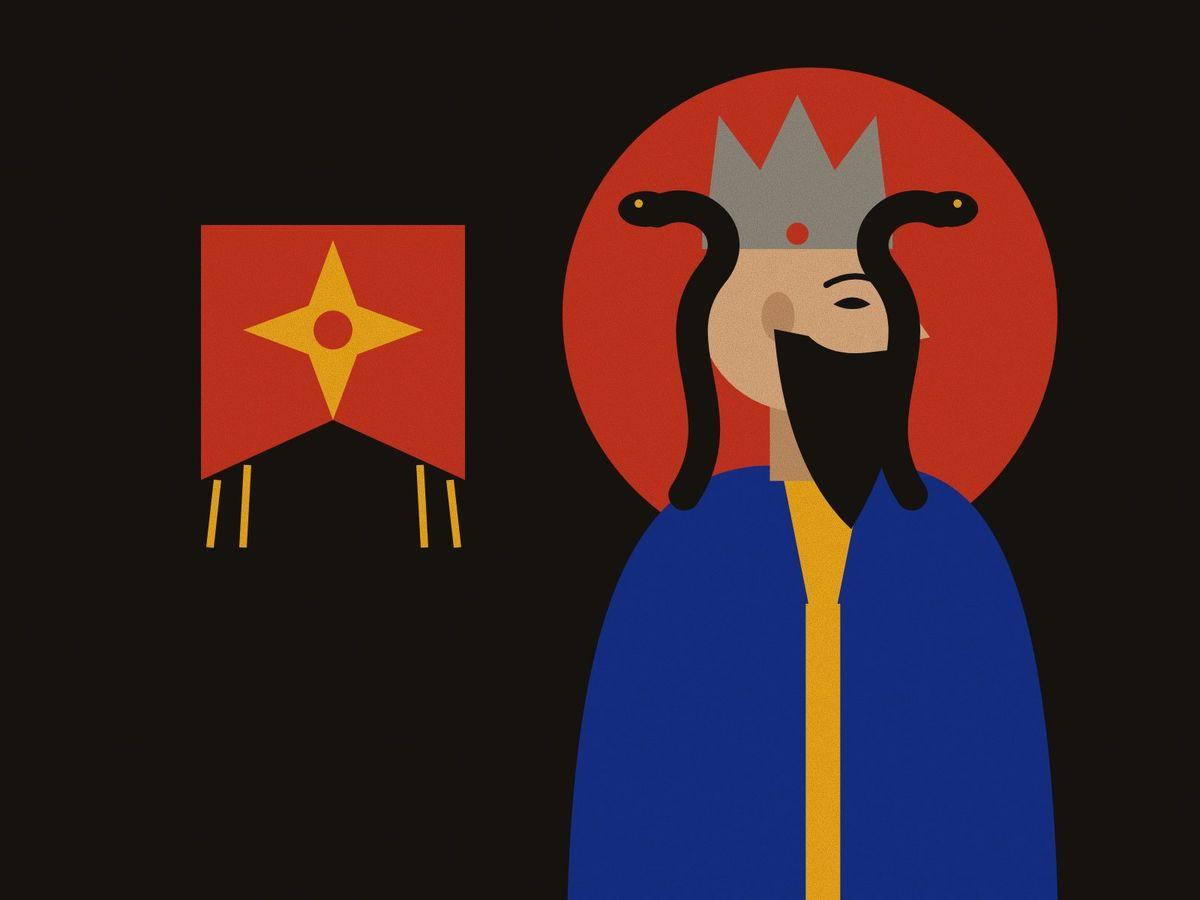
Zahhak and Kaveh the blacksmith
A king with serpents growing from his shoulders, and the blacksmith who raised his leather apron on a spear and brought him down.
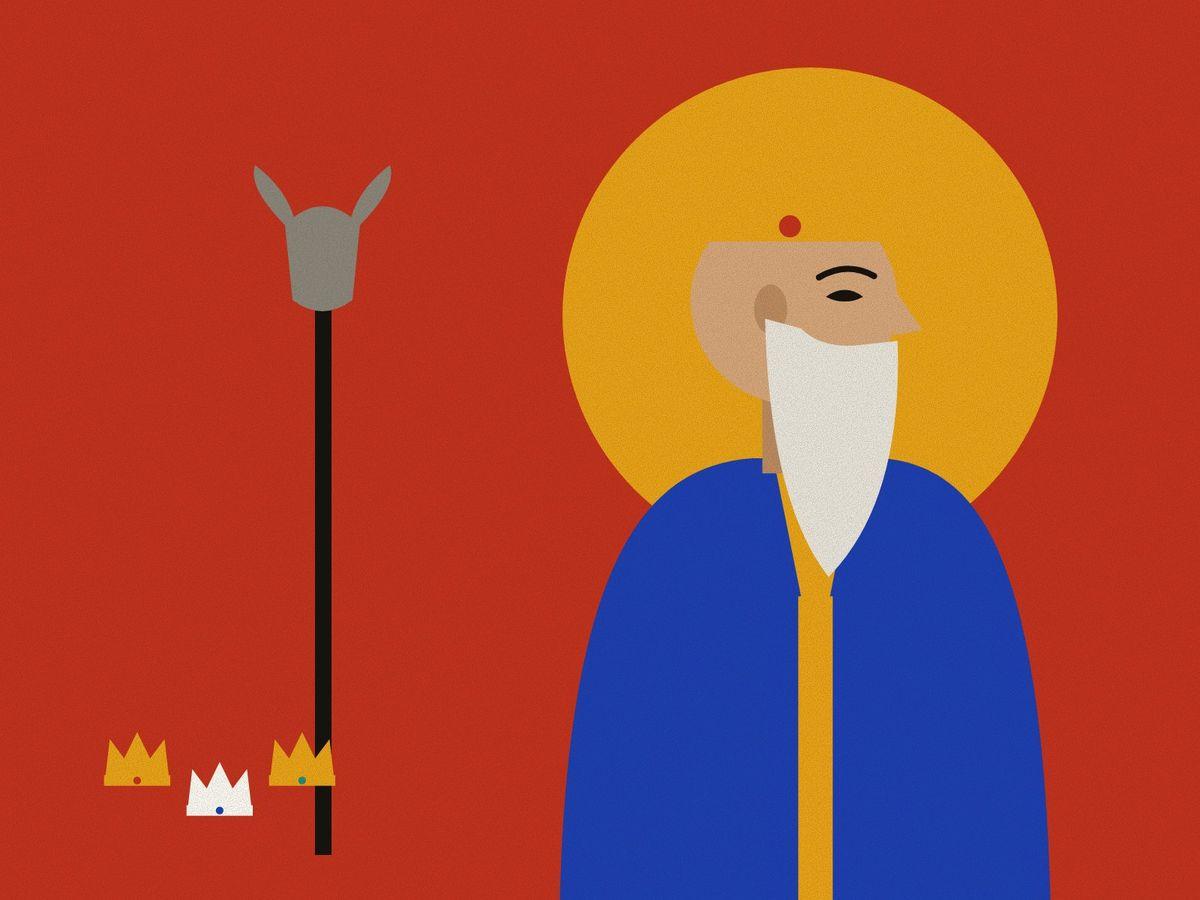
Fereydun and his three sons
The king who freed Iran from Zahhak divided the world between his sons, and in doing so, Ferdowsi says, began the long feud between Iran and Turan.
More from the mythical ageشاهنامه
Takht-e Jamshid (Persepolis)تخت جمشید
Persian tradition gave the ruins of Persepolis to Jamshid, the radiant king of the Shahnameh's golden age. The poem never names the site; the connection was made by the people who lived beside it.
The Arvand (Tigris)اروند
On his way to overthrow Zahhak, Fereydun reaches the Arvand, which Ferdowsi explains is the river the Arabs call the Dejla, the Tigris. When the ferryman refuses him, he rides straight into the water.
Kang Dezhhukhtکنگ دژهوخت
Zahhak rules the world from a palace city that the poem calls Kang Dezhhukht, adding that in Ferdowsi's own day it was known as Beyt al-Moqaddas, Jerusalem. Here Fereydun frees Jamshid's daughters and confronts the tyrant.
Tamishehتمیشه
After his victory, Fereydun moves his court from Amol to Tamisheh, at the eastern end of the Caspian forests. The name survives in a long Sasanian defensive wall near the coast of Golestan.