The Shahnameh atlas · The mythical age · The reign of Fereydun
Manuchehr avenges Iraj
کینخواهی منوچهرIraj's grandson grows up, kills both his murderers, and an old king mourns all three sons
Fereydun visits Iraj's women's quarters and finds that Mah-Afarid, a lovely servant whom Iraj loved, is carrying his child. Hope returns to the old king, but the child is a daughter. She grows up so like her father that you would say Iraj himself had come back. Fereydun marries her to a prince named Pashang, and she bears a son.
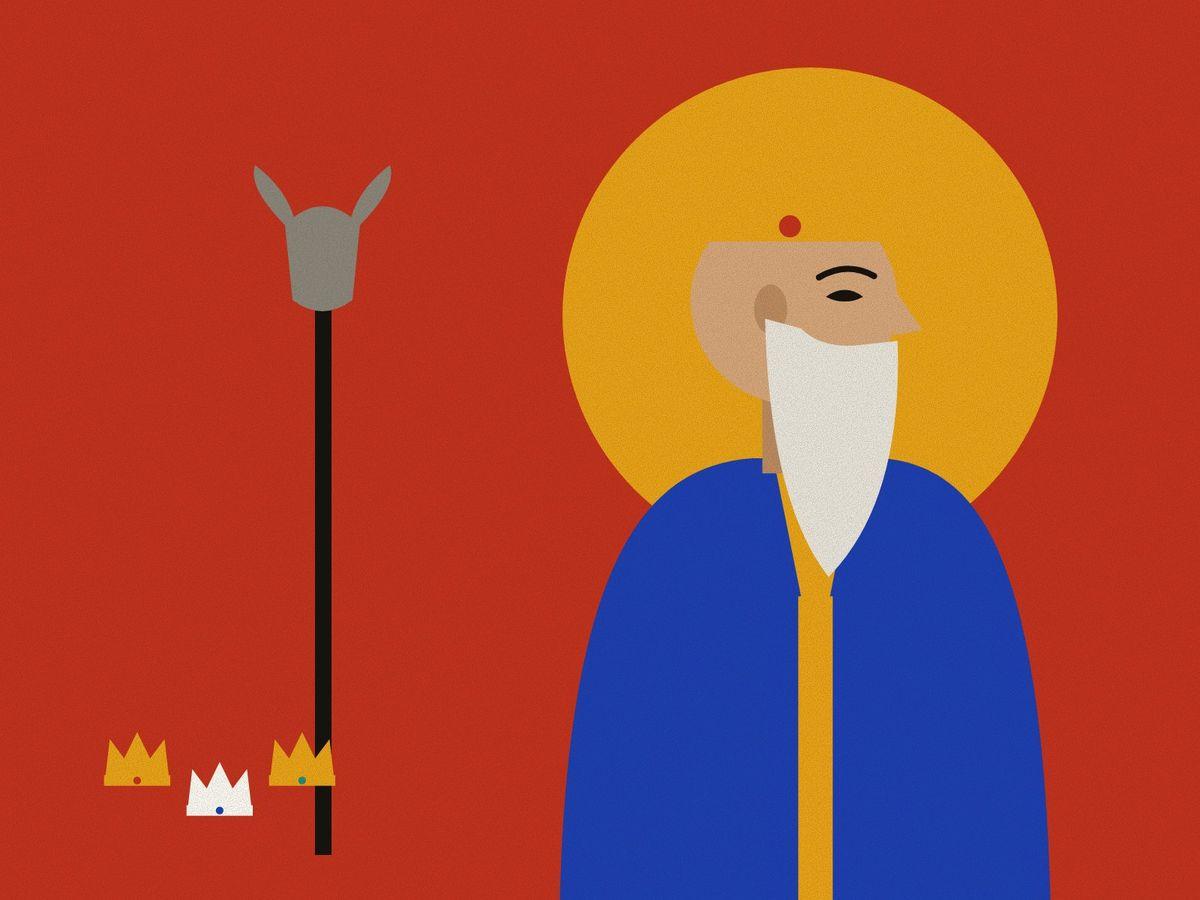
The baby is carried to Fereydun. 'Look at Iraj,' the priest says. The old king's lips fill with laughter, as if Iraj were alive again. He prays to see the child, and God gives him back his sight. He names the boy Manuchehr and raises him with every care, teaching him the arts of kings. When the boy is grown, Fereydun gives him the golden throne, the heavy mace and the turquoise crown, opens his treasuries to him, and calls the champions to his side: Qaren son of Kaveh, Shiruy, Garshasp and Sam.
Salm and Tur hear of it and are afraid. They send an envoy with elephants loaded with gifts: they are sorry, they say, they blame fate and the div (demon), and they ask Fereydun to send Manuchehr to them so that they may serve him. Fereydun sees straight through them. If you love Manuchehr, he replies, where is the body of Iraj? You will see Manuchehr's face only at the head of an army, with a steel helmet, the mace and Kaveh's banner. The tree that grew from the vengeance for Iraj will be washed in blood.
Two battles
The brothers march on Iran, and Manuchehr leads the army out from Tamisheh. Tur sends him a taunt: a king with no father, born of Iraj's daughter, who gave you a sword? Manuchehr laughs. Iraj is my grandfather, he says, and Fereydun is my witness; in battle my birth will show. On the first day the Iranians have the upper hand. The brothers plan a night attack, but scouts warn Manuchehr. He gives the army to Qaren and waits in ambush with thirty thousand men. When Tur comes in the dark and finds the Iranians ready, he turns to flee. Manuchehr rides him down, spears him in the back, lifts him from the saddle, throws him to the ground and cuts off his head. He sends it to Fereydun.
Salm makes for a fortress by the sea. Qaren takes it by a trick, showing Tur's signet ring at the gate, and burns it. Salm flees to the shore and finds no ships. Manuchehr catches him. 'You killed your brother for a crown,' he cries. 'Here are your crown and throne. The tree you planted has borne fruit. If the fruit is thorns, you planted them; if it is silk, you spun it.' With one stroke he cuts Salm in two, and the head is raised on a spear. Salm's soldiers send a spokesman: they are herdsmen and farmers who came at their king's command. Manuchehr spares them all. Today is a day of justice, he says.
If the fruit is thorns, you planted them; if it is silk, you spun it.
He comes home by way of Tamisheh, and Fereydun rides out to meet him and sets him on the golden throne. Then the old king withdraws from crown and court and sits with the heads of his three sons before him, weeping, until his life ends. Manuchehr builds him a royal tomb of red gold and lapis lazuli, sets an ivory throne inside with the crown hung above it, and closes the door. The mythical age of the Shahnameh ends with an old man mourning all three of his sons, the murdered and the murderers.
From the poemاز شاهنامه
Ferdowsi's words, with the English of Arthur and Edmond Warner's translation (1905–1925).
همان کز جهان آفرین کرد یاد
ببخشود و دیده بدو باز داد
He prayed so earnestly that God vouchsafed
To give his sight back.
سرش را هم آنگه ز تن دور کرد
دد و دام را از تنش سور کرد
Cast him to earth, slew him, cut off his head,
And left the body for the beasts of prey;
اگر بار خارست خود کشتهای
و گر پرنیانست خود رشتهای
If thorns, the tree was planted by thyself;
If painted silk, the weaving was thine own.
In Mythologyاسطوره
Fereydun and his three sons
The king who freed Iran from Zahhak divided the world between his sons, and in doing so, Ferdowsi says, began the long feud between Iran and Turan.