The Shahnameh atlas · The mythical age
Kang Dezhhukht
کنگ دژهوختZahhak's palace city, which Ferdowsi identifies with Jerusalem
- Traditionally placed here
- Zahhak, Fereydun, Shahrnaz, Arnavaz, Kondrow
Across the Arvand, Fereydun comes to a great city. Its palace is so tall it seems to touch the stars. The Shahnameh calls it Kang Dezhhukht and tells its readers that this is the place now called, in Arabic, Beyt al-Moqaddas, the Holy House: Jerusalem. The identification belongs to the poem and its sources. It is a literary geography, placing the tyrant's seat in a famous city of the west, not a historical claim about Jerusalem.
Zahhak is away, in India by the poem's account, when Fereydun arrives. The young prince storms the palace, throws down the talismans of the sorcerer-king and frees the two women held there, Shahrnaz and Arnavaz, the daughters of Jamshid in most readings, who have been Zahhak's captives for years. Zahhak's steward Kondrow greets the newcomer politely, then slips away to warn his master. Zahhak returns in secret and climbs onto the palace roof, mad with jealousy, and leaps down with a dagger. Fereydun strikes him with his ox-headed mace.
Its palace is so tall it seems to touch the stars.
He does not kill him. The angel Sorush tells Fereydun to bind Zahhak instead and carry him away, and the story moves north-east, to Mount Damavand. The palace city drops out of the poem, its work done, and Fereydun takes the throne with Jamshid's daughters as his queens. In the story of Iran, it is the place where tyranny is unseated rather than destroyed, and where the line of Jamshid, through his daughters, returns to the throne.
In Mythologyاسطوره
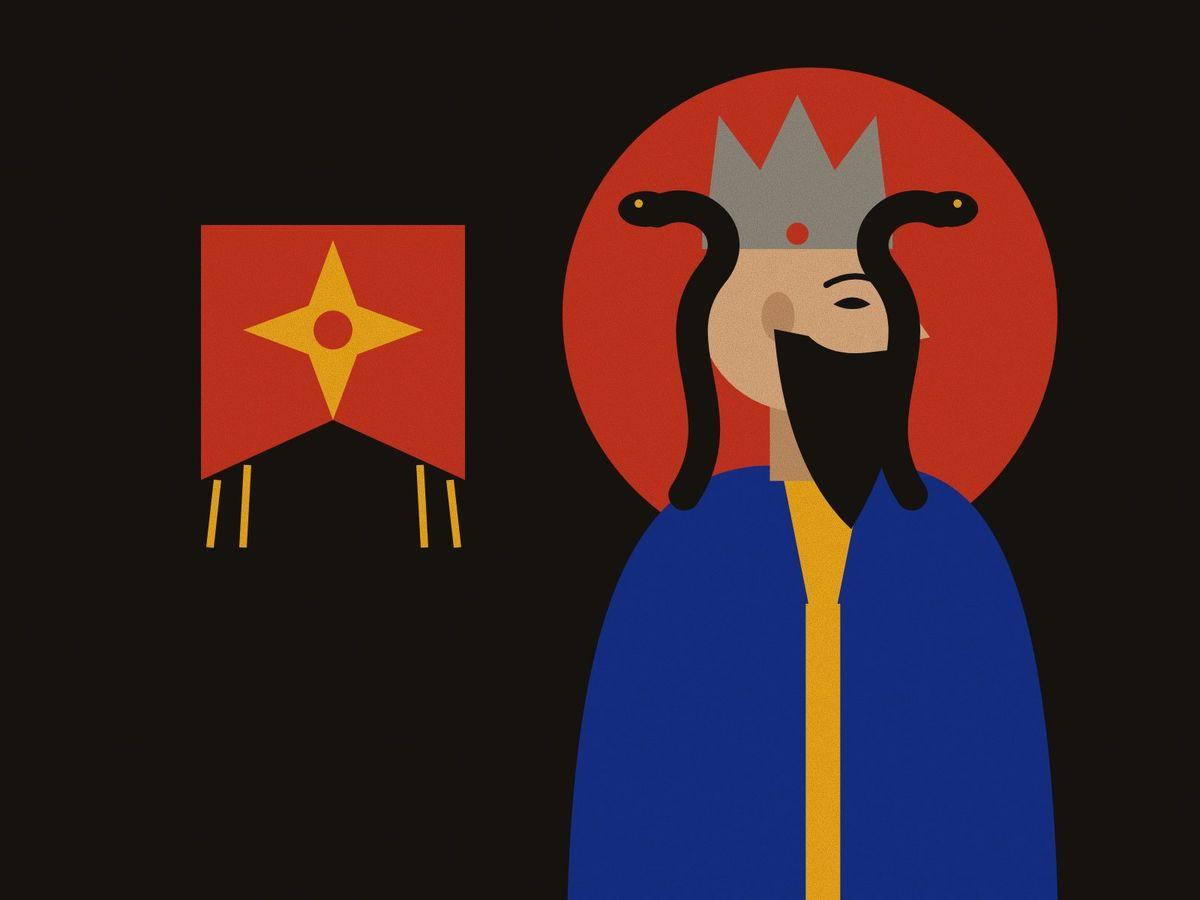
Zahhak and Kaveh the blacksmith
A king with serpents growing from his shoulders, and the blacksmith who raised his leather apron on a spear and brought him down.
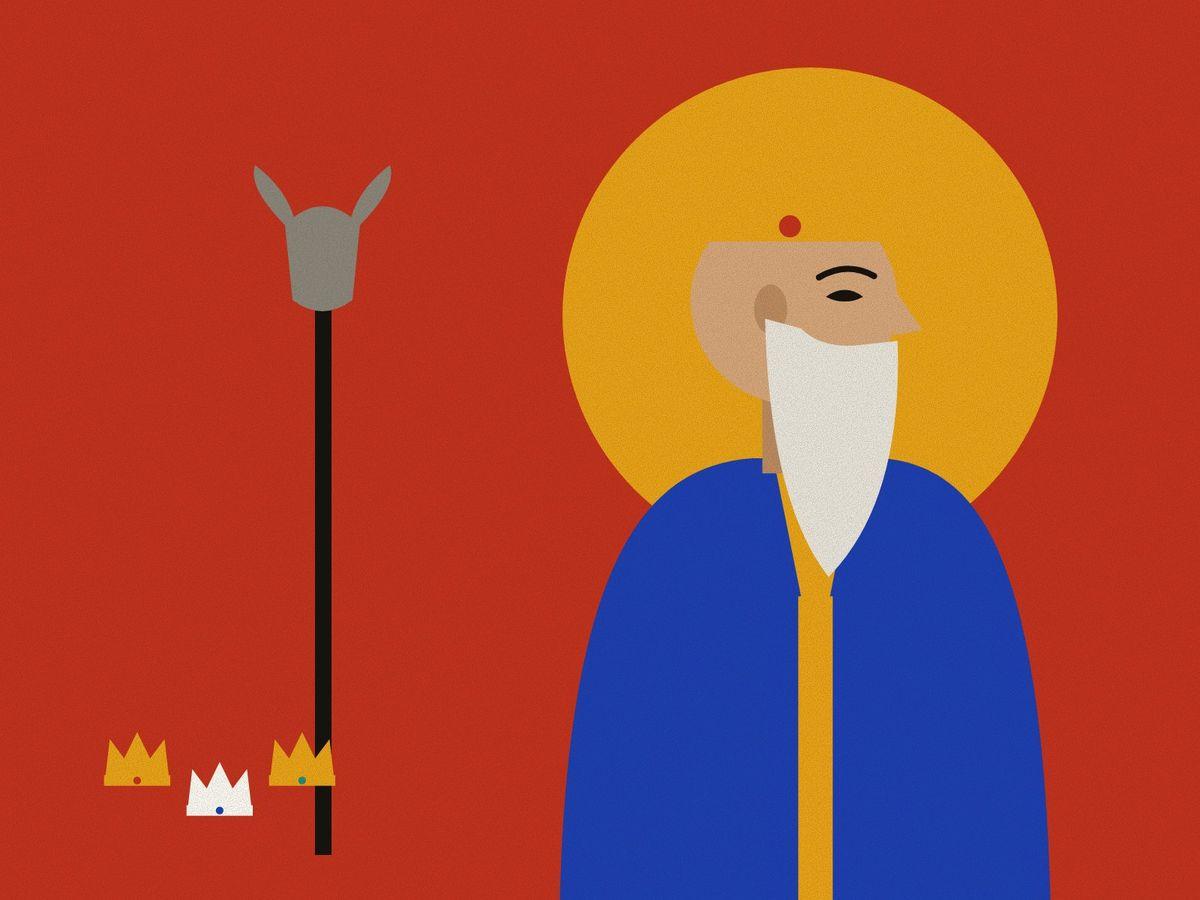
Fereydun and his three sons
The king who freed Iran from Zahhak divided the world between his sons, and in doing so, Ferdowsi says, began the long feud between Iran and Turan.
More from the mythical ageشاهنامه
Takht-e Jamshid (Persepolis)تخت جمشید
Persian tradition gave the ruins of Persepolis to Jamshid, the radiant king of the Shahnameh's golden age. The poem never names the site; the connection was made by the people who lived beside it.
The Arvand (Tigris)اروند
On his way to overthrow Zahhak, Fereydun reaches the Arvand, which Ferdowsi explains is the river the Arabs call the Dejla, the Tigris. When the ferryman refuses him, he rides straight into the water.
Mount Damavandکوه دماوند
Iran's highest mountain is the prison of the serpent-shouldered tyrant Zahhak. Fereydun chains him in a cave inside it, and folk tradition still hears him in the mountain's rumbles.
Tamishehتمیشه
After his victory, Fereydun moves his court from Amol to Tamisheh, at the eastern end of the Caspian forests. The name survives in a long Sasanian defensive wall near the coast of Golestan.