The Shahnameh atlas · The heroic age
Siyavashgerd and Gang Dezh
سیاوشگردThe cities Siyavash built in exile; location approximate
- Legendary: the location is approximate
- Siyavash, Farangis, Afrasiab, Garsivaz, Kay Khosrow
Afrasiab welcomes Siyavash to Turan, marries him to his daughter Farangis and gives him lands to rule. In the Shahnameh, Siyavash first builds Gang Dezh in a far-off country: a city on a mountain plain with gardens, running water, game and flowers. It is so lovely that it seems to belong to paradise. He then founds a second city, Siyavashgerd, with palaces, squares and orchards, and lives there with Farangis in peace.
The peace does not last. Afrasiab's brother Garsivaz visits Siyavashgerd, grows jealous of its splendour, and turns the king against his son-in-law with lies. Siyavash is seized on the road and put to death on the plain, and his blood is caught in a golden basin and emptied where Afrasiab ordered, so that no plant should grow from it. Yet when the boy Kay Khosrow and Farangis are later sent back to Siyavashgerd, the poem says, a tree has risen to the clouds from the earth that drank his blood, with his face drawn on its leaves. It smells of musk, stays green in the depth of winter, and has become a place of worship for those who mourn him. Years later, when Kay Khosrow returns to avenge his father, Afrasiab retreats to Gang Dezh, and Kay Khosrow besieges and takes it, one of the great climaxes of the heroic age.
It is so lovely that it seems to belong to paradise.
Where were they?
Neither city can be placed with certainty. Middle Persian Zoroastrian books also know Kangdez as a wondrous fortress built by Siyavash in the east, sometimes described as moving or floating, which suggests a place of myth rather than geography. Medieval writers tried to find Siyavashgerd in Central Asia, and Bukhara and other towns of Transoxiana kept their own Siyavash traditions. The point here, in the Ferghana region, is only an approximate marker for the far side of Turan. What the poem gives is not a location but a lament: the most beautiful cities in the epic are built by an exile and lost with him.
The tales told hereداستانها
Siyavash, Farangis and Siyavashgerdفرنگیس و سیاوشگرد
In exile Siyavash marries Farangis, builds two cities and foresees his own death
The death of Siyavashکشته شدن سیاوش
Garsivaz's lies turn Afrasiab against Siyavash, who dies refusing to fight
Giv's seven years' search for Kay Khosrowگیو و کیخسرو
Giv searches Turan for seven years, finds Siyavash's son and brings him home
Kay Khosrow's great war and the death of Afrasiabجنگ بزرگ کیخسرو و افراسیاب
Kay Khosrow pursues Afrasiab across the Jayhun and the sea, to a cave and a lake
In Mythologyاسطوره
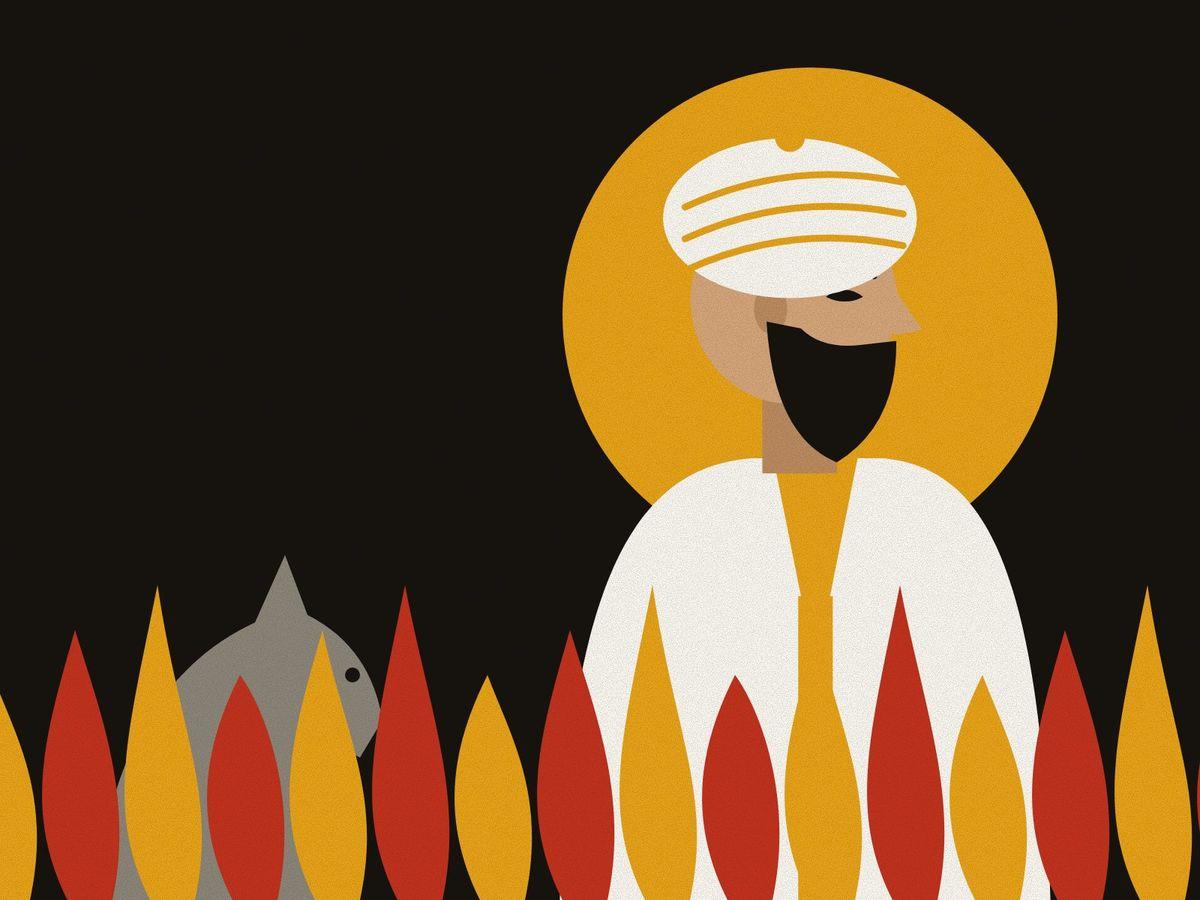
Siyavash and the trial by fire
The innocent prince who rode through fire to prove his honour, kept his word at the cost of his life, and was mourned for centuries in Central Asia.
More from the heroic ageشاهنامه
Mount Alborzالبرز کوه
On the heights of the Alborz the Simorgh raises Zal, the white-haired child his father abandoned. The poem's Alborz is a mountain at the edge of the world, traditionally identified with the range north of Tehran.
Kabulکابل
Kabul frames the life of Rostam. His mother Rudabeh is a princess of Kabul, and it is in the hunting grounds of a later king of Kabul that Rostam is betrayed and killed.
Zabulistanزابلستان
Zabulistan is the realm of the house of Sam: the court where Zal rules, Rostam is raised, and Esfandiyar comes to put Rostam in chains. Tradition places it in Sistan, around today's Zabol.
Kuh-e Khwajaکوه خواجه
A flat-topped black hill rising from the Hamun wetlands, crowned with the ruins of a Parthian and Sasanian palace that local people call Rostam's castle. It is the closest thing Rostam has to a home on the map.