The Shahnameh atlas · The heroic age · The reign of Kay Kavus
Siyavash, Farangis and Siyavashgerd
فرنگیس و سیاوشگردIn exile Siyavash marries Farangis, builds two cities and foresees his own death
Afrasiab comes on foot into the street to meet Siyavash, embraces him and gives him a palace. Soon he puts the prince to the test. At polo Siyavash strikes the ball so hard that it vanishes into the sky. He strings a royal bow that Garsivaz cannot bend, and hits the target at full gallop. Hunting, he cuts a wild ass into two halves so equal that they balance to a grain. For a year the king shares every joy and sorrow with him and confides in no one else.
Piran points out that Siyavash has no brother, sister or wife in Turan, like a single rose-branch at the edge of a meadow, and offers him his own daughter, Jarireh. Siyavash takes her gladly. Later Piran urges a greater match: Farangis, the finest of Afrasiab's daughters. Siyavash agrees with a sigh. If he is never to see Iran again, or Kavus, Zal and Rostam, so be it.
Afrasiab is reluctant. A wise man once warned him against nursing a lion's cub, and astrologers have said that a king born of these two lines will take his crown. Piran answers that such a prince might rule both Iran and Turan and end the wars between them, and the king gives way. Farangis is brought to Siyavash with a procession of treasure, the feasting lasts a week, and Afrasiab gives his son-in-law a province reaching to the sea of Chin, with a patent written on silk, a golden throne and a crown.
Two cities
Siyavash and Farangis travel to Khotan, Piran's land, and spend a month there. Then Siyavash finds a place he loves and builds Gang Dezh. Ferdowsi describes it as lying a month's journey beyond the sea of Chin: a city ringed by a vast mountain no army could climb, with baths and streams, game on the hills, no heat or cold and no one ever sick, a garden of paradise. But when Siyavash asks the astrologers whether the place will bring him fortune, they say it will not.
Weeping, he tells Piran what he knows of the future. Before long, though innocent, he will be killed at the king's hand through a slanderer's words. Iran and Turan will rise against each other, banners red, yellow, black and violet will come out of Iran, lands will be trampled and streams fouled, and Afrasiab will repent when it is too late. Piran is shaken, but tells himself that the prince is only homesick.
Piran is shaken, but tells himself that the prince is only homesick.
When Piran goes away to collect tribute as far as Hind and Chin, Siyavash moves on and builds a second city, two farsangs (leagues) long and wide, with palaces, gardens and domes where minstrels sing. On its walls he paints Kavus with Rostam, Zal and Gudarz, and on the other side Afrasiab with Piran and Garsivaz. People call it Siyavashgerd. Piran visits on his return, finds Farangis's palace shining like a treasury of jewels, and tells Afrasiab that whoever has not seen paradise in spring should see this city.
From the poemاز شاهنامه
Ferdowsi's words, with the English of Arthur and Edmond Warner's translation (1905–1925).
نبینی بدان شهر بیمار کس
یکی بوستان بهشتست و بس
Thou wilt not see a single invalid;
In short it is a paradise on earth.
شوم زار من کشته بر بیگناه
کسی دیگر آراید این تاج و گاه
I shall, though guiltless, cruelly be slain.
Another will possess this crown and throne.
سیاووش گردش نهادند نام
همه شهر زان شارستان شادکام
Siyawushgird the common voice
Called it; that city made all hearts rejoice.
In Mythologyاسطوره
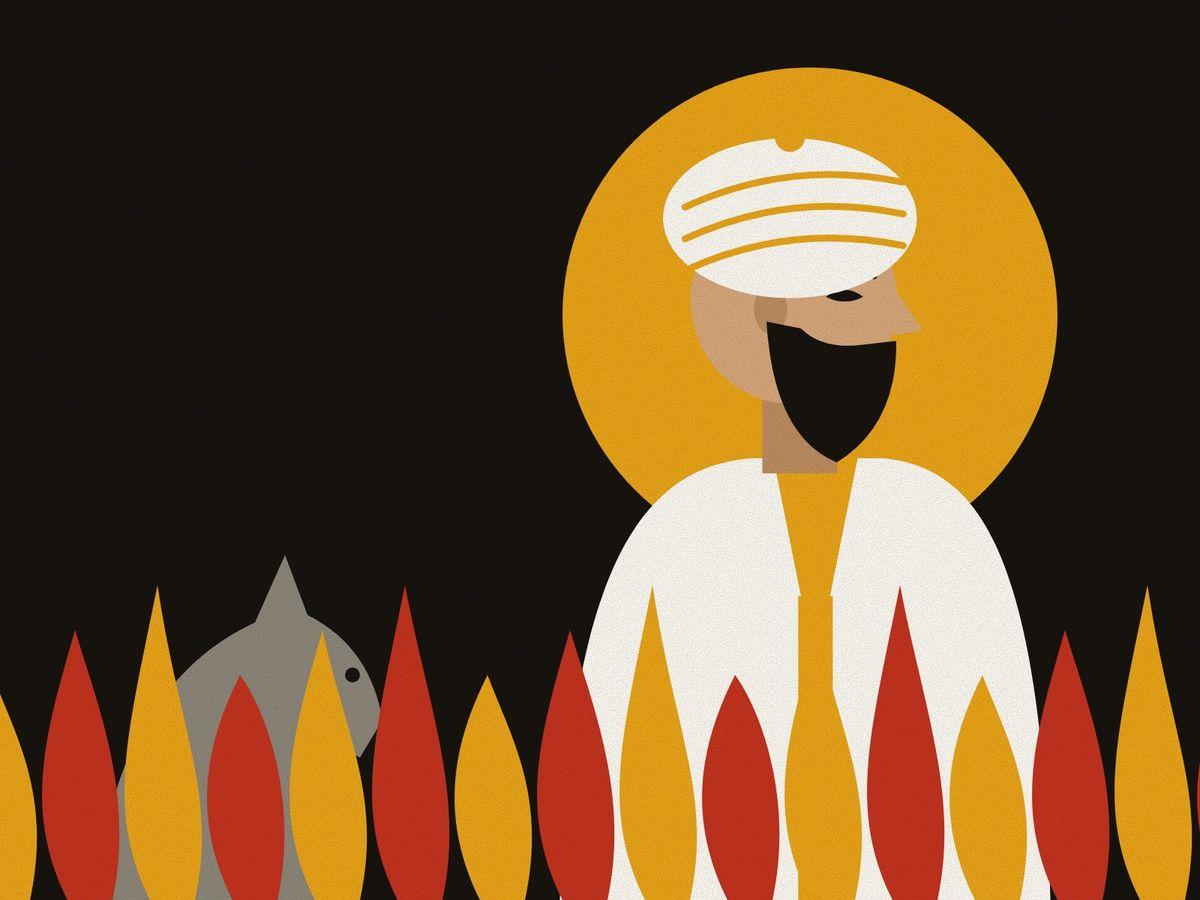
Siyavash and the trial by fire
The innocent prince who rode through fire to prove his honour, kept his word at the cost of his life, and was mourned for centuries in Central Asia.