Agnosticism
ندانمگراییBetween faith and denial lies a long Persian habit of asking and not being sure: in Khayyam’s quatrains, in the wine-house of Hafez, and in the private doubts of many Iranians today.
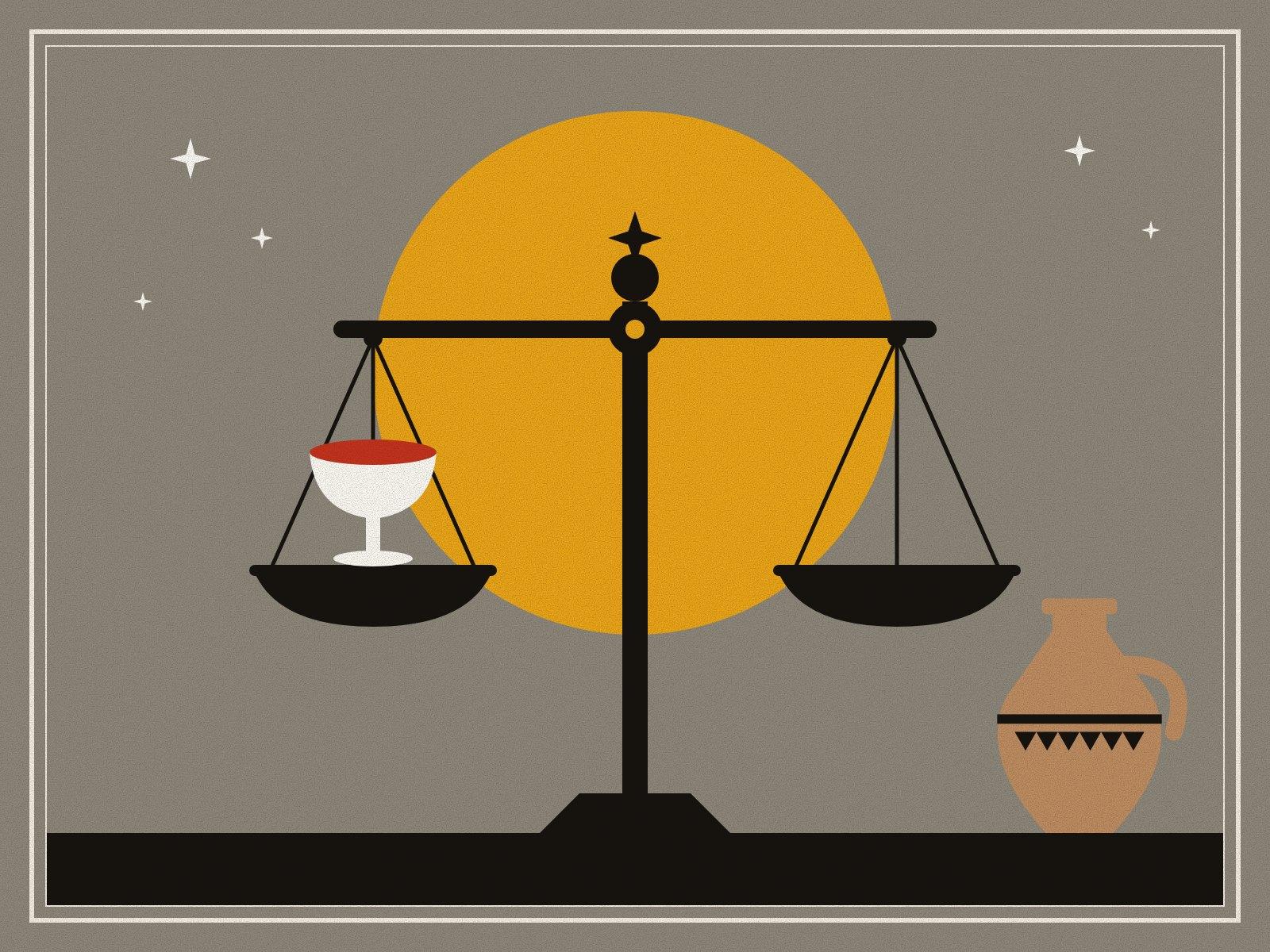
Agnosticism is the position of not knowing: of holding that the existence of God, or what follows death, cannot be settled either way. In Persian it is called nadanam-gera’i, a modern coinage built on nemidanam, ‘I do not know’, and the European word agnostisism is also heard. Many Iranians who would never use either term recognise the stance at once. It is the shrug at a confident sermon, the question asked at a funeral, the line of poetry quoted with a half-smile when someone claims too much certainty.
The Iranian world has a long tradition of putting such questions into verse. The quatrains, roba’iyat, attributed to Omar Khayyam of Nishapur, the eleventh- and twelfth-century mathematician and astronomer, return again and again to the same few thoughts: no one has come back from the other side to tell us what is there; the clay of the potter’s jug was once a living person; the scholars argue and know no more than we do; so take the cup of wine today. How many of these quatrains Khayyam actually wrote is one of the great unsettled questions of Persian scholarship. Many verses circulated under several poets’ names, and the collections grew over the centuries.
The quatrains have been read in sharply different ways. One of the earliest writers to quote verses under Khayyam’s name, the Sufi author Najm al-Din Razi in the thirteenth century, cited them as an example of a philosopher gone astray. Later Sufi readers took the opposite course and read the wine and the tavern as images of divine love. Edward FitzGerald’s English version of 1859 gave Victorian readers a melancholy, worldly sceptic, and in 1934 the novelist Sadegh Hedayat published his own selection, Taraneh-ha-ye Khayyam, presenting a freethinker who doubted the promises of religion. Each reading has its defenders, and the argument is itself part of the inheritance.
Each reading has its defenders, and the argument is itself part of the inheritance.
The rend of Hafez
Hafez of Shiraz, in the fourteenth century, gave Persian a figure who stands outside the pieties of the town: the rend, the knowing rogue of the wine-house, who mocks the ascetic (zahed), the preacher and the morals officer (mohtaseb) for their hypocrisy. Whether rendi, the way of the rend, is a mystical path or a worldly freedom has been debated for centuries. Scholars such as Baha’oddin Khorramshahi and Dariush Ashuri have written at length on it, and many readers see in it a love of the divine expressed through scorn for its self-appointed guardians. Others hear in it an honest uncertainty, a refusal to claim what cannot be known. The Divan allows both, which may be why so many kinds of Iranian keep it by the bed.
Doubt also has a place in the history of philosophy and theology. Abu Hamed Mohammad al-Ghazali of Tus, one of the most influential theologians of Islam, described in his autobiography, al-Munqidh min al-dalal, ‘The Deliverer from Error’, a period in which he doubted the evidence of the senses and of reason itself, before, in his own account, certainty returned to him as a light from God. His book is a believer’s testimony, but it treats doubt as a serious experience rather than a sin, and Iranian readers of every outlook have found it honest.
Agnostic Iranians today
Today agnostic Iranians are found in every city of Iran and across the diaspora, from Los Angeles and Toronto to London, Hamburg and Sydney. In Iran most keep their doubts within the family or among friends, since public questioning of religion carries legal and social risks. In exile and among younger Iranians online, the conversation is more open: in Persian-language podcasts, essays and reading groups that return, again and again, to Khayyam and Hafez. Many agnostics still keep Nowruz and Yalda, recite poetry at the graveside and take part in the rites of their families, Muslim, Zoroastrian, Jewish, Christian or Bahá’í, as a way of belonging rather than of belief.
Poetsشاعران

Omar Khayyam
خیامMathematician and astronomer of Nishapur, known to the world for quatrains on time, wine and doubt.

Hafez
حافظThe supreme master of the ghazal, whose Divan is found in nearly every Iranian home.
Across Cultureپیوندها

Faiths
Atheism
Some Iranians do not believe in God at all. Their tradition runs from medieval freethinkers known mostly through their critics to modern secular writers, and it meets very different laws across the Iranian world.

Faiths
Spiritual but not religious
Many Iranians keep a spiritual life without a mosque, church or temple: in poetry, in the omens of Hafez, in nature and the old festivals, and in meditation and yoga from Tehran to Los Angeles.

Faiths
People of no faith and of many
Some Iranians believe deeply, some not at all, and many sit somewhere between. The customs of Nowruz and Yalda belong to all of them.
More from Faithsدینها
Zoroastrianism
Good thoughts, good words, good deeds: the faith of Zarathushtra, kept by its followers in Yazd, Kerman, Tehran, Mumbai and far beyond.

Mithra and the old Iranian gods
Before and beside Zarathushtra stood older Iranian divinities: Mithra of the covenant, Anahita of the waters, Verethragna of victory. Their names survive in hymns, festivals and children.

Manichaeism
Mani, born in Sasanian Mesopotamia in 216 CE, founded a faith of light and darkness that reached from Roman Africa to the coast of China, and left Persian a proverbial painter.