The Shahnameh atlas · The heroic age
Mazandaran
مازندرانThe land of divs that Kay Kavus tried to conquer
- Traditionally placed here · Mazandaran in the Atlas
- Kay Kavus, Rostam, White Div, Olad, Rakhsh
Mazandaran in the Shahnameh is a land of gardens, flowers and endless spring, sung to Kay Kavus by a demon disguised as a minstrel. It is also the country of the divs, ruled by a demon king and guarded by the White Div. Kavus, against all advice, invades. He and his army are struck blind and taken prisoner, and Rostam rides to the rescue by the short, deadly road of the Seven Labours, ending with the White Div's death in his cave.
After the White Div, there is still a war to fight. Kavus, his sight restored, demands the king of Mazandaran's submission, and the two armies meet. Rostam faces the demon king, who escapes him by turning himself into a great rock. Only Rostam can lift it, and he carries it back to the Iranian camp, where he threatens to break it apart until the king takes his true form again and is killed. Kavus gives the kingdom to Olad, the warrior who guided Rostam on the later stages of his journey.
Rostam faces the demon king, who escapes him by turning himself into a great rock.
Which Mazandaran?
The modern province of Mazandaran, the green coastal strip between the Alborz and the Caspian, is the obvious candidate, and many readers simply picture the story there. But in Ferdowsi's day the Caspian lands were usually called Tabaristan, and scholars have long debated whether the poem's Mazandaran was originally somewhere else entirely, with suggestions ranging from lands in the west to India. The question remains open. The province of today, with its rice paddies, forests and towns like Sari and Babol, has embraced the association, and the white demon and the hero on his red horse decorate its teahouses as they do across Iran.
In Mythologyاسطوره
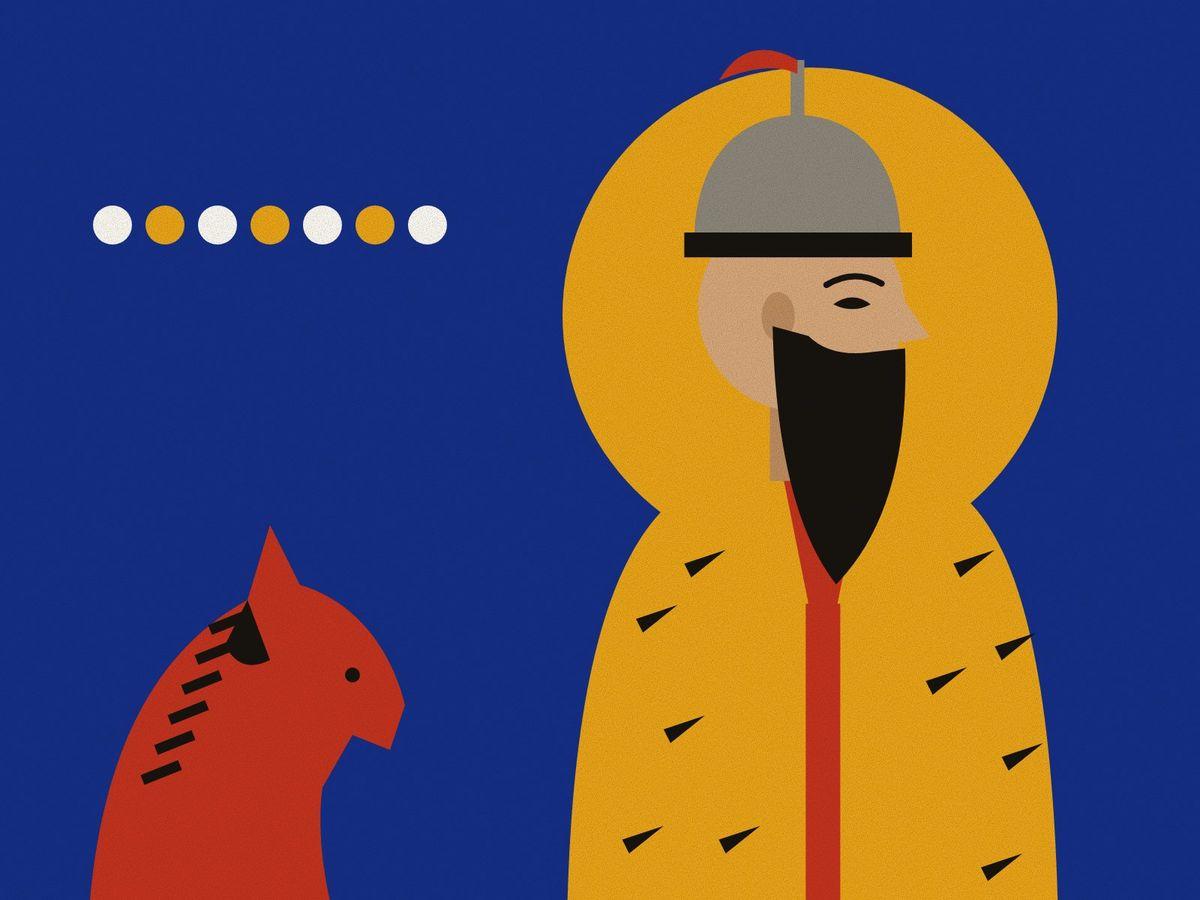
Rostam, Rakhsh and the seven labours
Iran's greatest hero and his matchless horse take the short, deadly road to rescue a foolish king: a lion, a desert, a dragon, a witch and the White Div.
More from the heroic ageشاهنامه
Mount Alborzالبرز کوه
On the heights of the Alborz the Simorgh raises Zal, the white-haired child his father abandoned. The poem's Alborz is a mountain at the edge of the world, traditionally identified with the range north of Tehran.
Kabulکابل
Kabul frames the life of Rostam. His mother Rudabeh is a princess of Kabul, and it is in the hunting grounds of a later king of Kabul that Rostam is betrayed and killed.
Zabulistanزابلستان
Zabulistan is the realm of the house of Sam: the court where Zal rules, Rostam is raised, and Esfandiyar comes to put Rostam in chains. Tradition places it in Sistan, around today's Zabol.
Kuh-e Khwajaکوه خواجه
A flat-topped black hill rising from the Hamun wetlands, crowned with the ruins of a Parthian and Sasanian palace that local people call Rostam's castle. It is the closest thing Rostam has to a home on the map.