The Shahnameh atlas · The heroic age
Bukhara
بخاراA city of Turan in the poem, and of Siyavash in local tradition
- A real place the poem names · Samarkand and Bukhara in the Atlas
- Siyavash, Afrasiab
Bukhara appears in the Shahnameh among the cities of Turan and Sogdiana, the country beyond the Jayhun where Afrasiab's power lies. But the city's deepest link to the epic is a local one. The History of Bukhara by Narshakhi, written in Arabic in the 940s and later translated into Persian, records that Siyavash, son of Kay Kavus, built the city's citadel, and that his grave lay by one of its gates.
Narshakhi adds that the Magians, the Zoroastrians, of Bukhara held his memory sacred, and that every year at Nowruz, before sunrise, people brought a cockerel to sacrifice at the spot. He also mentions songs of mourning for Siyavash sung by the people of Bukhara, laments that scholars connect with ancient rites of the dying hero across Central Asia. These are local traditions, older than Ferdowsi. They show that the story of the innocent prince was alive here long before it was written down in the poem.
They show that the story of the innocent prince was alive here long before it was written down in the poem.
The city today
Bukhara, now in Uzbekistan, was the capital of the Samanids in the ninth and tenth centuries, the dynasty whose court revived Persian as a language of literature and sponsored poets such as Rudaki. Without that revival, there would have been no prose Book of Kings in Tus and no Shahnameh. The old city, with its citadel, the Ark, the Samanid mausoleum and the Kalyan minaret, is a UNESCO World Heritage site, and Tajik, a form of Persian, is still widely spoken in its streets.
In Mythologyاسطوره
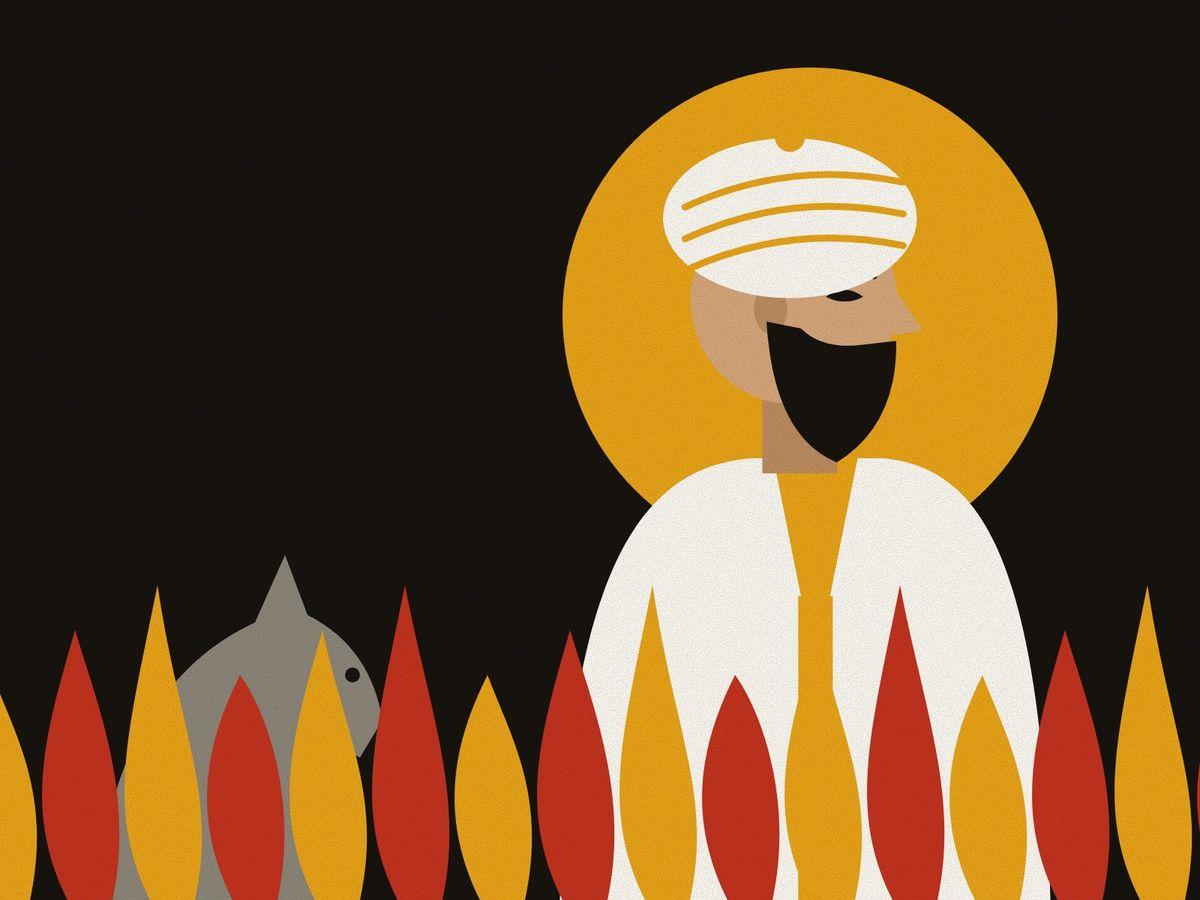
Siyavash and the trial by fire
The innocent prince who rode through fire to prove his honour, kept his word at the cost of his life, and was mourned for centuries in Central Asia.
More from the heroic ageشاهنامه
Mount Alborzالبرز کوه
On the heights of the Alborz the Simorgh raises Zal, the white-haired child his father abandoned. The poem's Alborz is a mountain at the edge of the world, traditionally identified with the range north of Tehran.
Kabulکابل
Kabul frames the life of Rostam. His mother Rudabeh is a princess of Kabul, and it is in the hunting grounds of a later king of Kabul that Rostam is betrayed and killed.
Zabulistanزابلستان
Zabulistan is the realm of the house of Sam: the court where Zal rules, Rostam is raised, and Esfandiyar comes to put Rostam in chains. Tradition places it in Sistan, around today's Zabol.
Kuh-e Khwajaکوه خواجه
A flat-topped black hill rising from the Hamun wetlands, crowned with the ruins of a Parthian and Sasanian palace that local people call Rostam's castle. It is the closest thing Rostam has to a home on the map.