Balochi
بلوچیSpoken across the dry lands where Iran, Pakistan and Afghanistan meet, and by communities from Turkmenistan to Oman, Balochi carries a long tradition of sung epic and romance.
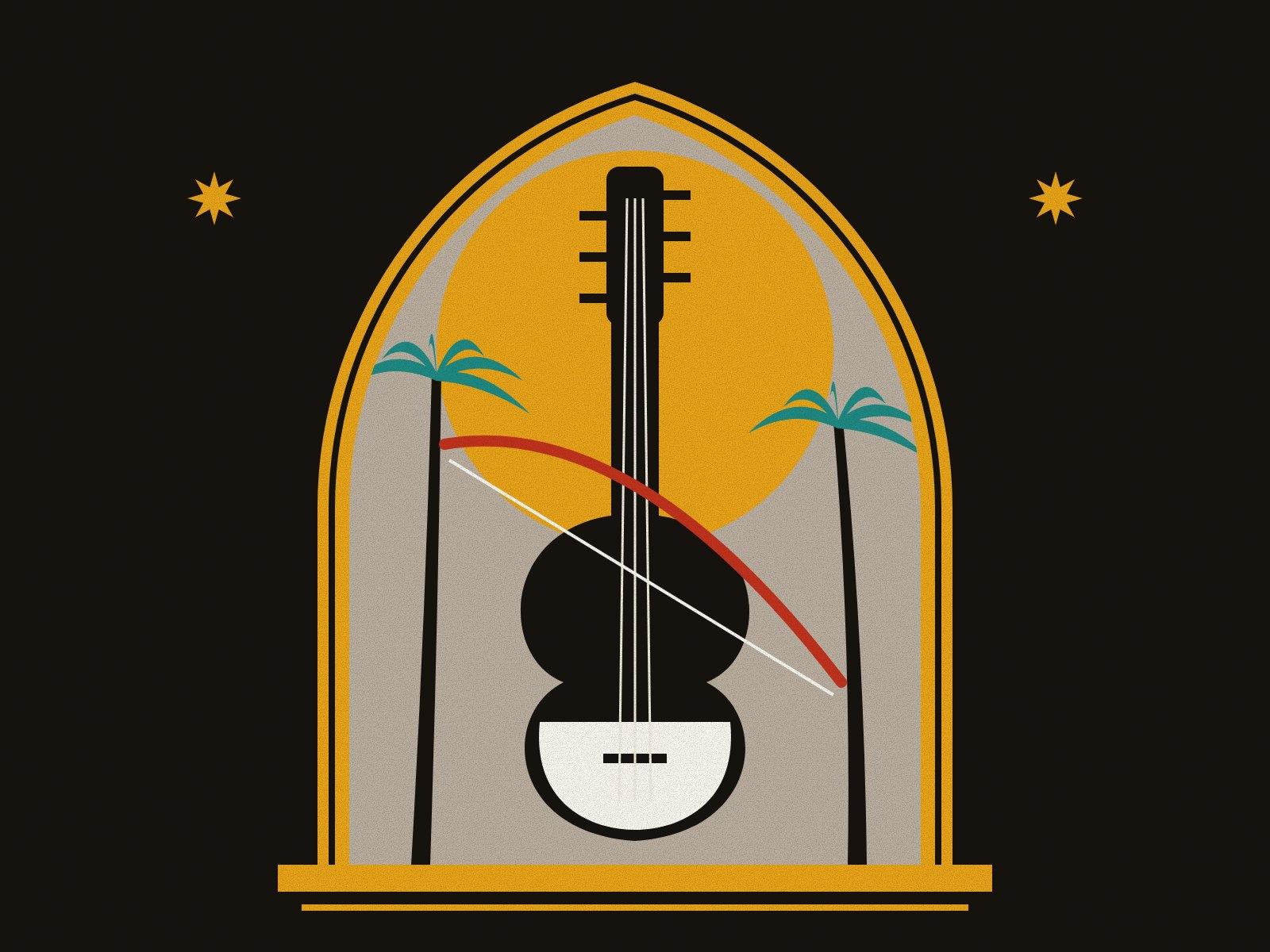
In the evening, in a courtyard in Saravan or Chabahar, a singer tunes the sorud, the Baloch bowed fiddle, and begins the story of Hani and Shey Mureed, the lovers parted by a rash vow. The language of the song is Balochi, Balòchi, the mother tongue of the Baloch people. Its homeland, Balochistan, spans south-eastern Iran, south-western Pakistan and southern Afghanistan, and Baloch communities have lived for generations in Turkmenistan, Oman and the Gulf states, and in East Africa.
Balochi belongs, perhaps surprisingly given where it is spoken now, to the Northwestern Iranian languages, the group that includes Kurdish. Its speakers are thought to have migrated south-eastwards in the medieval period. The language divides into several main dialects, usually grouped as Western or Rakhshani, spoken in the north of Iranian Balochistan, around Zahedan and Khash, and in Afghanistan and Turkmenistan; Southern or Makrani, spoken along the coast of Makran on both sides of the border; and Eastern, spoken in the Sulaiman mountains of Pakistan.
Poets and singers
Balochi literature was carried for centuries by bards rather than books. The classical ballads, which tell of the wars of the Rind and Lashari tribes and of lovers such as Hani and Shey Mureed, are attributed to poets of the fifteenth and sixteenth centuries. Jam Durrak, a court poet of the eighteenth-century Khanate of Kalat, wrote love poetry, and Mast Tawakali, a wandering mystic poet of the nineteenth century, is still loved for his verses to his beloved Sammo. Baloch music, with the sorud, the benju and the trance songs of the guati healing ceremonies on the coast, is among the most distinctive in the region.
Balochi literature was carried for centuries by bards rather than books.
Baloch women are known across the region for their needlework, worked in dense geometric patterns of fine stitches on the bodice, cuffs and deep front pocket of a dress; in Iran this embroidery is known as suzan-duzi. Its motifs, like the old ballads, pass from mother to daughter, and a woman’s embroidery is often recognised by her neighbours as surely as her voice. Hospitality, the protection of a guest and the keeping of one’s word are values that Balochi poetry returns to again and again.
Writing Balochi
Written Balochi is largely a product of the twentieth century. In Pakistan, poets and editors developed an adapted Perso-Arabic script, and Balochi is used in publishing, radio and some schooling. In Iran, Balochi is spoken at home and in the bazaar while education is in Persian; Minority Rights Group International and UN human rights mechanisms have reported discrimination affecting the Baloch, a mostly Sunni community in one of Iran’s poorest provinces. Many Baloch also speak Brahui, a Dravidian language unrelated to Balochi, and the two have long shared poetry, music and marriage alliances across their villages.
Across Cultureپیوندها
Music
Music of Baluchistan
The bowed sorud, the keyed benju, epic songs of the *pahlawan* and the healing ceremonies of the *guati*: the music of the Baluch, in Iran, Pakistan and Afghanistan.
Peoples
Baluch
The Baluch, *Baloch* in their own spelling, live across Iran, Pakistan and Afghanistan and around the Gulf. They keep the Balochi language, epic ballads, healing music and some of Iran’s finest embroidery.
More from Languagesزبانها

Persian
Spoken in Tehran, Kabul and Dushanbe under three names and written in two alphabets, Persian is one language with three national standards and a thousand years of shared poetry.

Old Persian and the cuneiform inscriptions
Carved into cliffs and palace walls in a script of wedges, Old Persian is the oldest recorded form of the Persian language, and the key that unlocked the cuneiform world.

Avestan
Known only from the sacred texts of Zoroastrianism, Avestan is one of the two oldest recorded Iranian languages, and it is still recited daily in fire temples in Yazd, Tehran and Mumbai.