Talysh and Tati
تالشی و تاتیOn the forested Caspian coast and in the villages of the north-western plateau, Talysh and the Tati dialects preserve some of the oldest Iranian speech of the region, much of it on the edge of disappearance.
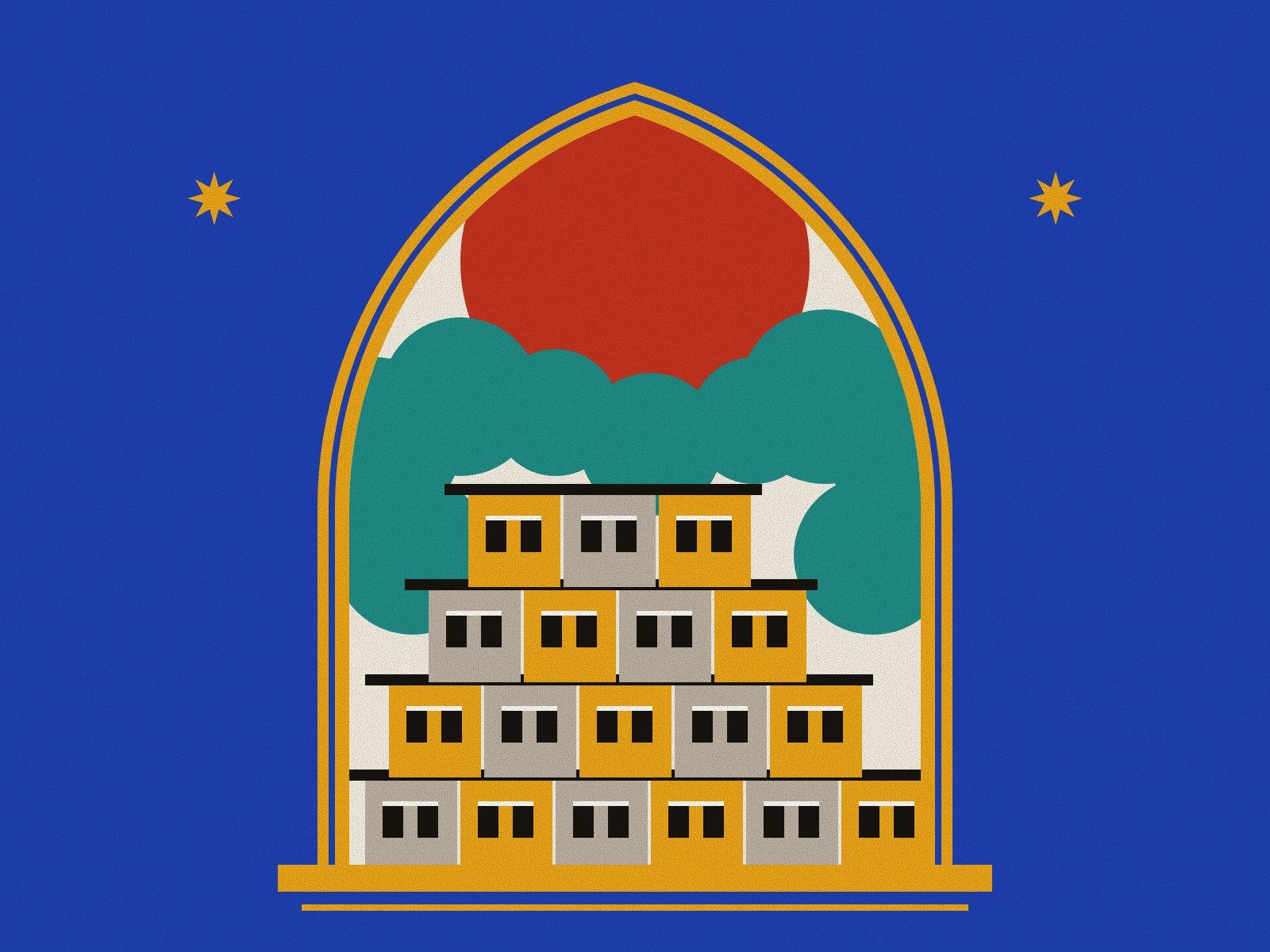
In the green hills that run along the Caspian from Astara south towards Gilan, the Talysh people speak their own language, Tolışi or Talyshi. It is a Northwestern Iranian language, related to Gilaki and to the Tati dialects, spoken on both sides of the border between Iran and the Republic of Azerbaijan. In Iran it is heard around Talesh, Masal, Rezvanshahr and Astara in Gilan, and in the uplands of Ardabil province; in Azerbaijan, around Lankaran, Lerik and Astara.
Talysh life has been built on rice, tea, forest and the seasonal movement of herds into the mountains, and its culture is rich in songs, proverbs and wedding customs. In Iran, Talyshi is used at home and in local poetry and music, and writers have produced dictionaries and collections of verse in it. In Azerbaijan it has been written in Latin letters; activists and writers have worked to keep it alive in publishing and education, often in difficult conditions.
The stepped mountain village of Masuleh in Gilan, where the roofs of one row of houses serve as the street for the row above, is among the places where a Talysh dialect is spoken, and its name is known to every Iranian traveller. Further north, the forests and tea gardens of the Talysh mountains straddle the border, and families on both sides kept ties, songs and customs in common through the long Soviet decades when the frontier was closed.
What ‘Tati’ means
The name Tati is confusing, because it has been given to two quite different things. In Iran, ‘Tati’ refers to a group of Northwestern Iranian dialects spoken in scattered villages in the provinces of Qazvin, Zanjan, Ardabil and East Azerbaijan, such as Takestani, Chāli and Harzandi. Many scholars, following the historian Ahmad Kasravi, believe these dialects descend from the old Iranian language of Azerbaijan, which medieval writers called Āzari, before Turkic became dominant there. Kasravi set out the case in a short book of 1925.
The name Tati is confusing, because it has been given to two quite different things.
In the eastern Caucasus, by contrast, ‘Tat’ is the name of a Southwestern Iranian language, close to Persian, spoken in parts of the Republic of Azerbaijan and in Dagestan. A form of it, Judeo-Tat or Juhuri, is the traditional language of the Mountain Jews of the Caucasus, many of whom now live in Israel, Russia and the United States.
Languages at risk
Talysh and the Tati dialects are spoken by shrinking numbers as young people move to cities and grow up with Persian or Azerbaijani. UNESCO’s Atlas of the World’s Languages in Danger lists Talysh among the vulnerable languages and several Tati varieties as endangered. Local scholars in Iran, often villagers themselves, have spent decades recording songs, stories and word lists before the last fluent speakers are gone.
Across Cultureپیوندها

Peoples
Talysh, Tats and other peoples
The Iranian world holds many more peoples than any list can name: Talysh and Tats in the north, Ossetians in the Caucasus, Pashtuns to the east, Georgians in Isfahan, Afro-Iranians on the south coast, and more.
More from Languagesزبانها

Persian
Spoken in Tehran, Kabul and Dushanbe under three names and written in two alphabets, Persian is one language with three national standards and a thousand years of shared poetry.

Old Persian and the cuneiform inscriptions
Carved into cliffs and palace walls in a script of wedges, Old Persian is the oldest recorded form of the Persian language, and the key that unlocked the cuneiform world.

Avestan
Known only from the sacred texts of Zoroastrianism, Avestan is one of the two oldest recorded Iranian languages, and it is still recited daily in fire temples in Yazd, Tehran and Mumbai.