The Shahnameh atlas · The heroic age
The White Div's cave
غار دیو سپیدThe end of Rostam's Seven Labours; location approximate
- Legendary: the location is approximate · Mazandaran in the Atlas
- Rostam, White Div, Olad, Kay Kavus, Rakhsh
The cave of the White Div is the destination of Rostam's Haft Khan, the Seven Labours. By the time he reaches it he has survived a lion, a desert, a dragon, a witch and the warrior Olad, who becomes his guide, and he has killed the div Arzhang. Olad tells him that the demons sleep in the heat of the day and are weakest then, so Rostam waits for the sun to climb before he goes in.
Inside it is dark as night. Rostam rubs his eyes and searches until he makes out a shape like a mountain filling the cave, its face black as jet and its hair, in the poem's words, chun shir, which can mean white as milk or like a lion's mane. The demon comes at him like a black mountain, with iron on its forearms and an iron helmet. For a moment even Rostam is afraid. He strikes at its middle and cuts off a thigh and a leg, and still the maimed demon grapples with him until the ground is mud with their blood. At last Rostam lifts him and throws him down. He tears out the White Div's liver, and drops of its blood restore the sight of King Kay Kavus and his army, blinded and held captive in Mazandaran. In some texts of the poem, including the one the Warners translated, Rostam finds the demon asleep and will not kill him so, but wakes him with a roar.
The demon comes at him like a black mountain, with iron on its forearms and an iron helmet.
Where is it?
The poem places the cave beyond seven mountains in the land of Mazandaran and says no more. Local tradition in several parts of northern Iran has pointed to caves in the Alborz as the White Div's lair, but none has a claim older than the story's popularity. The point here, in the mountains south of Amol, is approximate and marks the poem's Mazandaran rather than a real site. The fight itself is painted on teahouse walls and recited by the naqqal storytellers across Iran, the white demon falling under the hero with the tiger-skin coat.
The tales told hereداستانها
The seven labours of Rostamهفت خان رستم
A lion, a desert, a dragon, a witch, a darkness, a demon and the White Div
In Mythologyاسطوره
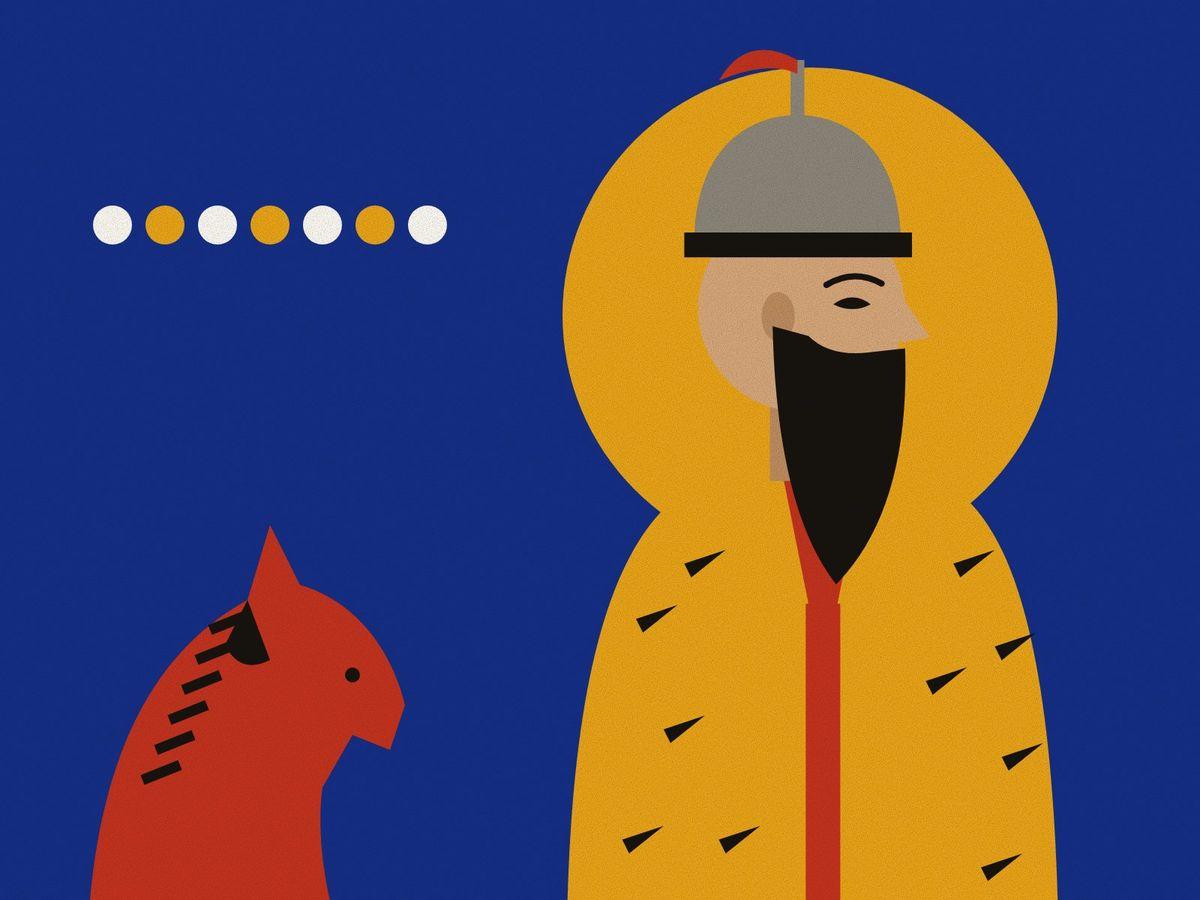
Rostam, Rakhsh and the seven labours
Iran's greatest hero and his matchless horse take the short, deadly road to rescue a foolish king: a lion, a desert, a dragon, a witch and the White Div.
More from the heroic ageشاهنامه
Mount Alborzالبرز کوه
On the heights of the Alborz the Simorgh raises Zal, the white-haired child his father abandoned. The poem's Alborz is a mountain at the edge of the world, traditionally identified with the range north of Tehran.
Kabulکابل
Kabul frames the life of Rostam. His mother Rudabeh is a princess of Kabul, and it is in the hunting grounds of a later king of Kabul that Rostam is betrayed and killed.
Zabulistanزابلستان
Zabulistan is the realm of the house of Sam: the court where Zal rules, Rostam is raised, and Esfandiyar comes to put Rostam in chains. Tradition places it in Sistan, around today's Zabol.
Kuh-e Khwajaکوه خواجه
A flat-topped black hill rising from the Hamun wetlands, crowned with the ruins of a Parthian and Sasanian palace that local people call Rostam's castle. It is the closest thing Rostam has to a home on the map.