The Shahnameh atlas · The heroic age
Afrasiab (old Samarkand)
افراسیابThe ancient mound of Samarkand, named after the king of Turan
- Traditionally placed here · Samarkand and Bukhara in the Atlas
- Afrasiab, Kay Khosrow, Siyavash
In the Shahnameh, Afrasiab is the king of Turan through most of the heroic age: a brilliant, ruthless and sometimes tormented ruler who outlives generations of Iranian kings and heroes. He kills Nowzar, has Siyavash put to death, imprisons Bijan, and is finally hunted down by Kay Khosrow, who finds him hiding in a cave by a lake and puts him to death. Samarkand itself appears in the poem as a city of the east, named in the wars of later kings.
Samarkand's old city, on a plateau of loess north of the modern centre, was the Sogdian capital known to the Greeks as Marakanda. It was destroyed by the Mongols in 1220 and never rebuilt, and the city moved south. At some point later the abandoned mound came to be called Afrasiab, after the epic king. Nobody knows exactly when, and it is a name given by tradition, not evidence that the poem placed his court here.
At some point later the abandoned mound came to be called Afrasiab, after the epic king.
The ruins today
Archaeologists have excavated Afrasiab since the nineteenth century. Its most famous find is a hall of wall paintings from the seventh century, often called the Ambassadors' Painting, which shows envoys from China, Korea and elsewhere arriving at the court of the Sogdian king Varkhuman. A museum now stands on the site, and the mound is part of Samarkand's UNESCO World Heritage listing. Iranian and Central Asian readers sometimes smile at the irony: one of the great archaeological sites of the Persian-speaking world bears the name of Iran's epic enemy.
In Mythologyاسطوره
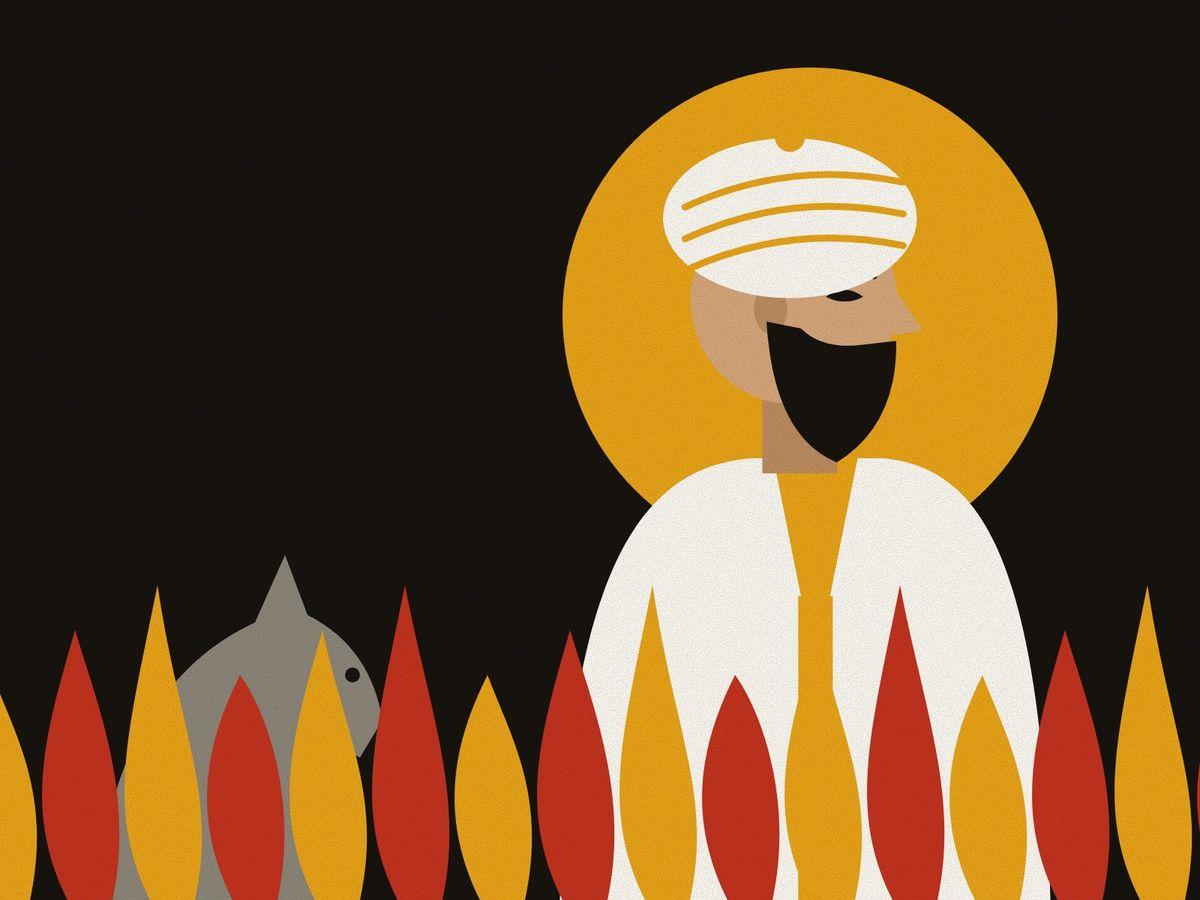
Siyavash and the trial by fire
The innocent prince who rode through fire to prove his honour, kept his word at the cost of his life, and was mourned for centuries in Central Asia.
More from the heroic ageشاهنامه
Mount Alborzالبرز کوه
On the heights of the Alborz the Simorgh raises Zal, the white-haired child his father abandoned. The poem's Alborz is a mountain at the edge of the world, traditionally identified with the range north of Tehran.
Kabulکابل
Kabul frames the life of Rostam. His mother Rudabeh is a princess of Kabul, and it is in the hunting grounds of a later king of Kabul that Rostam is betrayed and killed.
Zabulistanزابلستان
Zabulistan is the realm of the house of Sam: the court where Zal rules, Rostam is raised, and Esfandiyar comes to put Rostam in chains. Tradition places it in Sistan, around today's Zabol.
Kuh-e Khwajaکوه خواجه
A flat-topped black hill rising from the Hamun wetlands, crowned with the ruins of a Parthian and Sasanian palace that local people call Rostam's castle. It is the closest thing Rostam has to a home on the map.