The bakhshis of Khorasan
بخشیهای خراسانIn northern Khorasan, singers called *bakhshi* tell epics and love stories to the two-stringed dotar, in Kurdish, Turkic, Turkmen and Persian. Their music was inscribed by UNESCO in 2010.
In the towns and villages of northern Khorasan, around Quchan, Bojnurd, Shirvan, Dargaz and Torbat-e Jam, the bakhshi is a musician who is also a storyteller. Alone with a dotar, a long-necked lute with two strings, the bakhshi sings epics and romances that may last an evening or several evenings, alternating sung verse with spoken narration and instrumental passages. The name is often explained as ‘one who gives’ or ‘one who bestows’, though its origin is debated, and in neighbouring Turkmenistan and Uzbekistan a related word, bagshy or bakhshi, names the same kind of performer.
Khorasan is a meeting ground of peoples, and its bakhshis sing in several languages. They perform in Kurmanji Kurdish among the Kurds of the region, in Khorasani Turkic, in Turkmen and in Persian, and a single musician may move between two or three of them in one evening. The repertoire includes heroic tales such as Koroghlu, love romances such as those of Tahir and Zohreh, religious and mystical poetry, and laments. Songs about the Imams and Shia devotion sit beside ancient legend and local history. Many bakhshis also composed their own verses.
Khorasan is a meeting ground of peoples, and its bakhshis sing in several languages.
The dotar
The dotar, ‘two strings’, is made from a single piece of mulberry hollowed into a pear-shaped body, with a thin wooden face and a long neck with tied frets. It is played with the fingers, in a rapid strumming technique, and the two strings, tuned a fourth or fifth apart, give a melody against a drone. The bakhshi’s fingers may play the strings in a style of their own, at times using the knuckles or the whole hand. Some performers also accompany themselves on the ghichak fiddle or join with a sorna and drum for dances.
In 2010 UNESCO inscribed the music of the bakhshis of Khorasan on the Representative List of the Intangible Cultural Heritage of Humanity. In 2019 a second inscription, of the traditional skills of crafting and playing the dotar, recognised the instrument itself and the workshops that make it. Turkmenistan, where the dutar is a national emblem, has inscribed its own dutar-making and performance tradition separately, and Uzbek and Tajik musicians play their own dutor. In Herat, the Afghan dutar grew from two strings to many in the twentieth century and became a classical instrument in its own right.
Masters
The twentieth century brought recordings of great bakhshis. Haj Ghorban Soleimani of Quchan (1920–2008) became internationally known through concerts in Europe and recordings that captured his long epic performances. Nur-Mohammad Dorpour of Torbat-e Jam, who died in 2006, represented the Persian-speaking eastern tradition. Their pupils, including members of their own families, continue to perform and to teach, and the dotar workshops of the region supply instruments to players across Iran. The art is passed on within families as well as in classes, and a bakhshi is still judged above all by how long and how well he or she can hold an audience with a story.
Across Cultureپیوندها
Peoples
Turkmen
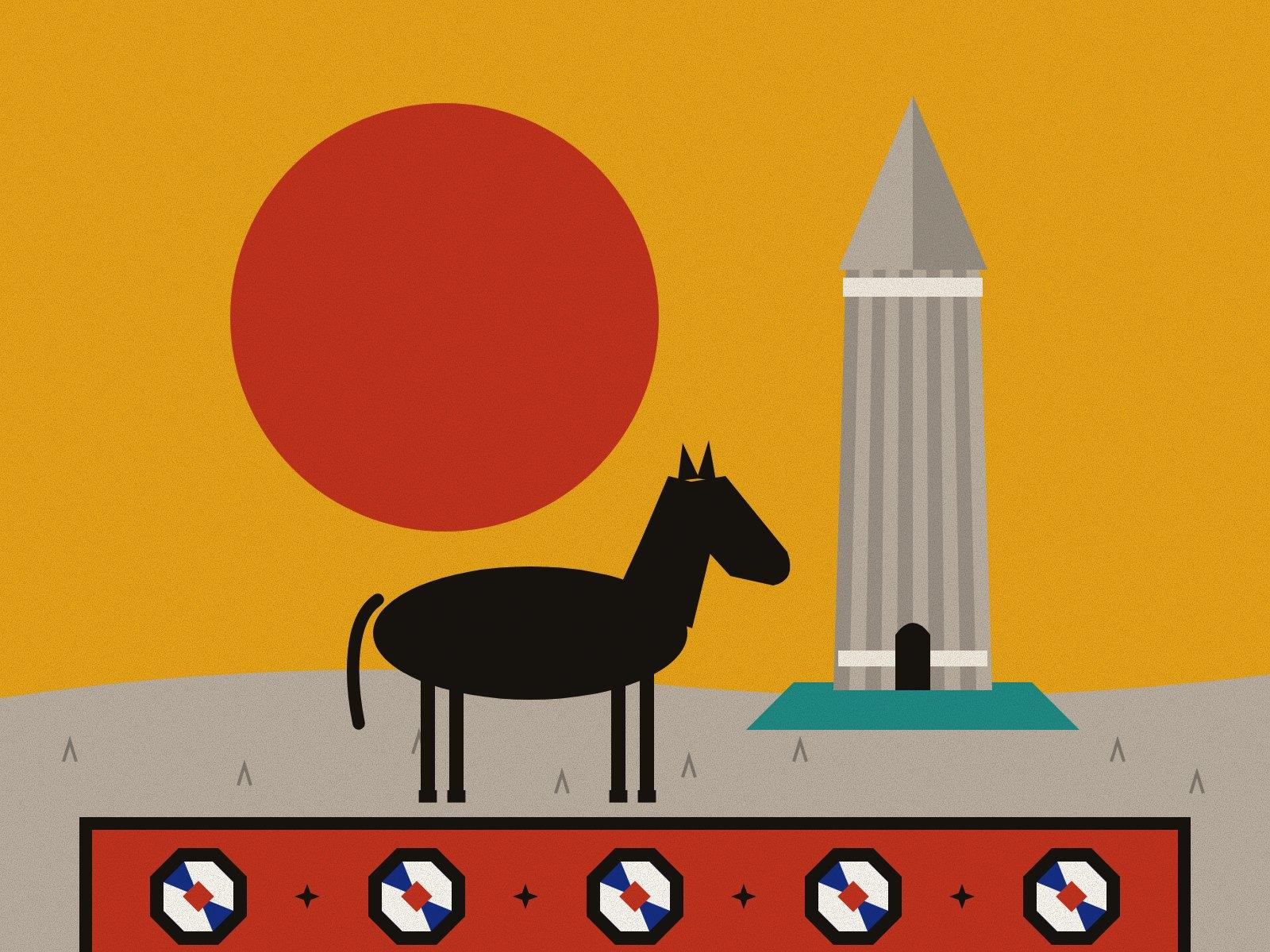
Iran’s Turkmen live on the Turkmen Sahra plain north of the Alborz. They keep the poetry of Magtymguly, the music of the *bagshy*, red carpets and a passion for horses.
More from Musicموسیقی
The radif and the dastgah
Persian classical music is not written down as compositions but held in the *radif*, a body of melodies passed from master to pupil and arranged into twelve modal systems.
Avaz: the classical voice
In Persian classical music the singer is the centre, and the song is a poem: a ghazal of Hafez, Saadi or Rumi, unfolded line by line in free rhythm and ornamented with the breaking voice of the *tahrir*.
Barbad and the Sasanian court
Barbad, minstrel to Khosrow II, is the most famous musician in Persian memory. Little about him can be proved; much about him has been loved, retold and painted for fourteen centuries.