Khwaju Kermani
خواجوی کرمانی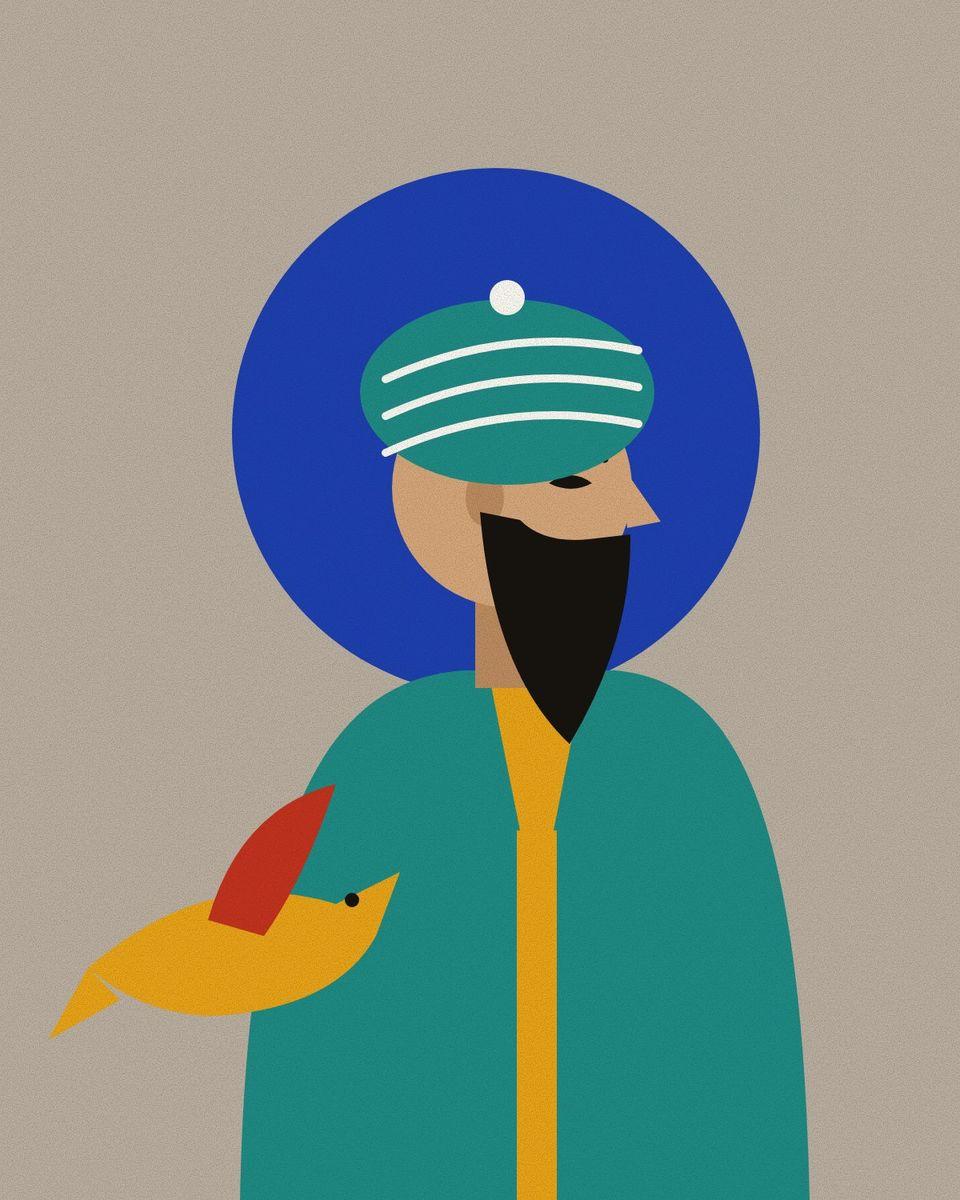
Poet of Kerman and Shiraz, author of verse romances and of ghazals that Hafez knew and echoed.
- Known for
- Ghazals and the romance Homay and Homayun
- Forms
- Ghazal, Masnavi
- Collection
- The Greats
Kamal al-Din Abu'l-Ata Mahmud, known as Khwaju, was born in Kerman in 1290 and travelled widely in his youth, to Egypt, Syria, Iraq and the Hejaz. He wrote for several rulers and ministers of his time, in Iraq, Kerman and Fars.
Besides his Divan, he wrote a set of narrative poems in answer to Nezami's Khamsa, among them the romances Homay and Homayun and Gol and Nowruz. He spent his later years in Shiraz, where his tomb stands in the Allahu Akbar gorge at the northern entrance to the city. Hafez, a younger contemporary, knew his ghazals well and echoed many of them.
Booksکتابها
The principal works of Khwaju Kermani.
The Divan of Khwaju
دیوان خواجوی کرمانیKhwaju's collected lyrics: fluent, musical ghazals, several of whose rhymes and refrains Hafez took up, and qasidas for the princes and ministers of his day.
Read 3 poemsHomay and Homayun
همای و همایونA romance of the Persian prince Homay and the Chinese princess Homayun, whom he falls in love with after seeing her picture and wins through adventures and trials. It is one of the narrative poems Khwaju wrote in answer to Nezami's Khamsa.
Gol and Nowruz
گل و نوروزA second romance, of Prince Nowruz and the princess Gol, whose name means 'rose'. Like Homay and Homayun it belongs to Khwaju's answer to Nezami's Khamsa.
Poems by Khwaju Kermaniشعرها
In the original Persian, beside an English translation.
من آن مرغ همایونم که باز چتر سلطانم
من آن نوباوهٔ قدسم که نزل باغ رضوانم
I am that blessed bird, the falcon beneath the sultan’s parasol;
I am that first fruit of holiness, the welcome-gift of Paradise’s garden.
I Am That Blessed Bird
رفت دوشم نفسی دیدهٔ گریان در خواب
دیدم آن نرگس پرفتنهٔ فتان در خواب
Last night my weeping eye went for a moment into sleep,
and in a dream I saw that narcissus full of mischief.
Last Night in a Dream
درد من دلخسته بدرمان که رساند
کار من بیچاره بسامان که رساند
Who will bring the pain of my wounded heart to its cure?
Who will bring the affairs of helpless me to order?
Who Will Bring My Pain to Its Cure?
Khwaju Kermani in Iranian history
Iranian historySeljuks, Mongols and Ilkhanidsسلجوقیان، مغولان و ایلخانان
Turkic and then Mongol conquerors took Iran in turn. The Seljuks built mosques and colleges; the Mongols brought catastrophe, then, as the Ilkhanids, became patrons of history-writing and art.