Wæjyg
The giants of the Ossetian Nart sagas, huge and strong but slow-witted, whom the heroes of the Narts defeat more by cunning than by force.
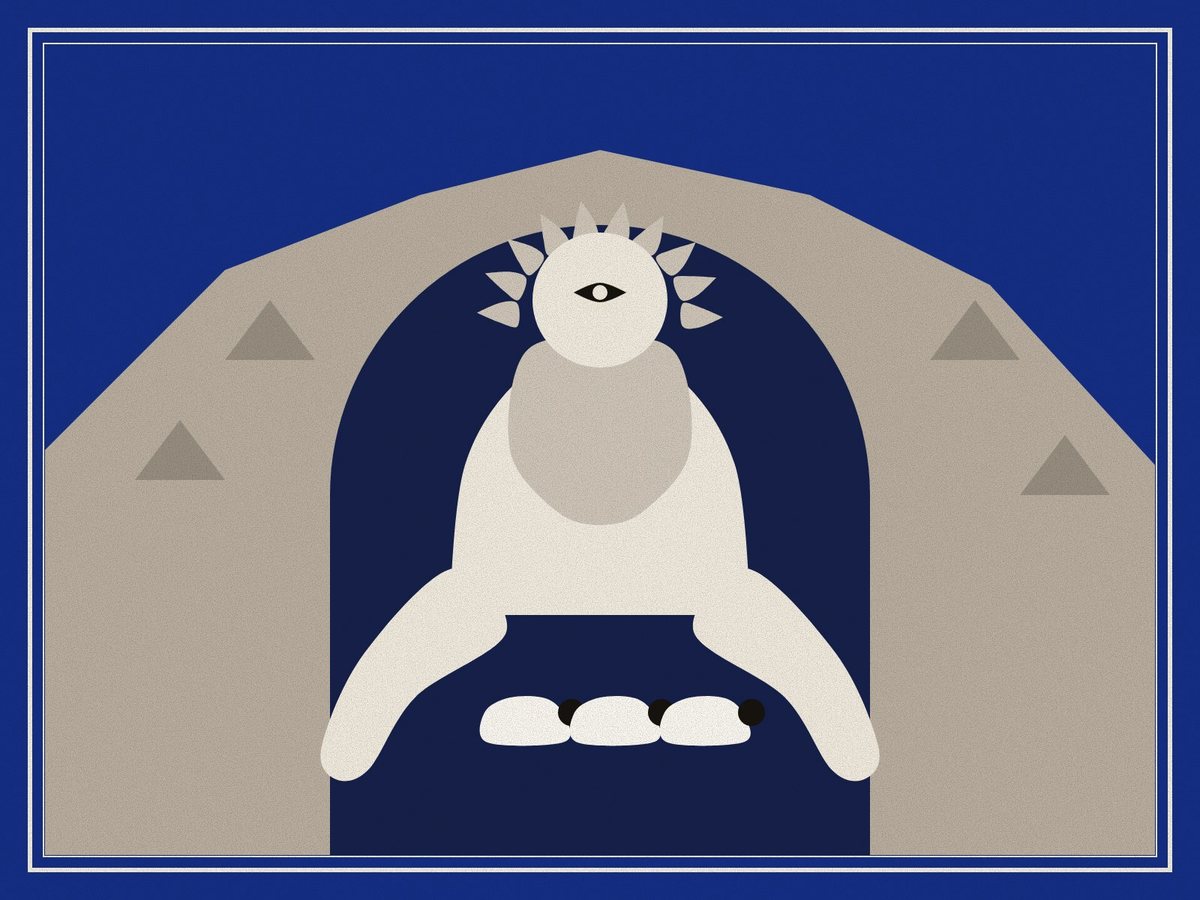
The Ossetians of the central Caucasus speak an Iranian language descended from that of the ancient Alans, and their great body of oral epic, the Nart sagas, preserves a world of heroes, gods and monsters that scholars have studied alongside the Shahnameh and the Avesta. Among its monsters the most common are the wæjyg (in Ossetian Cyrillic, уæйыг), giants who live in mountain fastnesses and on the edges of the Narts' world.
The wæjyg are huge, sometimes many-headed and sometimes one-eyed, immensely strong and often cannibal, but rarely clever. The Nart heroes, such as Uryzmæg, Soslan and Batradz, defeat them with tricks as often as with weapons. One tale, much discussed by scholars, has Uryzmæg trapped in the cave of a one-eyed giant, blinding him and escaping among his flock, a story strikingly close to Odysseus and the Cyclops. Georges Dumézil, who spent decades on the Ossetian epic, drew attention to such parallels with Greek and Indo-Iranian myth.
Immensely strong and often cannibal, but rarely clever.
A cousin of the div
Like the divs of Iranian tradition, the wæjyg are opponents of the heroes and of order, but they are closer to the giants of European folklore than to the demons of Zoroastrian theology. The linguist Vasily Abaev, the great authority on the Ossetian language, discussed the word's Iranian origins in his etymological dictionary; its exact source is debated.
The Nart sagas are a living heritage for Ossetians, recited, sung and taught, and shared in different forms with Circassian, Abkhaz and Chechen neighbours, each with their own tellings. The Atlas includes Ossetia as part of the wider Iranian-speaking world, not as a claim on its people, who define their own identity.
More from Folk creaturesموجودات افسانهای
Al
A female being said to haunt women in the days after childbirth, feared across Iran and among its neighbours, and kept at bay with iron, onion and company.
Div
Once a word for gods, the div became the great demon of Iranian story: an enemy of order in the Avesta, a captive scribe in the Shahnameh, and a horned giant in grandmothers' tales.
The White Div
The lord of the divs of Mazandaran, who blinded a king and his army, and whose blood restored their sight after Rostam killed him in his cave.