Nasnas
نسناسHalf a person, with one arm, one leg and half a face, the nasnas hops through the books of marvels and the epics that grew up around the Sistan heroes.
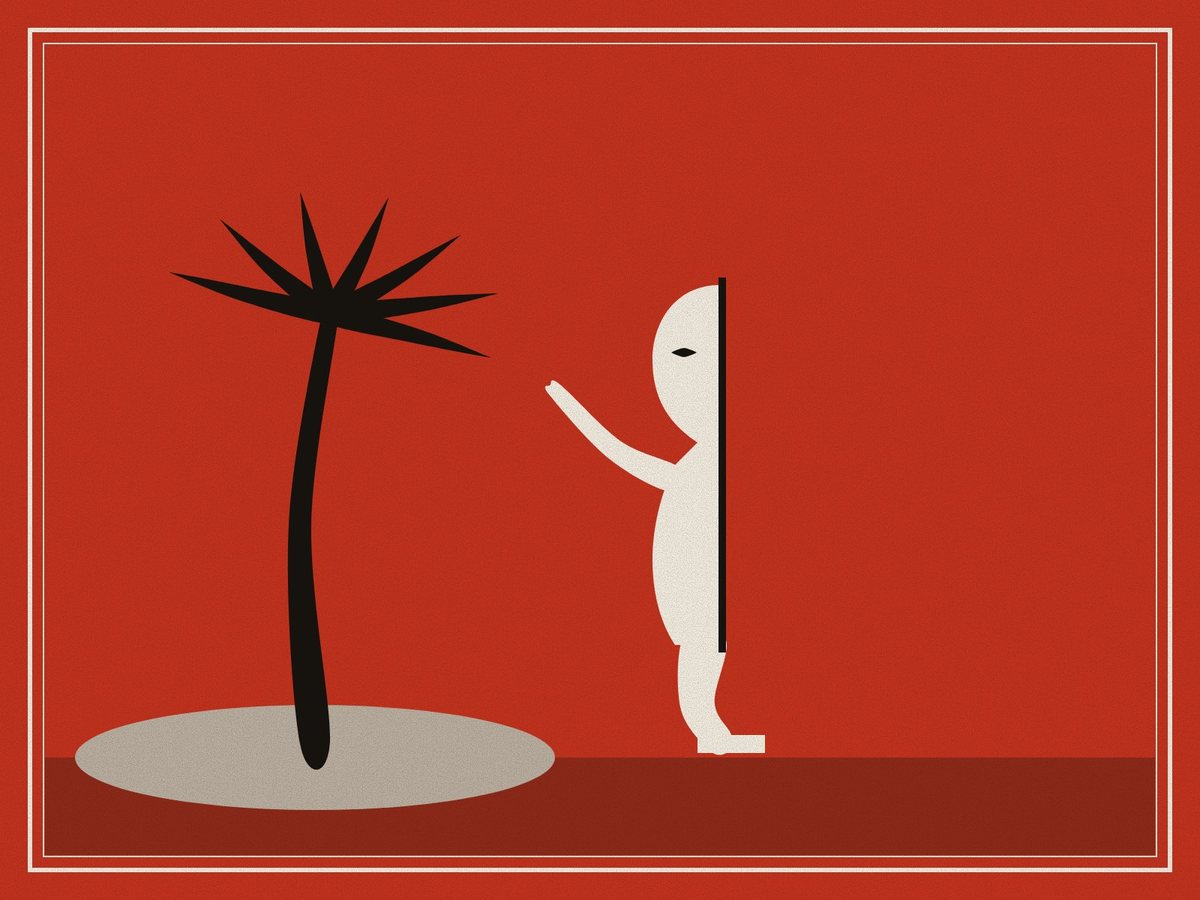
The nasnas is a creature of the edges of the known world. In Arabic and Persian books of marvels, the ʿajāʼib literature that catalogued wonders of land and sea, it is described as half a human being: half a head, half a body, one arm and one leg, moving with startling speed by hopping. Some writers placed it in Yemen, others on far islands or in India. A medieval belief made it the offspring of a human and a kind of jinn. The idea of a one-legged people is very old, and scholars have suggested that the nasnas carries memories of monopods described in Indian and Greek writing.
In the Persian epics
The nasnas found a new home in the Persian epics that grew up after Ferdowsi around the family of Rostam, the heroes of Sistan. A study in the journal Classical Persian Literature follows it through three of these poems. In the Faramarz-nameh, Rostam's son Faramarz passes the nasnas without a fight. In Asadi Tusi's Garshasp-nameh of the eleventh century, the hero Garshasp fights them on one occasion and flees from them on another. By the later Sam-nameh, the nasnas have become demonic enemies, and Sam kills their king. Across these poems the creature drifts from curiosity to monster, a pattern the study sees as typical of how marvels were absorbed into epic.
The creature drifts from curiosity to monster.
The word also lives in everyday Persian, where nasnās can be a jokey insult for a wild or unruly child. The Atlas places the nasnas in Sistan, the homeland of the heroes who meet it in the epics, though the creature itself was always imagined further away, at the end of a long voyage.
More from Folk creaturesموجودات افسانهای
Al
A female being said to haunt women in the days after childbirth, feared across Iran and among its neighbours, and kept at bay with iron, onion and company.
Div
Once a word for gods, the div became the great demon of Iranian story: an enemy of order in the Avesta, a captive scribe in the Shahnameh, and a horned giant in grandmothers' tales.
The White Div
The lord of the divs of Mazandaran, who blinded a king and his army, and whose blood restored their sight after Rostam killed him in his cave.