Nane Sarma
ننه سرماOld Mother Cold, who prepares all winter for Amu Nowruz, Uncle New Year, and falls asleep just before he arrives.
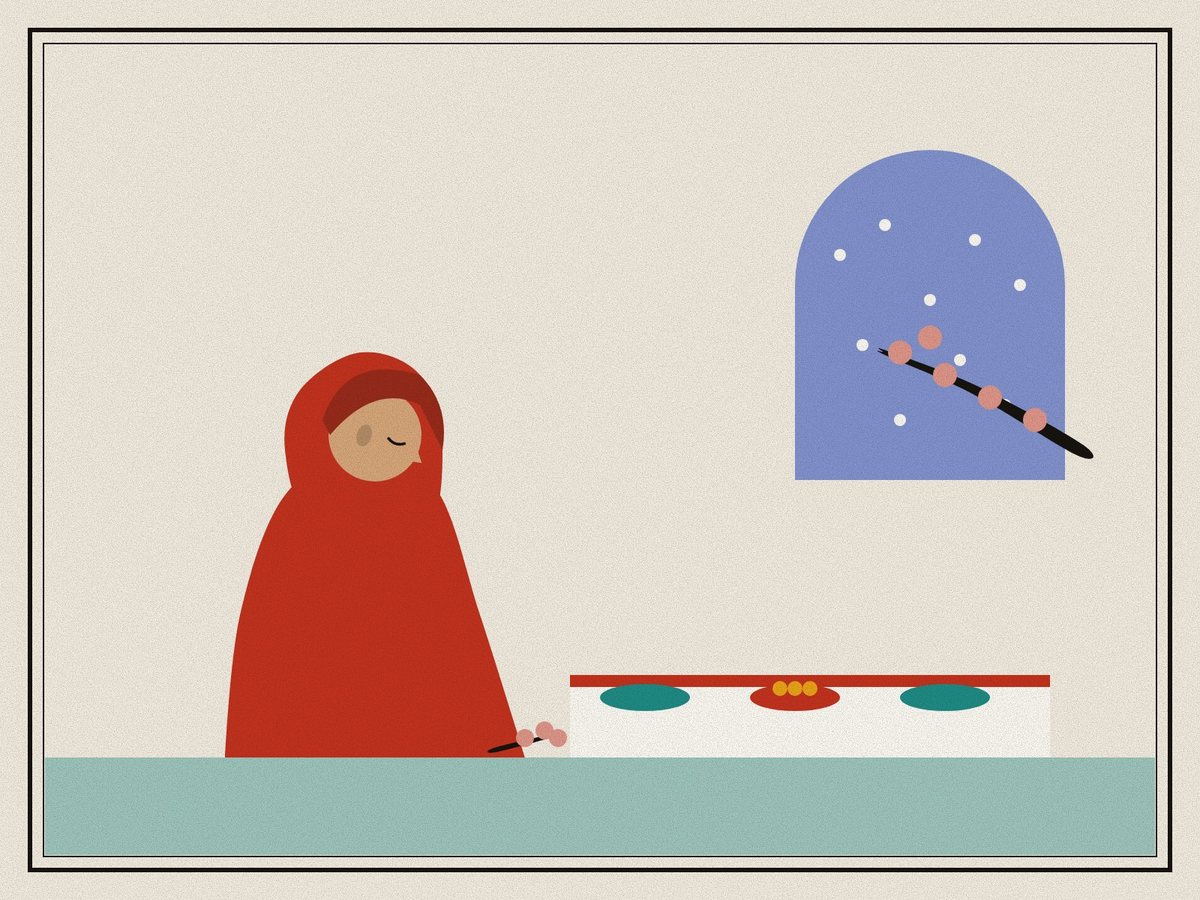
Nane Sarma, "Mother Cold" or "Granny Cold", is the old woman of winter in Iranian folk tales. In the most familiar version she lives alone and waits all year for her beloved, Amu Nowruz, "Uncle Nowruz", a white-bearded old man who comes once a year at the turning of the new year. Before his visit she cleans the house, lays out the new-year spread, puts on her best clothes and sits down to wait. But she is tired, and as the hour approaches she falls asleep. Amu Nowruz arrives, sees her sleeping, and, not wanting to wake her, leaves. In some versions he kisses her forehead first, or lights the fire, or leaves a sprig of blossom. She wakes to find spring has come and he has gone.
Then the year turns again, and she waits. The story is told every Nowruz, and different families tell it differently: in some tellings they meet briefly at the moment the year changes, in others they never meet at all.
She wakes to find spring has come and he has gone.
Winter in a story
Folklorists read Nane Sarma as winter in human form, sleeping as the warm season arrives. Persian has other sayings for the last cold of winter, among them the cold "of the old woman", sarmā-ye pirezan, used for a late cold snap near the end of the season, and some writers link the figures. Amu Nowruz is himself sometimes confused with Haji Firuz, the black-faced singer who appears in the streets before the new year; they are separate figures with separate customs.
The tale is known in Iran and among Persian-speaking communities in Afghanistan, and has been retold in many children's books. The Atlas pin uses Kabul for the eastern tellings of the story.
More from Folk creaturesموجودات افسانهای
Al
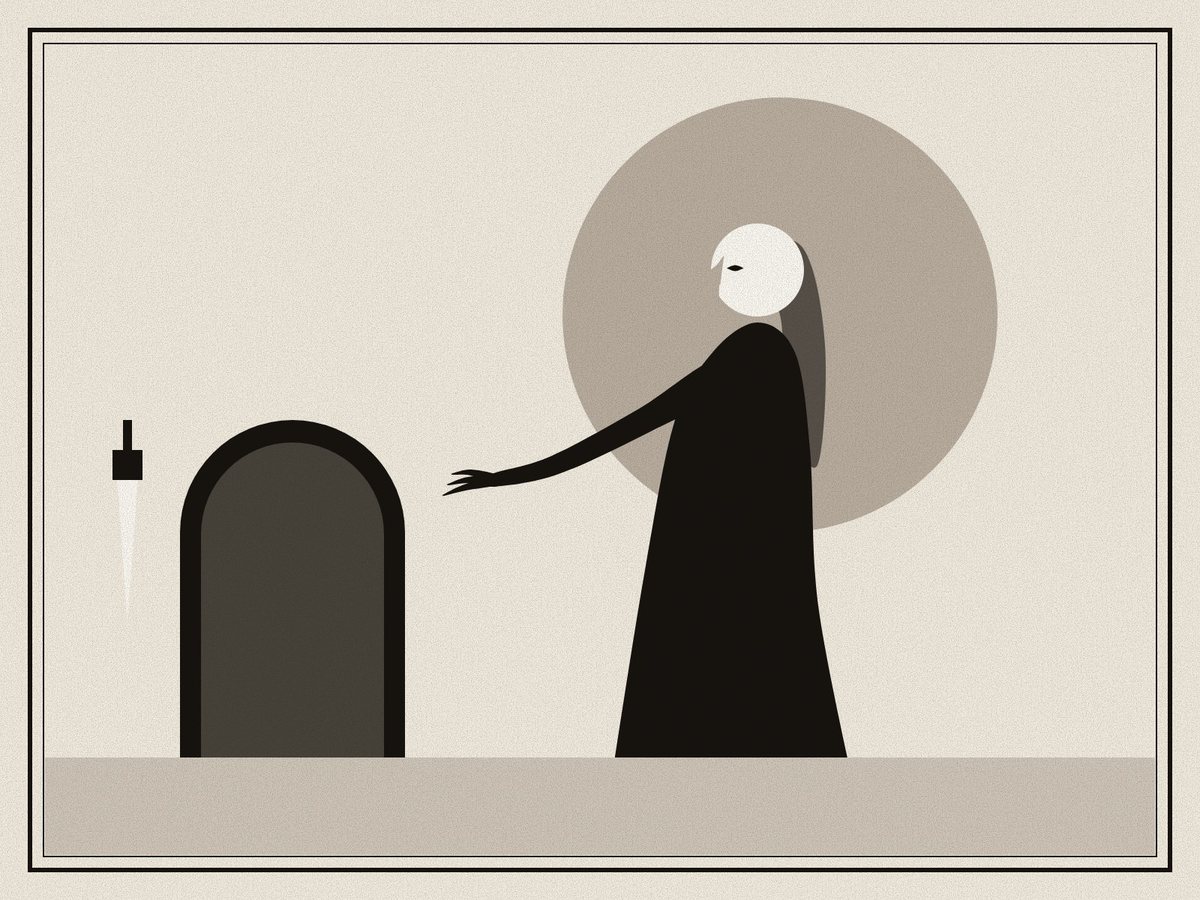
A female being said to haunt women in the days after childbirth, feared across Iran and among its neighbours, and kept at bay with iron, onion and company.
Div
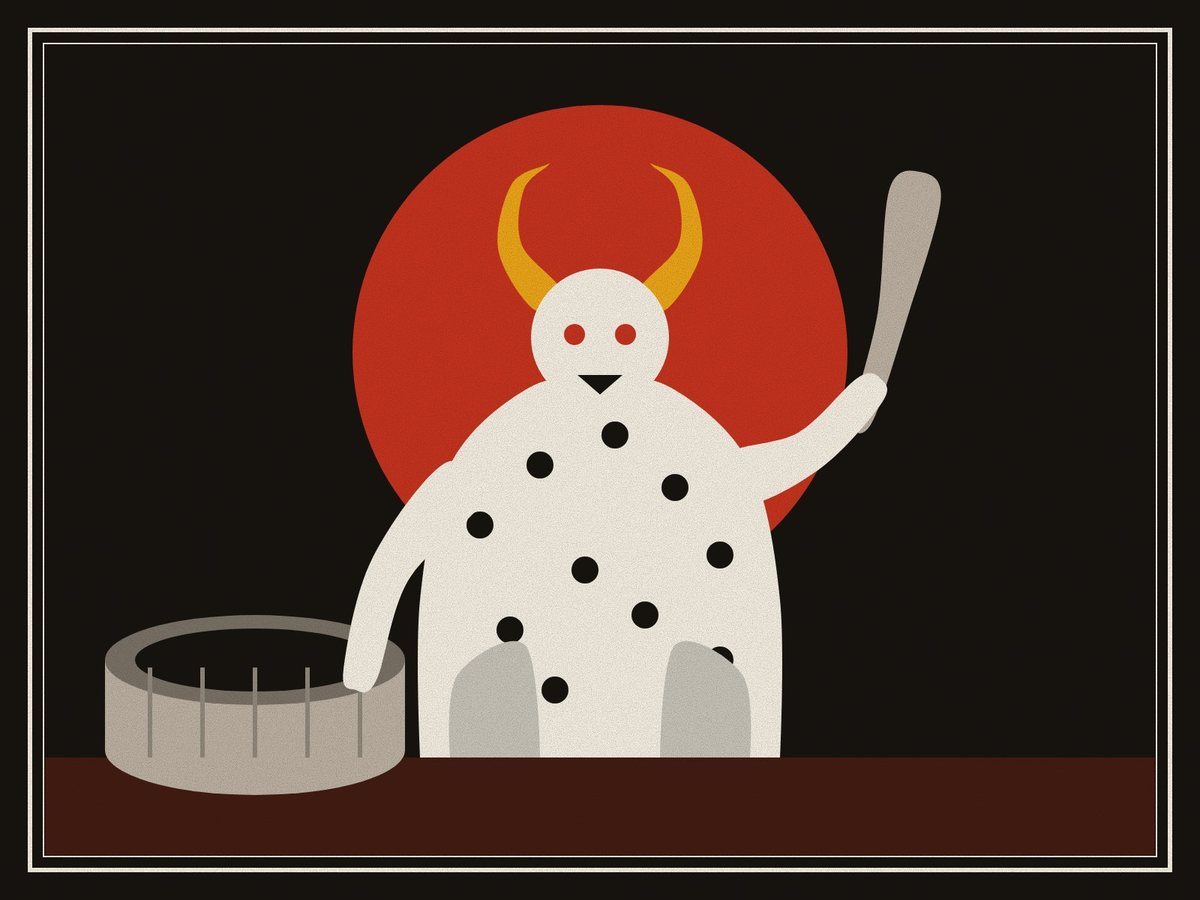
Once a word for gods, the div became the great demon of Iranian story: an enemy of order in the Avesta, a captive scribe in the Shahnameh, and a horned giant in grandmothers' tales.
The White Div
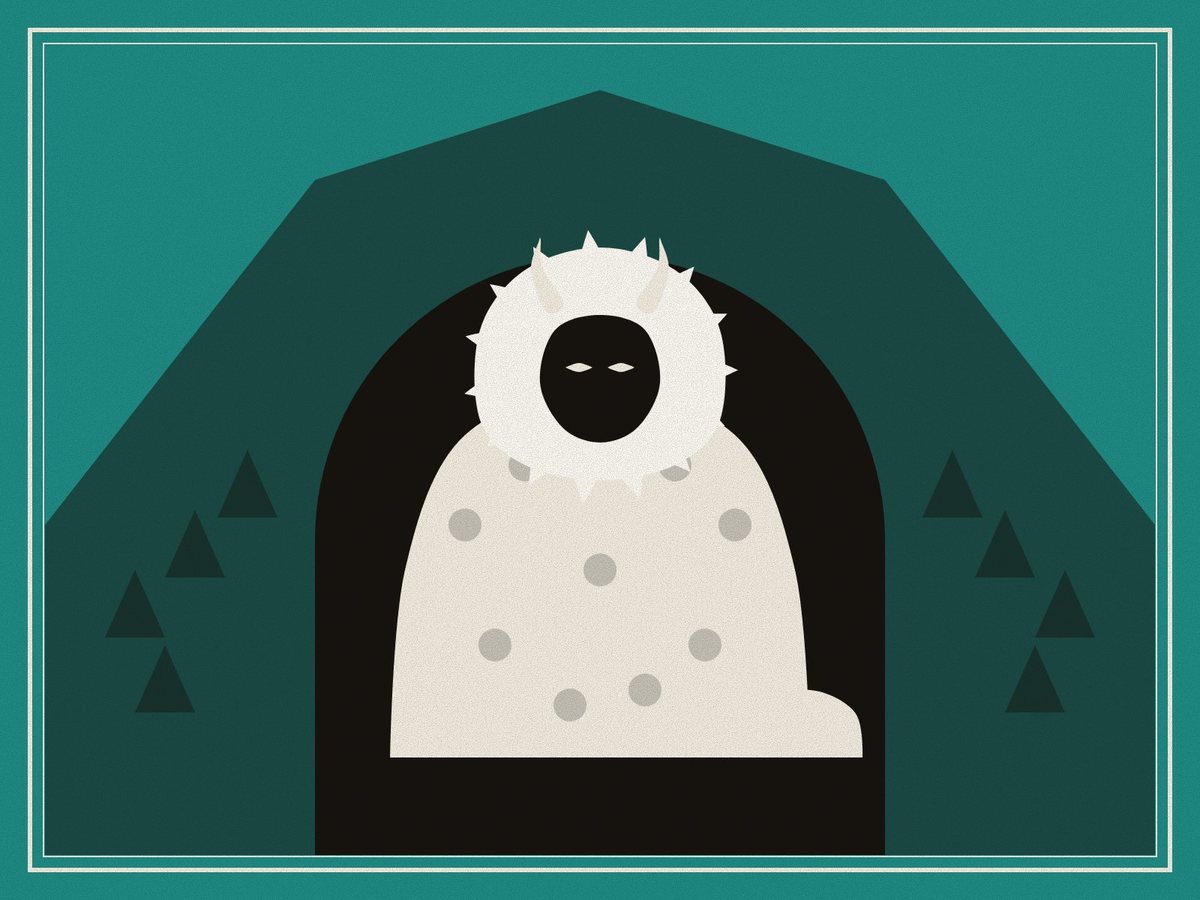
The lord of the divs of Mazandaran, who blinded a king and his army, and whose blood restored their sight after Rostam killed him in his cave.