The Shahnameh atlas · The heroic age
Hamavaran
هاماورانSudabeh's homeland, often identified with Yemen; location approximate
- Legendary: the location is approximate
- Kay Kavus, Sudabeh, Rostam
After Mazandaran, Kay Kavus marches against a rebellious kingdom called Hamavaran, which submits. Its king has a daughter, Sudabeh, of whom the poem says the bride's beauty was beyond words, and Kavus demands her in marriage. The king agrees reluctantly, and after the wedding invites his new son-in-law to a feast. It is a trap: Kavus and his nobles are seized and imprisoned in a mountain fortress. Sudabeh refuses to leave her husband and shares his captivity. It is the first sign of the fierce loyalty, and later the fierce passions, that will make her one of the poem's most memorable women.
Rostam once again rides to the rescue. He defeats the armies of Hamavaran and its allies, frees the king and brings him home with his bride. Back in Iran, Kavus, as reckless as ever, is persuaded by a demon to try to fly to heaven on a throne lifted by eagles, and crashes. Sudabeh's story continues in the tragedy of Siyavash, her stepson, whom she accuses falsely when he rejects her.
Sudabeh refuses to leave her husband and shares his captivity.
Where was Hamavaran?
The name has long been read as a Persian form of Himyar, the ancient kingdom of south Arabia, and many scholars place Hamavaran in Yemen; others have suggested lands in the Levant or elsewhere in the west. The poem itself is not concerned with exact geography. The point here, near the old Himyarite capital of Zafar in the highlands of Yemen, is approximate and follows the most common identification. It should be read as a marker for a legendary kingdom, not a claim about any modern country.
In Mythologyاسطوره
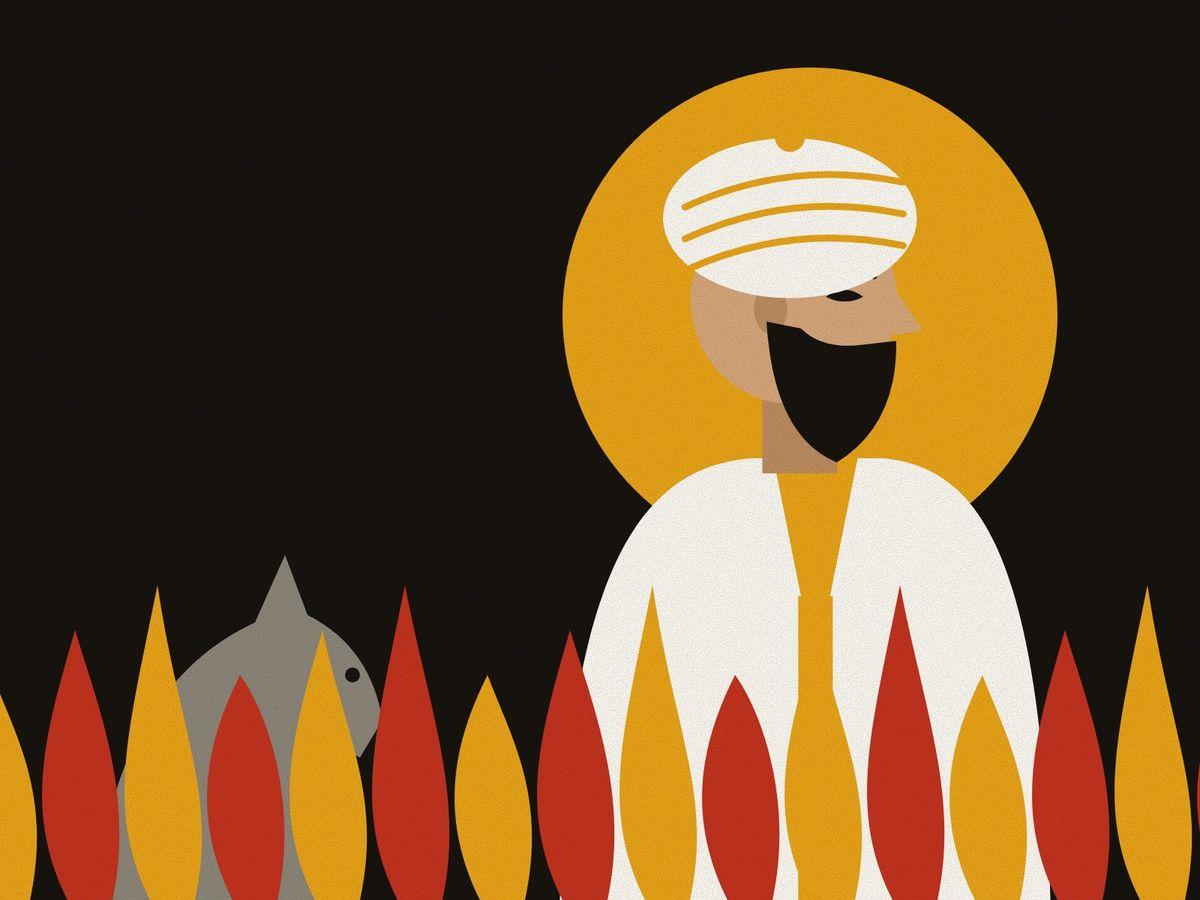
Siyavash and the trial by fire
The innocent prince who rode through fire to prove his honour, kept his word at the cost of his life, and was mourned for centuries in Central Asia.
More from the heroic ageشاهنامه
Mount Alborzالبرز کوه
On the heights of the Alborz the Simorgh raises Zal, the white-haired child his father abandoned. The poem's Alborz is a mountain at the edge of the world, traditionally identified with the range north of Tehran.
Kabulکابل
Kabul frames the life of Rostam. His mother Rudabeh is a princess of Kabul, and it is in the hunting grounds of a later king of Kabul that Rostam is betrayed and killed.
Zabulistanزابلستان
Zabulistan is the realm of the house of Sam: the court where Zal rules, Rostam is raised, and Esfandiyar comes to put Rostam in chains. Tradition places it in Sistan, around today's Zabol.
Kuh-e Khwajaکوه خواجه
A flat-topped black hill rising from the Hamun wetlands, crowned with the ruins of a Parthian and Sasanian palace that local people call Rostam's castle. It is the closest thing Rostam has to a home on the map.